


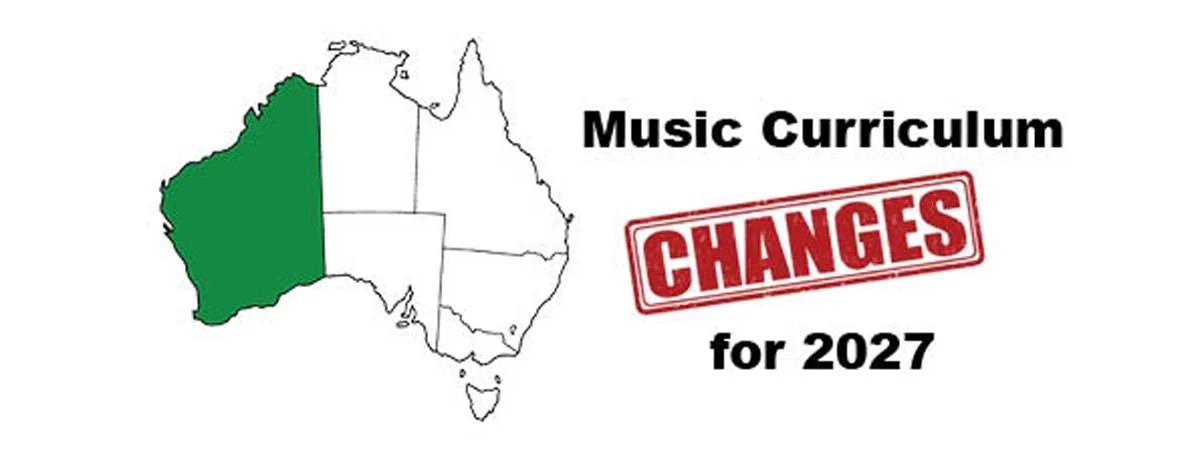
What’s Changing in the Western Australian Music Curriculum — and What It Means for Your Classroom
If you’re a music teacher in Western Australia — whether you’re a specialist or a classroom generalist — you may have heard that the music curriculum is being updated. Perhaps you’ve seen the documents circulating, or received communication from your school about familiarisation. Either way, we’ve done the reading so you don’t have to, and we’re here to walk you through exactly what’s changing, what it means in practice, and what you need to do (and not do) right now.
The short version? The changes are sensible, the structure is cleaner, and you have plenty of time to prepare.
When is this happening?
The revised Western Australian Music Curriculum has been released by the School Curriculum and Standards Authority (SCSA) for familiarisation in 2026, with full implementation from 2027. That means this year is about getting familiar with the changes — not about overhauling your teaching practice overnight. You have time to understand what’s coming, and to prepare thoughtfully.
What’s actually changing?
The revised curriculum has been updated from Australian Curriculum version 8.4 to version 9, contextualised for the Western Australian setting. The changes are best described as a refinement rather than a reinvention. The content that good music teachers have always delivered is still there — it’s just been organised more clearly and expressed more precisely.
Here’s a breakdown of the key changes:
The strands have been renamed
The biggest structural change is the renaming of the curriculum strands. The old curriculum organised music under two areas — Making (with sub-sections for Ideas, Skills and Performance) and Responding. The new curriculum uses three cleaner strands:
- Explore — listening, analysing, responding to music and reflecting on performances
- Create — composing, improvising and recording music ideas
- Perform — rehearsing and performing music
If you’re a Fun Music Company user, you’ll recognise these immediately. Three of our four curriculum pillars — CONNECT, COMPOSE, and SING & PLAY — map directly onto this new structure, just as they did with the old one. Our fourth pillar, SKILLS, covers the next important change.
The Elements of Music are now an Addendum
Previously, the elements of music (rhythm, pitch, dynamics, tempo, form, timbre and texture) were listed as a standalone Skills strand. In the revised curriculum, they sit in a dedicated Elements of Music Addendum — a supporting document that runs alongside all three strands and specifies which elements should be taught at each year level.
This is actually a more accurate reflection of how good music teaching works. The elements of music aren’t a separate thing you teach in isolation — they’re the vocabulary that runs through everything. The new structure makes that explicit.
Content descriptions are simpler and clearer
One of the most practical improvements in the revised curriculum is that the content descriptions themselves are shorter and easier to read. Where the old curriculum sometimes packed multiple ideas into a single statement, the new descriptions are focused and specific. For example, the Perform strand for Year 3 now simply reads:
“Engage with teacher-directed rehearsal strategies to develop a class/group performance of own and others’ music”
“Develop performance skills that demonstrate the elements of music”
This is clear, actionable, and easy to plan from.
Reflection is now an explicit requirement from Year 3
One genuinely new addition worth noting is that reflecting on performances and compositions becomes a standalone content description from Year 3 onwards, sitting within the Explore strand. From Year 3, students are expected to reflect on their own and others’ work, with this becoming increasingly specific through to Year 6 — by Years 5 and 6, students are identifying specific strengths and areas for improvement.
This doesn’t require new lessons — it’s something most good teachers are already doing. But it’s worth making the reflective process more visible and deliberate in your planning.
Stage presence is now named in Years 5 and 6
Another small but meaningful addition — “confident stage presence” is now explicitly named as part of the performance skills descriptor in Years 5 and 6. Again, this is something great teachers already develop in their students, but it’s now formally recognised in the curriculum. Worth a mention in your lesson notes and assessment conversations.
Cultural context is more precisely described
The Explore strand now gives more specific guidance on the cultural focus at each year level. Rather than a general requirement to explore music from different cultures, the progression is now clearly mapped: Year 3 explores why people make music across cultures; Year 4 specifically addresses music and connection to Country/place; Year 5 looks at how music continues and revitalises culture; and Year 6 examines factors that influence musical styles. This is a helpful clarification that makes planning more purposeful.
What doesn’t change?
Quite a lot, reassuringly. The fundamental content of music education in Western Australia remains consistent — students still sing, play, compose, listen and respond. The elements of music are the same. The expectation that students engage with music from a wide range of cultures, times and places is the same. The progression from playful exploration in Pre-primary through to sophisticated musical understanding by Year 6 is the same.
If you’ve been teaching music well under the current curriculum, you’re already doing most of what the revised curriculum asks for.
What should you do now?
For 2026, your focus should be on familiarisation. Read through the new scope and sequence documents from SCSA, note the strand name changes, and start thinking about how your current planning maps across. You don’t need to rewrite your units from scratch — you need to understand the new language and structure so that when 2027 arrives, the transition is smooth.
You can access all the familiarisation documents directly from the SCSA curriculum browser.
Our Fun Music Company Scope and Sequence for the current Western Australian Curriculum is still the document you should be working from this year, and it remains fully aligned with what is currently mandated.
In the meantime, if you’d like to see how the Fun Music Company program works in your classroom, we’d love to send you a sample lesson.
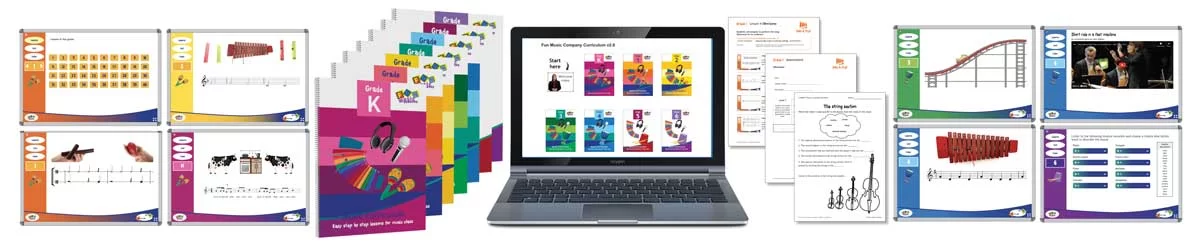
What we’re doing at Fun Music Company for Western Australian teachers
We know that curriculum updates land differently depending on where you are in your teaching week. So we want to be clear: we’ve read every document, we’ve mapped every change, and we’re already working on updates to make sure our program continues to be the easiest possible path to full curriculum alignment for WA teachers.
Here are a couple of the specific things we’re working on:
New material being added to the SKILLS unit
The revised Elements of Music Addendum is more specific than the old Skills strand in several places, and we’re adding new activities to make sure every element is explicitly covered at the right year level.
One example: the Addendum now specifically lists the distinction between speaking voice and singing voice as a Pre-primary requirement. It might sound like a small thing, but it’s a foundational skill — and we’re adding a dedicated echo singing activity to address it directly, so your youngest students have a clear, playful way into that concept from day one.
Another example: the Addendum now specifies exactly which intervals should be introduced at each year level — for instance, major second, minor third and major third at Year 5, moving to perfect fifth and perfect octave at Year 6. We’re updating our interval recognition activities to reflect this precise progression, so that when your students are singing and matching pitch, they’re working on exactly the right intervals for their year level.
These are the kinds of small, careful updates that don’t change the feel of the program — but mean you can point to the curriculum with complete confidence.
Updated Scope and Sequence on the way
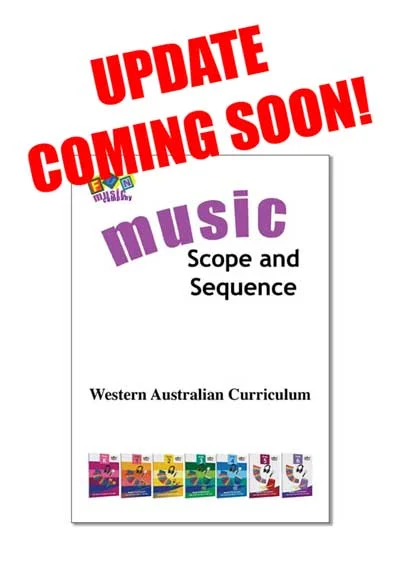
Our updated Fun Music Company Scope and Sequence for the revised Western Australian Curriculum is currently being prepared. We’ll publish it as soon as we have the copyright licence in place from the School Curriculum and Standards Authority — working with the SCSA in the proper manner is important to us, and we want to make sure everything is done right.
In the meantime, the current Scope and Sequence remains fully valid for 2026, and non-members can download a sample grade from that from this page. Curriculum members can access a full version for every grade inside our members area.
If you’re on our mailing list, we’ll let you know as soon as the new version is available.
A final word
Curriculum updates can feel overwhelming, especially when you’re already managing a full teaching load. But this one is genuinely one of the more teacher-friendly revisions we’ve seen — cleaner structure, clearer language, and no dramatic shifts in what’s expected. The SCSA has done a thoughtful job of refining rather than reinventing, and that’s good news for everyone in a Western Australian music classroom.
We’ll keep you updated as more resources become available. As always, we’re here to make music teaching a little easier.



Leave A Comment