



Ukulele Lesson Plans: What to Teach, When to Teach It, and How to Make It Work
Here’s a scenario that plays out in schools all over the world.
A teacher gets access to a class set of ukuleles — maybe they’ve just been purchased, maybe they’ve been sitting in a cupboard for years. They’re excited. They do some research, find a few YouTube videos, maybe download a chord chart, and walk into their first lesson with a plan.
They teach the C chord. Then G. Then Am. Then F. And the students are enjoying it — which is great. But somewhere along the way, things start to unravel. The lessons feel rushed. Students are technically on the right chord but their strumming is inconsistent. Some are still fumbling with the transition from C to G while others are ready to move on. And the teacher isn’t quite sure what to consolidate, what to introduce next, or whether melody playing fits in anywhere at all.
This is what happens without a structured lesson plan — not because the teacher is doing anything wrong, but because ukulele has more moving parts than it first appears. There’s technique, chord playing, melody playing, ensemble work, theory, and listening activities — and without a clear framework for how they fit together and when to introduce each element, it’s easy to end up covering some things and missing others entirely.
This page lays out that framework. We’ll walk you through what a well-structured ukulele lesson actually looks like, how to plan across year levels, and how to keep a program moving forward with real, audible progression.
If you’re just getting started and want a broader overview first, our complete guide to teaching ukulele in the classroom covers everything from choosing instruments to setting up your program.
Why the Resource You Choose Changes Everything
Many teachers use YouTube as a core resource for teaching ukulele.
Every day, teachers post on forums and social media asking for ukulele ideas, and the most common response they get is “just go on YouTube and do a song with your class.” And while YouTube has its place, that phrase — just go on YouTube — should give us pause. Because our students can go on YouTube at home. They all have phones and computers and unlimited access to whatever’s on there. So if what we’re doing in the classroom is the same thing they could find on a screen at home, we have to ask ourselves: what are we actually bringing to the table as teachers?
What we do in the classroom has to be better. It has to be structured, purposeful, and something students genuinely cannot replicate on their own. That’s what a proper lesson plan gives you — and it’s exactly what the rest of this page is about.
The Two Pillars of a Ukulele Lesson
When it comes to the core musical content of a ukulele lesson, there are two distinct pillars — and a complete program needs both.
Pillar 1: Chord Playing
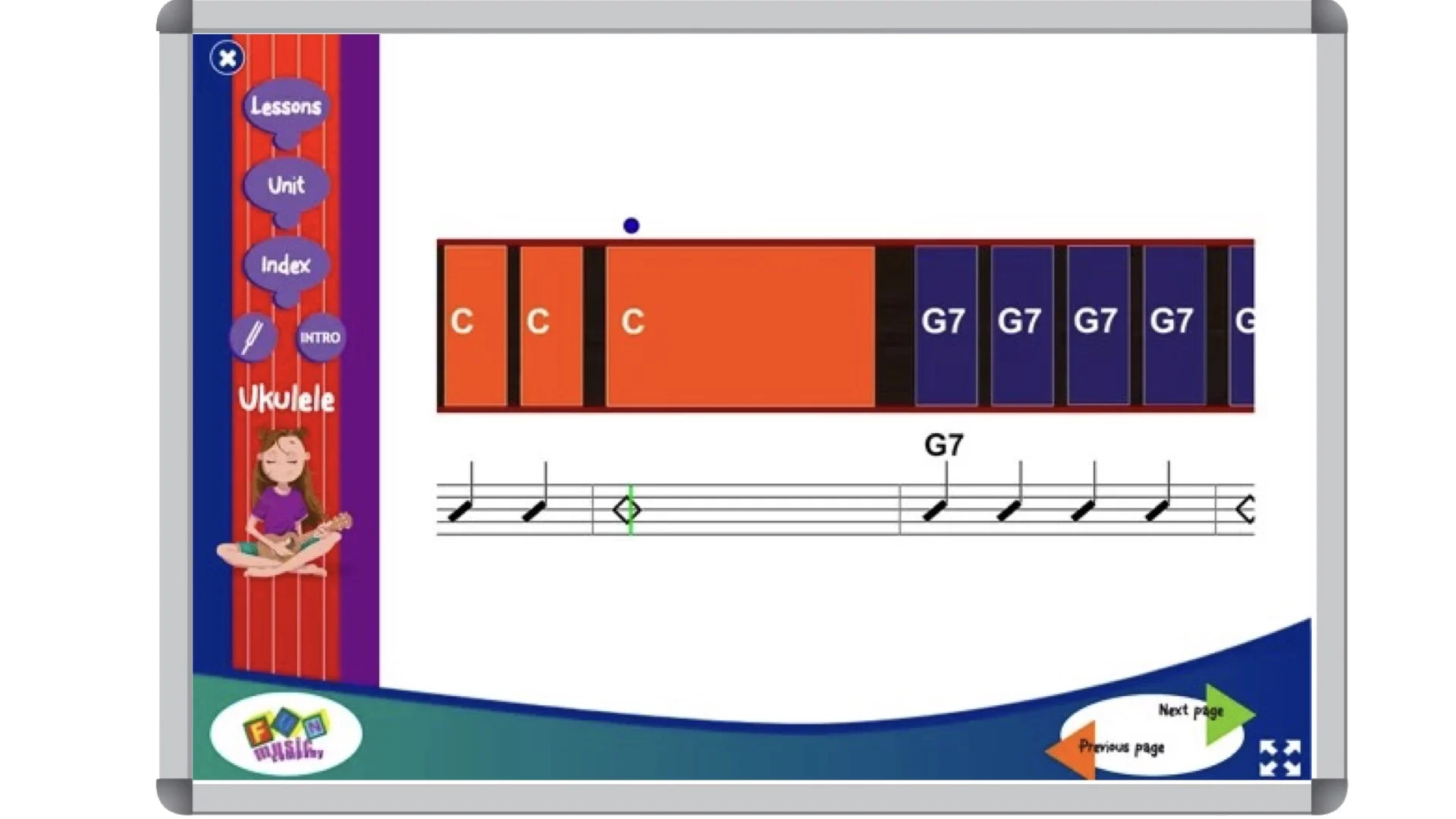
Chord playing is where most ukulele programs begin, and for good reason. Strumming chords is immediately satisfying for students — they can produce a full, musical sound from their very first lessons, and that early sense of achievement is a powerful motivator.
But chord playing is more layered than it first appears. Before students can successfully move between chords, they need to develop solid foundational technique — correct posture, how to hold the instrument, how to position the fretting hand, and how to develop a consistent strumming action. Rushing past these foundations in the excitement of getting to actual songs is one of the most common reasons ukulele programs run into trouble. Students who haven’t consolidated their technique will struggle when chord transitions get more demanding — and the gap between students who have it and those who don’t becomes increasingly difficult to manage in a classroom setting.
A well-structured chord playing sequence moves students through individual chords with enough consolidation time at each stage before introducing the next. It’s not about how quickly you can get through C, G, Am and F — it’s about how confidently and consistently students can use them.
Pillar 2: Melody Playing
This is where many ukulele programs stop short — not because teachers are doing anything wrong, but simply because most resources focus almost exclusively on chord playing and leave melody out altogether.
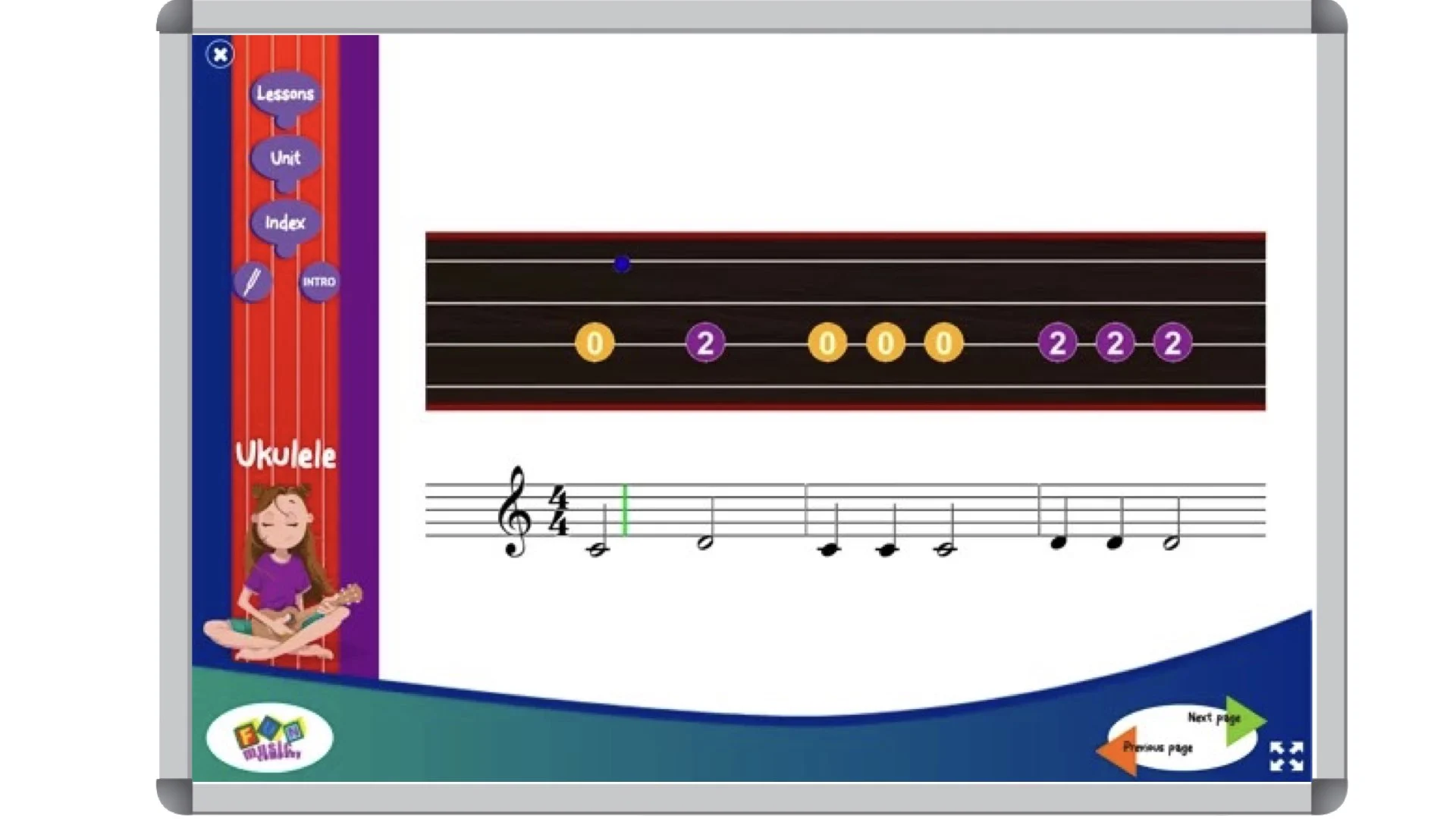
Melody playing opens up a completely different dimension of the instrument. Students learn to read and follow notation, play individual notes on the fretboard, and engage with music theory in a way that’s directly connected to what they’re doing with their hands. It also introduces an element of individual challenge that chord playing doesn’t always provide — there’s something genuinely compelling about working out a melody note by note, and students who might coast through chord strumming often find themselves deeply focused during melody work.
Bringing both pillars into your lessons also means you have natural variety built into every session — something that makes a significant difference to student engagement over a full term or year.
What Does This Look Like in an Actual Ukulele Lesson Plan?
Both pillars don’t exist in isolation — they sit inside a three-part lesson structure that gives every session a clear beginning, middle, and end.
Part 1: Skills Warm-Up
Every lesson begins with a short skills warm-up — typically five to ten minutes of focused attention on the physical foundations of playing. Posture, how to hold the instrument, fretting hand position, strumming technique.
This isn’t just a settling activity. Good technique is the foundation everything else is built on, and it needs regular, deliberate attention — especially in the early stages of a program. Students who develop poor habits early (hunching over the instrument, gripping the neck too tightly, strumming from the elbow instead of the wrist) will carry those habits forward, and they become increasingly difficult to correct the longer they’re left.
A consistent warm-up routine also has a practical classroom management benefit: it gives students something purposeful to do the moment instruments are in their hands, which significantly reduces the random plucking and noise that can derail the start of a lesson.
Part 2: Core — Chord Playing and Melody Playing
This is where the main musical learning happens. Depending on where your class is in the program, the core of the lesson will focus on chord playing, melody playing, or — as students develop — bringing both together in ensemble activities. We covered both pillars in detail above.
Part 3: Connect, Compose, or Consolidate
The final part of the lesson shifts from playing to reflecting, exploring, or extending. This might be a Connect activity — listening to a piece of music featuring the ukulele and exploring its cultural context, such as the instrument’s Hawaiian origins or its place in different musical traditions. It might be a theory worksheet connecting what students are playing to their broader music understanding. Or it might include simple composing activities, where students use the chords and melodic ideas they’ve learned to create something of their own.
This third part is what lifts ukulele teaching from an instrument skill into a genuine music education experience — and it’s what aligns your ukulele program with the broader Fun Music Company curriculum framework.
What Year Level Should You Teach Ukulele?
This is a question we get asked a lot — and we have a clear position on it.
The ukulele is best suited to Grades 5 and 6. This is the year level where students have the hand size, the finger strength, and the attention span to make real, satisfying progress on the instrument. They can hold it comfortably, press down strings cleanly, and sustain focus through the kind of careful, repetitive practice that building technique actually requires. The results at this level can be impressive — and the sense of achievement students feel when they can play a full ensemble piece is something that sticks with them.
Grade 3 and 4 teachers do use our program successfully, and we fully support that. Students at this level can engage meaningfully with the instrument — it just takes a little longer to establish the foundations, and expectations around how far they’ll progress in a given term should be adjusted accordingly. If you’re in a Grade 3 or 4 classroom and you’re keen to get started, there’s nothing stopping you.
We’d gently suggest holding off in Kindergarten through Grade 2. It’s not about the students’ enthusiasm — that’s rarely in short supply — but about the physical reality of small hands on a full-sized instrument. The ukulele requires a level of hand span and finger strength that most children under eight or nine simply haven’t developed yet, and pushing too early can lead to frustration rather than the enjoyment and success that a good ukulele program should deliver.
The sweet spot is Grades 5 and 6. That’s where the magic happens.
If you’re still at the stage of deciding whether to start a program at all, our guide to How to Start a Ukulele Program in Your Primary School covers instrument selection, budgeting, and classroom setup in detail
Try a Free Ukulele Lesson Plan
The best way to understand how this framework works in practice is to see a complete lesson in action.
We’ve put together a full sample lesson from the Fun Music Company Ukulele Curriculum System — and it’s free to access. No sign-up required, just click and explore.
The sample lesson covers all three parts of the lesson structure:
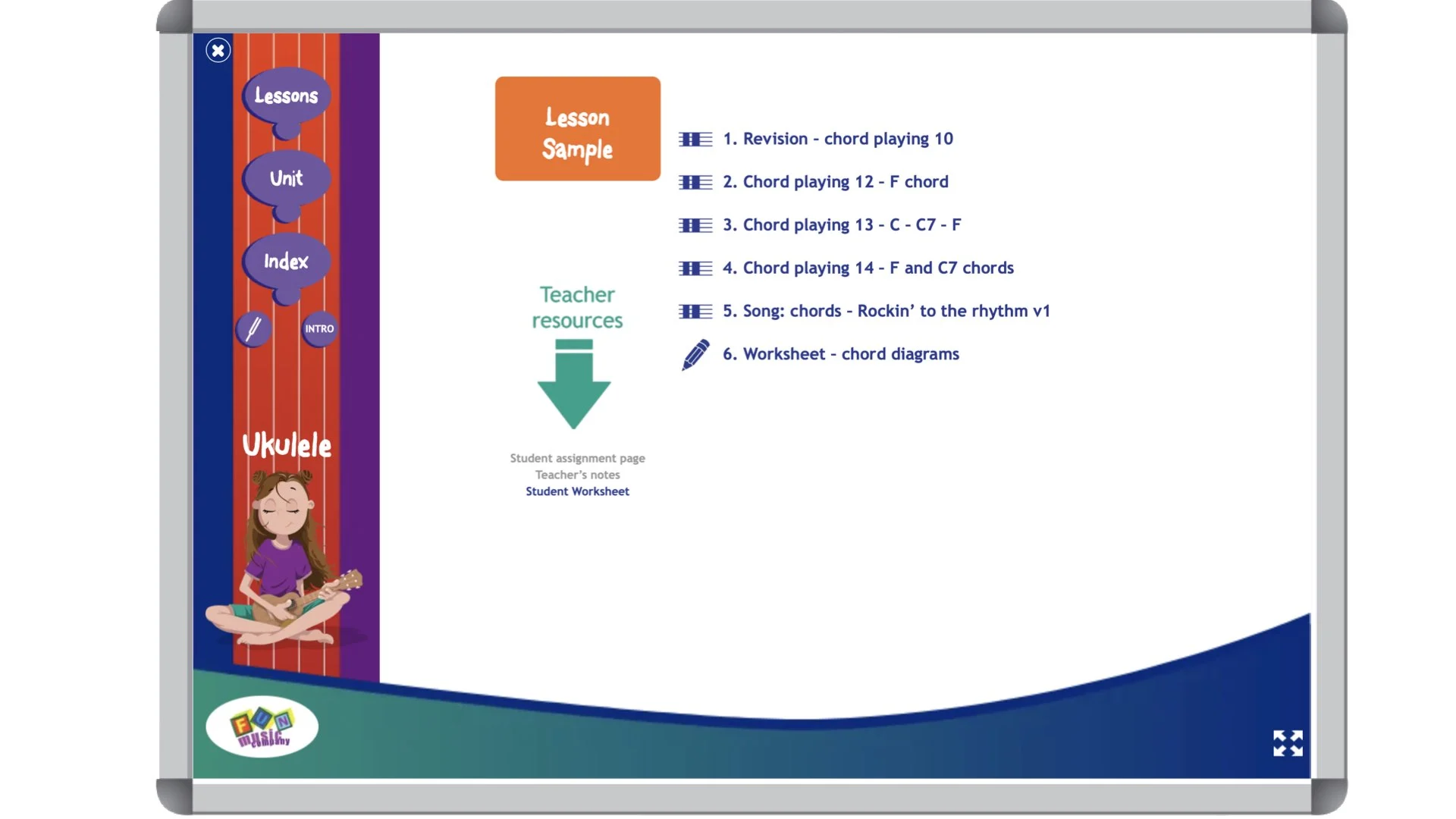
Skills Warm-Up — students begin with open string strumming exercises using the C chord, building the physical foundations before any new content is introduced.
Core — Chord Playing — the chord pathway works through learning the F chord, consolidating it across two practice exercises, combining F and C7 chords. Then we bring everything together in a song called Rockin to the Rhythm.
Extension and Consolidation — the lesson closes with a theory worksheet to consolidate the lesson content.
It’s a single lesson — but it gives you a clear picture of how a complete, structured ukulele program fits together from start to finish.

The Complete Ukulele Curriculum Program
If that sample lesson gave you a sense of what’s possible, the full Fun Music Company Ukulele Curriculum System takes it all the way.
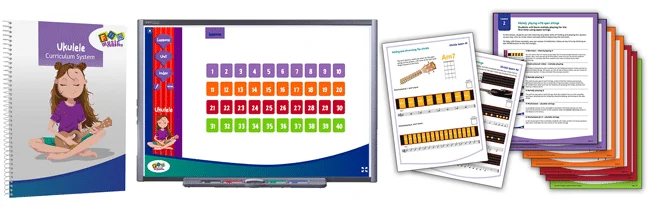
The complete program includes 40 fully structured lessons, covering everything in the right sequence — from the very first time your students pick up an instrument through to confident ensemble performance. Every lesson follows the three-part structure you’ve seen here: a skills warm-up, core chord and melody content, and a Connect, compose, or consolidate activity to round things out.
Everything is delivered on screen, ready to load on your classroom whiteboard and teach. Animated chord diagrams, bouncy-ball timing for melody work, backing tracks, printable worksheets, and a complete assessment framework across four ten-lesson blocks — it’s all included.
You don’t need to plan a thing. You don’t need to source resources or wonder what comes next. You just open the lesson and teach.
And because it’s part of the broader Fun Music Company curriculum membership, your ukulele program doesn’t sit in isolation — it connects to a complete K–6 music curriculum covering every area of the Australian music curriculum, including bucket drumming and boomwhacker programs, composition, music theory, and much more.



Leave A Comment