



The Research Behind Primary School Music Education: What the Evidence Actually Says
If you spend any time in conversations about music education, you will encounter two recurring claims made with great confidence by people on opposite sides of the debate.
The first: music education makes children smarter. It improves reading, boosts mathematical ability, raises IQ, and produces better academic outcomes across the board. Advocates of this position cite research freely — though the specific studies are rarely named.
The second: none of that matters, because music deserves a place in every child’s education for its own sake. It is a fundamental human experience, a core component of culture, and a discipline with its own rigorous body of knowledge. No further justification should be required.
Both positions contain genuine truth. Both are also, in different ways, incomplete.
What is less common — in staffroom conversations, in curriculum debates, and in the material published by music education organisations — is a careful look at what the peer-reviewed research actually shows. Not a selective reading of the studies that support a predetermined conclusion, but an honest engagement with the evidence, including the parts that complicate the picture.
That is what this article attempts to do.
The research on music education is substantial, genuinely interesting, and more nuanced than either side of the debate typically acknowledges. Some of the most confidently repeated claims about cognitive benefits turn out to rest on contested evidence. And some of the more consistent findings — particularly around student wellbeing — receive far less attention than they deserve.
What follows is not a case for or against music education. It is an attempt to read the evidence fairly.
The Academic Transfer Debate: What the Research Actually Shows
The claim that music education produces measurable benefits in other academic areas — literacy, mathematics, general intelligence — is probably the most widely repeated argument in favour of music in schools. It is also the most contested.
The most comprehensive attempt to synthesise the evidence on this question is Professor Susan Hallam’s The Power of Music (Hallam, 2015), a research synthesis commissioned by the Music Education Council in the United Kingdom and published by the International Music Education Research Centre. Drawing on evidence from neuroscience, psychology, and education, Hallam concludes that there is considerable evidence that musical training sharpens the brain’s early encoding of sound, leading to enhanced verbal memory, language skills, and literacy performance, as well as some elements of spatial reasoning and mathematical ability.
It is a substantial and carefully argued body of work, and it remains the most cited synthesis in the field. But Hallam herself is careful to note that the quality of teaching is critical — and that when teaching is poor, benefits may not materialise at all. The evidence, in other words, is not a blanket endorsement of music education in any form. It is an endorsement of well-taught, sustained, participatory music-making.
On the more specific question of literacy, a 2015 meta-analysis by Gordon, Fehd and McCandliss, published in Frontiers in Psychology, examined thirteen studies involving 901 children to test whether music training directly transfers benefit to literacy skill development. Their findings were cautiously positive — music training did appear to produce gains in phonological awareness, the ability to identify and manipulate the sound structures of language that underpins early reading. However, the effect size was small, and no significant transfer effect emerged for reading fluency. The authors concluded that the relationship between music training and literacy is real but modest, and grows stronger with increased hours of training (Gordon, Fehd & McCandliss, 2015).
The more challenging finding for advocates of the academic transfer argument comes from a 2020 meta-analysis by Sala and Gobet, which examined a larger body of evidence and reached a more sceptical conclusion: that engagement in music shows no meaningful impact on non-music cognitive skills or academic achievement. This finding generated considerable debate, and has been disputed by other researchers on methodological grounds. But it cannot simply be dismissed. It is peer-reviewed, it is rigorous, and it reflects a genuine difficulty in the research — that many studies in this area have design problems that make their conclusions difficult to rely on.
A 2017 systematic review by Dumont and colleagues, which examined 46 studies on music interventions for primary school children, found the picture similarly complex. While the review identified suggestive beneficial effects of music on child development, the authors were explicit that clear conclusions could not be drawn, and called for better-designed research before stronger claims could be made (Dumont et al., 2017).
What emerges from an honest reading of this literature is not that the academic transfer case is false — but that it is far from settled. Study design problems are common. Many studies compare music education groups against passive control groups rather than against other active interventions, which inflates the apparent benefit of music. The duration of programs, the quality of teaching, the age at which music education begins, and whether children are actively making music or passively listening all appear to influence outcomes significantly. Researchers who control carefully for these variables tend to find more modest effects than those who do not.
Anyone presenting the academic transfer case as established fact is going further than the evidence supports.
Where the Evidence Is More Consistent
While researchers continue to debate the extent to which music education transfers benefits to other academic domains, a separate and growing body of evidence has been building a more consistent case — one that has received considerably less attention in public discussions about music in schools.
That case is not about test scores or measurable academic outcomes. It is about something that most primary teachers would argue matters just as much, and that has become increasingly difficult to ignore in the years since the COVID-19 pandemic disrupted the social fabric of school communities across Australia and around the world.
It is about how music education affects the wellbeing of children.
The Wellbeing Evidence
In 2025, researchers Jason Goopy and Stephanie MacArthur from Edith Cowan University in Western Australia published a scoping review in Research Studies in Music Education that examined what the accumulated evidence actually shows about music learning and the wellbeing of school-aged children and adolescents. Working from nine academic databases and screening 423 sources down to 30 that met rigorous inclusion criteria, they synthesised the findings across three themes: individual wellbeing, social wellbeing, and educational wellbeing (Goopy & MacArthur, 2025).
The headline finding was striking in its consistency. Of the 30 sources analysed, all but one reported that music learning supported wellbeing. That kind of agreement across a body of research is relatively uncommon, and it stands in notable contrast to the divided literature on academic transfer.
Individual Wellbeing: Confidence, Self-Esteem, and Self-Efficacy
The most commonly reported individual outcomes in the Goopy and MacArthur review were improvements in confidence, self-esteem, and self-efficacy — the belief in one’s own capacity to succeed at a task. These are not trivial outcomes. For children who struggle academically, or who come from backgrounds where their abilities are rarely affirmed, the experience of learning a skill, practising it, and performing it in front of others can be genuinely transformative.
This finding aligns with the work of Dr Emily Dollman, Head of Music Education and Pedagogy at the University of Adelaide’s Elder Conservatorium of Music, whose 2023 research chapter in New Research and Possibilities in Wellbeing Education (Springer) examined the value of music education for child development and wellbeing with particular attention to participatory music learning and its effects across different socioeconomic contexts. Dollman notes that the rapid development of the neuro-musical field over the past two decades has deepened understanding of music’s contribution to children’s physical, cognitive, and socio-emotional development — and that these benefits have relevance for school communities regardless of demographic (Dollman, 2023).
Social Wellbeing: Belonging, Connection, and Cohesion
The social wellbeing findings in the Goopy and MacArthur review centred on a sense of belonging, of being connected, and of strengthened relationships with peers. Making music together — whether in a classroom, an ensemble, or an informal group setting — requires children to listen to each other, to synchronise, to contribute to something larger than their individual effort. The research suggests this process has measurable social benefits.
Dollman’s work gives this finding particular weight in an Australian context. Writing in the aftermath of COVID-19 disruption to school communities, she argues that music ensembles — both instrumental and choral — are demonstrably effective at strengthening social cohesion and rebuilding the peer networks that pandemic-era schooling eroded. The documented rise in anxiety, depression, and reduced attention span among Australian students following prolonged disruption to face-to-face learning makes this finding more than academically interesting (Dollman, 2023).
Educational Wellbeing: Motivation, Engagement, and Accomplishment
The third theme in the Goopy and MacArthur review is worth distinguishing carefully from the academic transfer claims discussed earlier. The educational wellbeing outcomes reported in the literature are not about music improving scores in other subjects. They are about how music learning affects a child’s broader relationship with school itself — their motivation to learn, their level of engagement, and their sense of accomplishment.
These are meaningful distinctions. A child who arrives at school more motivated, more engaged, and with a stronger sense that they are capable of achieving things is likely to perform better across the curriculum — but the mechanism is not a direct cognitive transfer from music to mathematics. It is something more fundamental: a shift in how the child experiences being a learner.
This is also where Australian research on rhythm and movement in early childhood becomes relevant. A randomised controlled trial conducted by Bentley and colleagues at Queensland University of Technology, published in Developmental Science in 2023, followed 213 children across eight preschools in disadvantaged Queensland communities. The program — Rhythm and Movement for Self-Regulation (RAMSR) — was delivered by generalist teachers, not music specialists, and involved structured rhythm and movement sessions over eight weeks. The results showed measurable improvements in executive function, self-regulation, and school readiness that were sustained at follow-up after children had transitioned into their first year of formal school (Bentley et al., 2023).
The RAMSR findings are significant for several reasons. The RCT design is methodologically stronger than most studies in this field. The program was delivered by generalist classroom teachers, which speaks directly to the reality of music education in many Australian primary schools. And the outcomes — self-regulation and school readiness — sit squarely in the educational wellbeing domain rather than the contested academic transfer territory.
What This Means for the Quality of Music Education
The wellbeing evidence is encouraging. But it comes with an important qualification that runs consistently through the research, and that deserves to be stated plainly rather than buried in a footnote.
The benefits documented in this literature are not automatic. They do not flow from music education in any form, delivered in any way, by anyone. They are associated with music education that is sustained, participatory, and well taught.
Hallam’s synthesis is explicit on this point. The quality of teaching is identified as a critical variable — and Hallam notes that when teaching is poor, benefits may not materialise, and negative outcomes are possible (Hallam, 2015). The RAMSR research similarly found that fidelity of implementation mattered — that the program produced its outcomes when it was delivered consistently and as designed (Bentley et al., 2023). Goopy and MacArthur note that the characteristics of music programs associated with positive wellbeing outcomes include sustained engagement over time, active participation rather than passive exposure, and attention to the social dimensions of music-making (Goopy & MacArthur, 2025).
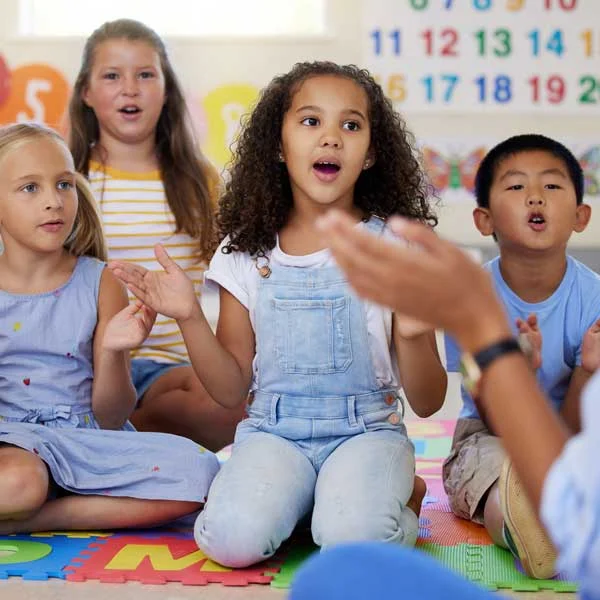
This has practical implications for how music is valued and resourced in primary schools. A single lesson delivered occasionally by a reluctant generalist teacher working from an unfamiliar resource is unlikely to produce the outcomes described in this research. Nor is passive music listening, however enjoyable. What the evidence points toward is regular, active, well-structured music-making — ideally embedded in a coherent curriculum that builds skills and confidence progressively over time.
It also has implications for how we train and support the teachers who deliver music in primary schools. The RAMSR findings are notable precisely because they demonstrate that generalist teachers — not music specialists — can deliver effective music and rhythm programs when they are properly trained and supported. The barrier is not always the teacher’s musical ability. It is often the absence of a clear, structured framework that makes the task feel manageable.
None of this is an argument for lowering expectations of what music education should look like. It is an argument for taking seriously what the research consistently shows: that the benefits associated with music education depend on conditions that require genuine commitment from schools — in curriculum time, in teacher support, and in the value placed on music as a discipline worth teaching well.
Music for Its Own Sake — and for the Evidence
At the beginning of this article, we noted two positions that tend to dominate conversations about music education. The first: that music deserves its place in schools because of what it does for academic outcomes. The second: that music needs no such justification, because it is valuable in its own right.
Having looked carefully at the research, we would suggest these positions are less opposed than they first appear.
The academic transfer case is genuinely contested. The most honest reading of the evidence is that some cognitive benefits — particularly in phonological awareness and verbal memory — appear in well-designed studies, but that effect sizes are often modest, findings are inconsistent across the literature, and strong claims about music raising academic achievement broadly are not well supported. Researchers who have examined this question carefully, including Sala and Gobet (2020), have found the evidence unconvincing. That finding deserves acknowledgement, not dismissal.
The wellbeing case, however, is more consistent than the public debate about music education typically reflects. The evidence that sustained, participatory music education supports children’s confidence, sense of belonging, motivation to learn, and capacity for self-regulation is meaningful, it is growing, and it holds up reasonably well across different research designs and contexts. It is not a perfect literature — Goopy and MacArthur (2025) note that most existing studies rely on qualitative methods and that the field would benefit from more rigorous quantitative measurement tools. But the direction of the evidence is clear, and it points toward something that primary teachers across Australia already understand from experience: that music does something for children that is difficult to replicate in any other part of the curriculum.
That something — the confidence of a child who has learned to play an instrument, the social cohesion of a class that makes music together, the engagement of a student who has found in music a reason to care about being at school — may not show up easily in standardised assessments. But it is real, it is documented, and it matters.
The case for music as a core part of primary education does not need to rest on contested claims about academic transfer. The evidence for its value is compelling enough without them.
References
Bentley, L.A., Eager, R., Savage, S., Nielson, C., White, S.L.J., & Williams, K.E. (2023). A translational application of music for preschool cognitive development: RCT evidence for improved executive function, self-regulation, and school readiness.. Developmental Science.
Dollman, E. (2023). The value of music education for child development and wellbeing in the post COVID-19 landscape.. In White, M.A., McCallum, F., & Boyle, C. (Eds.), New Research and Possibilities in Wellbeing Education. Springer, Singapore.
Dumont, E., Syurina, E.V., Feron, F.J.M., & van Hooren, S. (2017). Music interventions and child development: A critical review and further directions.. Frontiers in Psychology.
Goopy, J., & MacArthur, S.L. (2025). Music learning and school-aged children’s and adolescents’ wellbeing: A scoping review.. Research Studies in Music Education.
Gordon, R.L., Fehd, H.M., & McCandliss, B.D. (2015). Does music training enhance literacy skills? A meta-analysis.. Frontiers in Psychology.
Hallam, S. (2015). The power of music: A research synthesis of the impact of actively making music on the intellectual, social and personal development of children and young people.. International Music Education Research Centre (iMerc).
Sala, G., & Gobet, F. (2020). Cognitive and academic benefits of music training with children: A multilevel meta-analysis.. Memory & Cognition, 48(8), 1428–1441.





Leave A Comment