


How to Teach Ukulele in the Classroom: A Complete Guide for Primary and Elementary Teachers

World Ukulele Day — and there’s never been a better time to bring the ukulele into your classroom.
Whether you’ve been thinking about it for a while, or you’ve just stumbled across a set of ukuleles in a cupboard somewhere and wondered what on earth to do with them — this guide is for you. We’re going to walk you through everything: why the ukulele is such a powerful classroom instrument, how to get a program started at your school, and exactly how to teach it — step by step.
But first, a personal note from someone who knows exactly what it feels like to stare down a set of ukuleles and have no idea where to begin.
A personal note from Janice Tuck
I still remember the moment like it was yesterday.
I was a young teacher on one of my first assignments — a small country school in Australia where I’d been sent to teach “arts.” That meant dance, drama, music, and visual art, all rolled into one. Just the way things were for teachers in small schools back then, and still are for many around the world.
So there I was, rummaging through cupboards in the art room, trying to figure out what I had to work with. And then a colleague opened a dusty cupboard and said:
“Can’t you just use these?”
It was a class set of (somewhat broken) ukuleles.
I’d never even held a ukulele before. I was a trained classical clarinet player — I knew wind instruments, I knew how to conduct a band — but a ukulele? I didn’t even know what notes the strings were tuned to.
So I closed the cupboard door. It was too much to deal with.
It was almost a year before I opened it again. And when I did, I discovered something important — something that eventually led to everything we do here at the Fun Music Company. But I’ll save that part of the story for later in this guide.
For now, just know this: if I could go from not knowing how to hold a ukulele, to building an entire curriculum program around teaching it… so can you.

Janice Tuck
Creative Director,
The Fun Music Company
This guide is going to show you exactly how — even if you’ve never played ukulele yourself. Let’s start with the basics — why the ukulele deserves a place in your classroom in the first place.
Why the Ukulele Is the Perfect Classroom Instrument
If you’re already thinking about bringing the ukulele into your classroom, your instincts are good. The ukulele is one of the best instruments a primary or elementary teacher can choose — and there are some very practical reasons why.
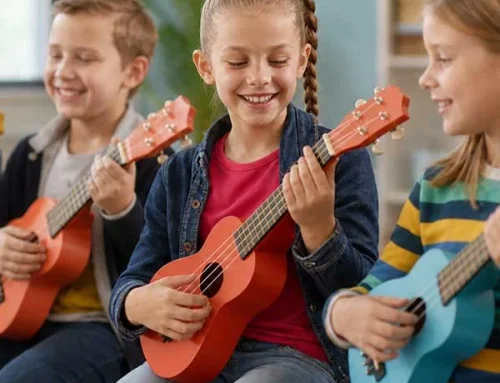
It’s the right size for young hands. Unlike a guitar, the ukulele is small, lightweight, and easy for children to hold and manage. From the lower primary years right through to upper elementary, students can grip it comfortably and move their fingers around the fretboard without strain. That matters more than you might think — when an instrument feels awkward or uncomfortable, kids disengage fast.
It’s affordable. A decent classroom set of ukuleles doesn’t need to cost the earth. Compared to most other instruments you could introduce into a music program, the ukulele is one of the most budget-friendly options available. And as many teachers already know, once you have a set, they tend to last a long time — which we’ll talk more about in the next section.
It sounds good, quickly. This is a big one. Many instruments require weeks or months of practice before a student can produce anything that sounds remotely musical. The ukulele isn’t like that. Students can be playing recognisable songs — and enjoying it — within their very first lessons. That early sense of success and achievement is incredibly powerful for keeping kids engaged and motivated.
It naturally encourages singing. There’s something about the ukulele that makes people want to sing along. It’s warm, it’s cheerful, and it fits beautifully alongside the voice. For classroom teachers, that connection between instrument and singing is a huge bonus — it opens up opportunities across the curriculum, not just in dedicated music lessons.
It’s genuinely fun. This might sound simple, but don’t underestimate it. Students get excited about the ukulele in a way that they don’t always with other instruments. There’s something about its size, its sound, and the fact that it feels approachable that brings an energy to the classroom. And when students are having fun, they’re learning.
These are the reasons the ukulele has become one of the most popular instrument choices in primary and elementary music programs around the world — and why it deserves a place in yours.
How to Start a Ukulele Program at Your School
So you’re convinced. The ukulele is a great fit for your classroom. Now comes the part that stops a lot of teachers in their tracks — actually getting started.
The good news is, it’s usually easier than you think. And in many cases, you might already be closer to starting than you realise.
First question: Do you already have ukuleles?
You’d be surprised how many schools do. Ukuleles are durable instruments — they last a long time — which means that once a school has a set, they tend to stick around. Sometimes for years. Sometimes quietly gathering dust in a cupboard while nobody remembers they’re there.
So before you do anything else, have a look around. Check the music room, the art room, the storage cupboards. You might find a set already waiting for you — even if some of them need a bit of repair or a new set of strings. A ukulele that needs restringing is a far cry from needing to purchase a whole new set, and a local music shop will usually sort that out cheaply and quickly.
If you don’t have ukuleles yet — or need to replace a set
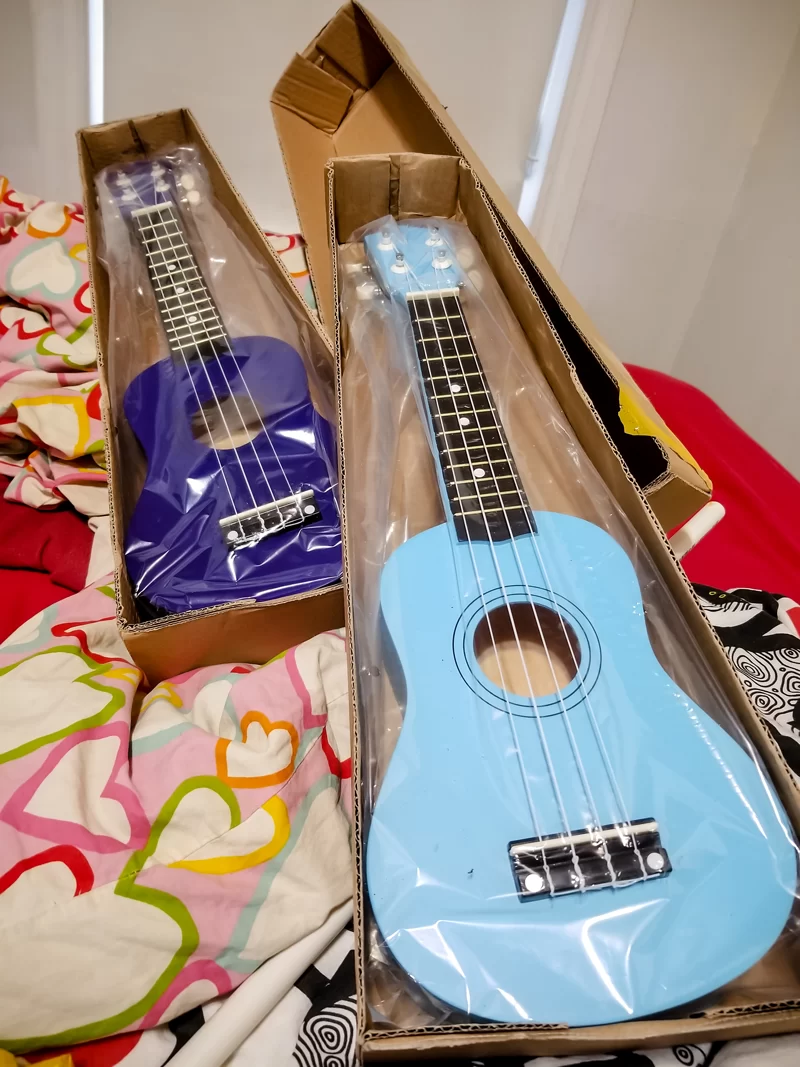
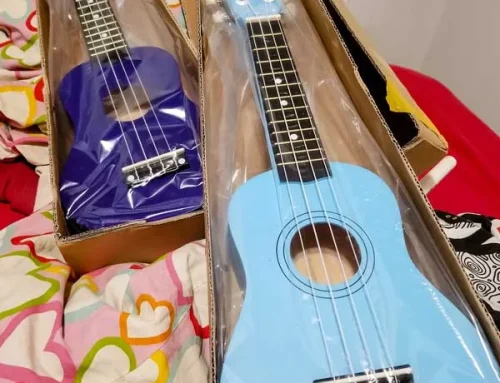
For a basic classroom set, soprano ukuleles are the most common choice for primary and elementary students. They’re the right size for younger hands, they’re affordable, and they’re widely available. You don’t need anything fancy — you just need instruments that will stay in tune and produce a decent sound. Avoid anything marketed as a “toy ukulele.” They look similar but the quality difference is significant, and your students will notice.
Getting buy-in from your school
If you need funding, or you need to convince an administrator that a ukulele program is worth the investment, you’re not alone — and you’re not starting from scratch. The conversation is usually easier than teachers expect, because the case for ukulele in the classroom is a strong one. It’s affordable compared to most other instrument programs. It’s accessible to all ability levels. And it delivers real musical outcomes.
The tricky part is often knowing how to frame that conversation — especially if you’re not naturally a “sell this idea to the administration” kind of person. That’s exactly why we created the Ukulele Letter Pack — a set of ready-to-use template letters you can customise and send. There’s one for a school administrator suggesting a ukulele program, one requesting funding, one for parents explaining what’s happening in music class, and even one for potential sponsors or community organisations. It takes the awkwardness out of the process entirely.
Setting yourself up for success
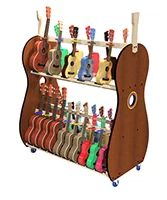
Once you’ve got your instruments sorted and any necessary approvals in place, there are a few practical things worth thinking about before your first lesson. How will you store the ukuleles? How will you hand them out and collect them without it turning into chaos? What are your classroom expectations going to be?
These might sound like small details, but getting them sorted in advance makes a huge difference to how smoothly your first lessons run. If you’d like a more detailed walk through of classroom setup and management, our free How to Get Started Teaching Ukulele ebook covers all of this — and it’s yours to download right here.
And if you’d like an even deeper walk-through — covering instrument selection, budgeting, and copyright considerations for your program — our complete guide, How to Start a Ukulele Program in Your Primary School, takes you through it step by step.
Now that you’ve got your program set up — let’s talk about how to actually teach it. But first, there’s something important we want to address. Something that a lot of teachers are already doing to prepare for ukulele lessons — and that we’d strongly encourage you to stop doing.
Why YouTube Is NOT the Answer for Classroom Ukulele Teaching

Before we get into the step-by-step teaching content, we need to talk about something. Something that a huge number of teachers are already doing when it comes to ukulele — and something that, with the best intentions in the world, is actually holding them and their students back.
They’re using YouTube.
Now, YouTube isn’t the enemy. It’s a wonderful platform, and for personal learning — practising on your own, picking up a few chords at home — it can be a great starting point. But for teaching ukulele in a classroom? It’s the wrong tool for the job. And here’s why.
The inconsistency problem
Open YouTube and search “how to teach ukulele to kids.” You’ll get thousands of results. Hundreds of teachers, musicians, parents, and hobbyists, all with their own way of doing things. Some are excellent. Many are not. And there is absolutely no way for you — or your students — to know the difference before you’re already in the middle of a lesson that isn’t working.
One video will teach students to hold the ukulele one way. The next will teach them differently. One will start with the C chord. Another will start with A minor. One will use standard notation. Another will use tablature. Another will skip notation entirely. The sequence jumps around, the terminology is inconsistent, and by the time your students have watched three or four different creators, they’re confused — and so are you.
This isn’t a criticism of the people making those videos. Many of them are talented musicians. But talented musicians and effective classroom teachers are two very different things — and YouTube has no way of filtering for the difference.
The ads problem
Let’s be practical for a moment. YouTube videos are covered in ads. Ads that interrupt. Ads that pop up mid-lesson. Ads that are completely unrelated to what you’re trying to teach — and sometimes, ads that are entirely inappropriate for a classroom full of young children.
Every time an ad interrupts, you lose the flow of the lesson. Every time you have to fumble to skip something, you lose your students’ attention. It’s not a dealbreaker on its own, but it adds up — and it adds unnecessary stress to what should be an enjoyable experience.
The bigger problem — and this one matters
Here’s the question that every music teacher should be asking themselves:
If my students can just learn ukulele from YouTube at home, why do they need to come to school to learn it?
That’s not a comfortable question. But it’s an important one.
When a teacher stands in front of a class and essentially plays a YouTube video as their lesson, they are — whether they intend to or not — sending a message.
The message is: This is easy. This is something anyone can learn at home. This is something every kid with a screen already has access to.
And once that message lands, it’s hard to take it back. Why wait for music class? Why listen to the teacher? The same content is sitting right there on their phone at home.
But when a teacher walks into class with a structured, professionally designed curriculum — something the students can’t simply replicate on their own — the dynamic changes completely. Suddenly, the classroom is where the magic happens. The teacher is the one with access to something special. And the students actually need to be there to get it.
That’s the difference between using YouTube as a teaching tool and having a real ukulele program. And it’s a difference your students will feel, even if they can’t quite put it into words.
There is a better way.
A properly designed ukulele curriculum gives your students a consistent, sequential learning experience. Every lesson builds on the last. The progression makes sense. The resources are created specifically for classroom use — no ads, no inconsistency, no guessing about whether the next video is going to be any good.
That’s exactly what we set out to build here at the Fun Music Company — and it’s what we’ll be looking at in the next sections of this guide.
How to Teach Ukulele Step by Step
Now we get to the good part. You’ve got your ukuleles. You’ve got the support of your school. You understand why a structured curriculum matters more than cobbling together lessons from random online sources. So — how do you actually teach this thing?
The key is to think about ukulele instruction in three pillars. Each one builds on the last, and together they take your students from complete beginners to confident, engaged musicians. Miss one out, and you’ll find your program has gaps — and your students will too.
Pillar 1: Learning Chords
Chords are where almost every ukulele program begins — and for good reason. Learning to play chords is the foundation of everything else. It’s where students get their first taste of actually making music on the instrument, and that feeling of success is what keeps them coming back.
The basic idea is simple: start with the easiest chords first, and build from there. Your first chord should be one that uses minimal finger placement — something a beginner can get their head (and their fingers) around quickly. From there, you introduce new chords one at a time, giving students plenty of time to practise changing between them before adding another one to the mix.
A few things to keep in mind as you teach chords:
The way students hold the ukulele matters enormously at this stage. If they’re looking down at their hands, hunching over the neck, or holding the instrument at an awkward angle, they’re going to struggle — and they’re going to get frustrated. Right from the start, make holding the ukulele correctly a priority. The free ebook we mentioned earlier has some great tips on this, but the short version is: ukulele held vertically against the body, right forearm acting as a “seatbelt,” neck angled up. Once good posture becomes a habit, everything else gets easier.
Students also need to be looking up — at you, or at a screen, or at whatever visual guide you’re using — not down at their fingers. This is one of the biggest problems Janice encountered when she first started teaching ukulele, and it’s one of the main things the Fun Music Company Ukulele Curriculum System was specifically designed to solve. When students are watching something engaging on a screen that keeps them in time, they naturally lift their heads, their posture improves, and their playing improves with it.
Don’t rush this pillar. Chords take time. But the payoff is worth it — because once students have a handful of chords under their belt, they can start playing real songs. And that’s a powerful moment.
Pillar 2: Melody Playing
Here’s where a lot of ukulele programs fall short — and where yours can really stand out.
Many teachers focus almost entirely on chords and strumming. And chords are important, absolutely. But if that’s all your students ever do on the ukulele, they’re missing a huge chunk of what the instrument can do — and, more importantly, they’re missing out on one of the most engaging parts of learning it.
Melody playing is where students pick out individual notes and play tunes. It might sound like a small step up from chords, but the effect on student engagement is dramatic. Playing a melody feels like a challenge — like a puzzle to solve. Students are motivated to get it right in a way that’s almost like a game. They want to nail it. They want to hear the tune come out correctly. That intrinsic motivation is incredibly powerful in the classroom.
Melody playing also opens up music theory in a way that chords alone don’t. When students are reading notes, following a sequence, and understanding how individual notes relate to each other, they’re building a foundation that will serve them well beyond the ukulele — whether they go on to guitar, piano, or any other instrument.
If your ukulele program doesn’t include melody playing, it’s worth asking why. It’s not harder to teach than chords. It just requires the right resources — and the right sequence.
Pillar 3: Ensemble Playing
The third pillar is where everything comes together — and where the real magic happens in the classroom.
Ensemble playing means your students are playing together. Not just practising individually, but actually making music as a group. Playing songs together. Playing in different parts. Listening to each other. Responding to what’s happening around them.
And at the heart of that ensemble experience? Singing.
The ukulele is a natural accompaniment instrument. It’s warm, it’s cheerful, and it sits beautifully alongside the human voice. When students learn to play simple chords while singing along — really singing, not just mumbling — something clicks. They’re not just playing an instrument anymore. They’re making music. The kind of music that fills a room, that other people want to listen to, that feels genuinely alive.
This is where the ukulele program goes from being a solo practice exercise to being a genuine musical experience. Students start to understand what it actually means to be a musician — not just someone who can play an instrument, but someone who can play with other people, and someone who can bring their voice into it too. That connection between voice and instrument is one of the most important things a young musician can develop — and the ukulele makes it feel natural rather than forced.
Ensemble work also gives your program a sense of purpose and direction. Students aren’t just learning chords and melodies in isolation — they’re working toward something. A performance. A class concert. A moment where they can show what they’ve achieved. That goal-oriented structure keeps students motivated throughout the program, and it gives the whole thing a satisfying shape.
Ukulele Lesson Plan Ideas for Primary and Elementary Classrooms
Now that you know what to teach and why, let’s look at what that actually looks like in practice.
The three sample lessons below are taken directly from the Fun Music Company Ukulele Curriculum System. Each one maps to one of the three pillars we covered above — chord playing, melody playing, and ensemble — so you can see exactly how each skill area is built in a structured, step-by-step way.
For a detailed breakdown of how to structure your ukulele lessons from warm-up through to consolidation, see our Ukulele Lesson Plans guide.
These are real lessons from the program. Try them out and see for yourself how straightforward ukulele teaching can be — even if you’ve never picked up a ukulele before.
Ukulele Lesson Plan Idea #1 – Chord Playing
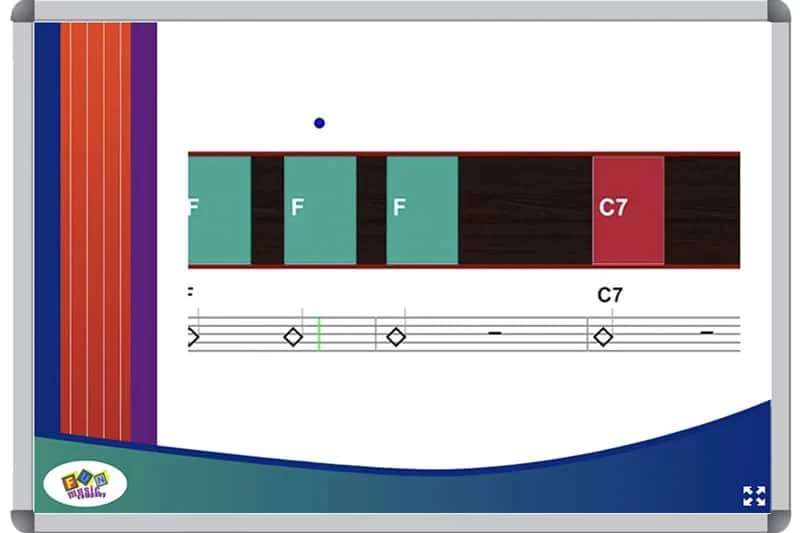
Chord Playing: F and C7 Chords
This lesson focuses on one of the most important skills in ukulele playing — changing between chords smoothly. Students learn the finger positions for the F and C7 chords, then practise switching between them with enough time to think and adjust before the next change comes.
It sounds simple. And that’s the point. The first time students successfully change chords on their own, without rushing and without fumbling, is a genuinely exciting moment in the classroom. That’s exactly what this lesson is designed to give them.


Ukulele Lesson Plan Idea #2 – Melody Playing
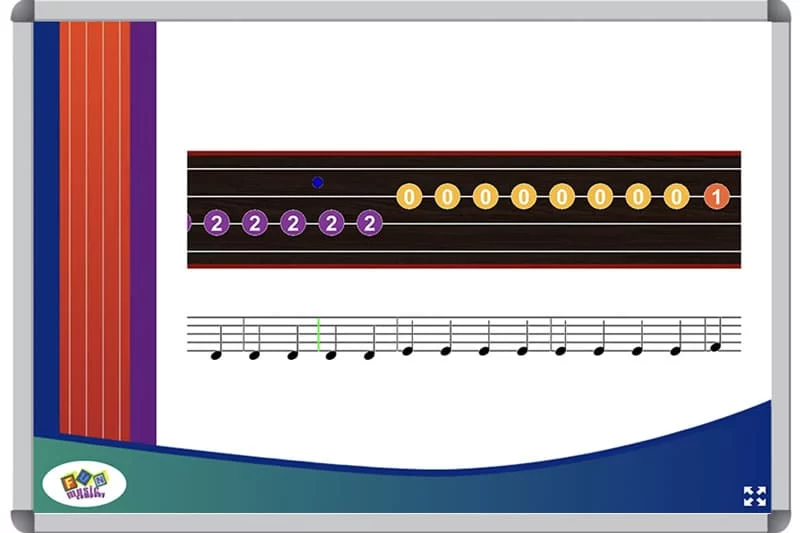
Melody Playing: C, D, E, F, G
This lesson introduces students to playing individual notes — moving gently through C, D, E, F, and G, one finger position at a time. It’s not about speed. It’s about accuracy and control, and learning that each small movement of the fingers produces a different note.
For many students, this is the first time they realise they can play a tune on an instrument — not just strum along, but actually pick out a melody note by note. That moment of recognition, “I’m playing a song!” is one of the things that makes ukulele teaching so rewarding. And this lesson is where it starts.
Ukulele Lesson Plan Idea #3 – Ensemble Playing
Ensemble: I Hear You Knockin’
This is the one students will talk about after class.
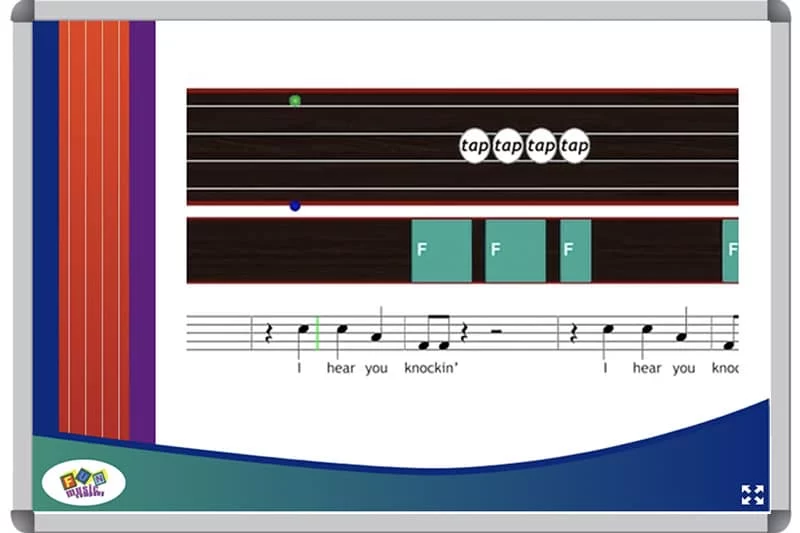
I Hear You Knockin’ brings all three pillars together in one lesson. There’s a chord part. There’s a melody part. And students sing along — which, as we talked about earlier, is where ensemble playing really comes alive.
The song itself does a lot of the heavy lifting here. It’s easy to sing, it’s fun, and it’s the kind of song where students actually want to join in — you won’t be dragging anyone along. In the classroom, it sounds like a proper band. Students are playing different parts, listening to each other, and making music together in a way that feels genuinely exciting rather than like a lesson.
This is what a ukulele program looks like when it’s working.
Common Questions Teachers Ask About Teaching Ukulele
This is more common than you’d think. Most schools that have ukuleles have had them for a while, and they’ve often been sitting in a cupboard getting dusty. Some will just need new strings — which is a quick, cheap fix. Others may need a bit more work. Our free ebook, How to Get Started Teaching Ukulele, has a section on assessing and repairing existing instruments so you can work out exactly what you’re dealing with before you spend a cent.
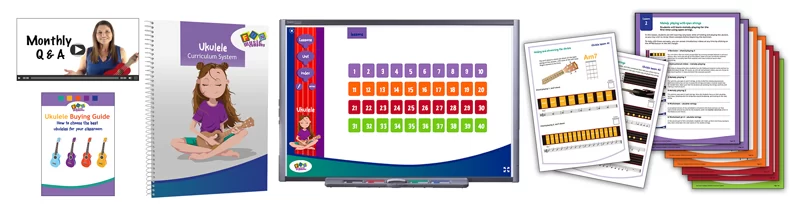
Within the first few lessons, students will be playing their first chord. Within a term or semester, most students will be playing multiple chords, simple melodies, and participating in group songs. The Fun Music Company Ukulele Curriculum System is structured as 40 lessons across four blocks of ten, which gives you a clear progression from absolute beginner through to confident ensemble playing — all within a single school year.
We’d strongly advise against it. We covered this in detail earlier in this article, but the short version is: YouTube videos are inconsistent, full of ads, and — most importantly — they send the message that ukulele is something students can learn at home on their own. That undermines the value of what you’re doing as a teacher. A structured curriculum keeps the learning in the classroom where it belongs, and keeps you in the role of the expert.
Ideally, one for every student. But if that’s not where you are right now, you can start smaller and work up. Some teachers begin with one ukulele per pair, rotating who plays and who observes or practices finger positions on the table. The important thing is to have a plan for how students will progress once you do have a full set. If you’re working on getting more instruments, our Ukulele Letter Pack has template letters for administrators, parents, and potential sponsors that make that conversation much easier.
The ukulele is one of the best instruments for younger students because of its size and simplicity. Soprano ukuleles — the smallest and most common — sit comfortably in the hands of children from about age six onwards, which makes them a great fit for primary and elementary classrooms from Year 1 or Grade 1 up through to Year 6 or Grade 6. With some adjustments, even younger students can begin exploring basic chord shapes and strumming.
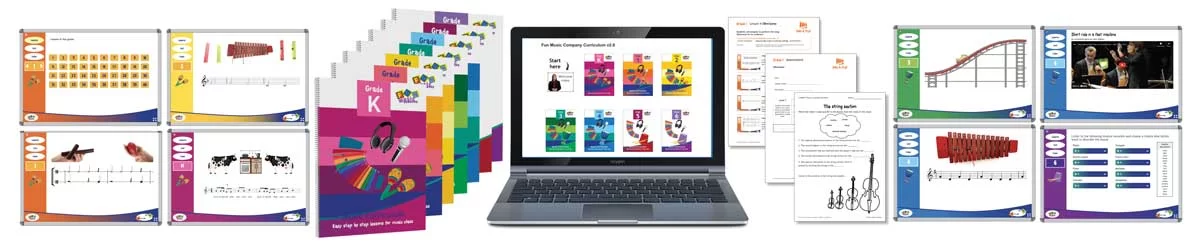
Absolutely. You don’t need to be a ukulele player to teach ukulele in the classroom. What you need is a structured program that walks you through exactly what to teach, in what order, and how. The Fun Music Company Ukulele Curriculum System is designed specifically for this — every lesson comes with instructional videos, classroom presentation slides, and teacher guides so you always know what’s happening next. Plenty of the teachers using our program have never picked up a ukulele before. They teach it successfully every week.
Ready to Teach Ukulele in Your Classroom?
If you’ve made it this far, you already know more about teaching ukulele than you did when you started reading. You know why the ukulele is such a powerful classroom instrument. You know the three pillars that make a ukulele program actually work — chords, melody, and ensemble. You know why a structured curriculum beats cobbling together YouTube videos. And you know that you don’t need to be a musician yourself to make this happen.
The only thing left is to take the first step.
Here’s how:
If you’re not quite ready to jump into a full program — or if you just want to get the lay of the land before committing — start here. How to Get Started Teaching Ukulele walks you through everything from finding (or buying) your first set of ukuleles, to setting up your classroom, to getting your school on board. It’s practical, it’s straightforward, and it’s completely free.
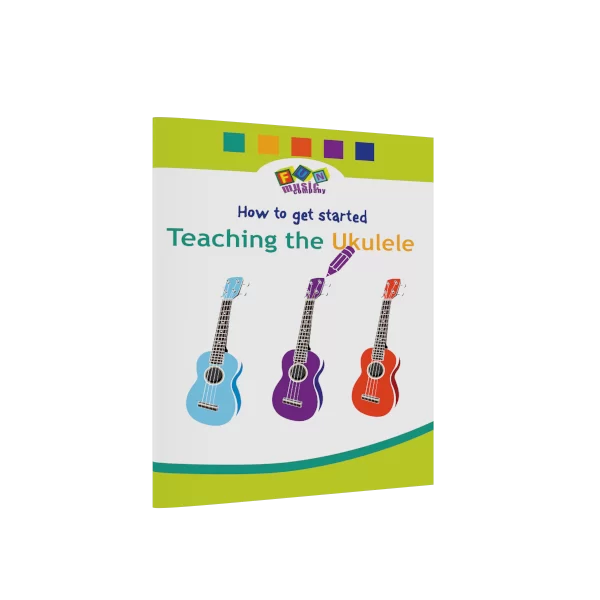
If you’re ready to actually start teaching — this is where you want to be. The Fun Music Company Ukulele Curriculum System gives you 40 structured lessons, classroom presentation slides, worksheets, and instructional videos. Everything you need to take your students from absolute beginners to confident ensemble players — all within a single school year. No guesswork. No gaps. No stress.
If ukulele is just the beginning — and for most schools, it is — the full Fun Music Company Curriculum gives you everything. The complete ukulele curriculum system, plus all of our other music programs, lesson plans, and resources. One subscription. One place. Everything you need to teach music with confidence, all year round

I am starting a ukulele class for veterans. Someone volunteered to teach the class but decided to back out.
I have no teacher and no teaching experience. Would this program help me with teaching adult students?
Hi Diane,
What a wonderful thing you’re doing for veterans — what a meaningful community to serve!
To answer your question: our program is designed specifically for school children (K-6), so the lesson structures, activities, and language are geared toward young learners rather than adults. We wouldn’t want to mislead you about that.
That said, if you’re brand new to teaching ukulele and need to get your bearings quickly, the foundational content — chord progressions, song structures, how to break down techniques into simple steps — could still give you a solid starting point and some confidence as you find your feet.
If you’d like to explore it for yourself, you’re welcome to join for a single month and see how it goes — there’s no lock-in, so it’s a low-risk way to see what might be useful for your situation.