

What Is Bucket Drumming?
The Complete Classroom Guide for Teachers
Picture this: thirty students, thirty buckets, thirty pairs of sticks — and every single one of them completely locked in, playing together, and you can see that they’re enjoying themselves, without being silly. No one is off-task. No one is checking the clock. The music is happening, and it sounds genuinely impressive.
That’s bucket drumming at its best. And it’s entirely achievable in your classroom.
But if you’ve landed here with a healthy dose of scepticism, you’re not alone. Maybe you’ve never tried bucket drumming before, and the thought of handing thirty kids a stick and something to hit with it feels like a recipe for chaos. Or maybe you have tried it — and it didn’t go the way you hoped. The noise was overwhelming, students kept playing when they weren’t supposed to, and you left that lesson exhausted and quietly vowed never to do it again.
Both of those reactions make complete sense. Bucket drumming does have a reputation — and honestly, sometimes that reputation is earned. But here’s what experienced bucket drumming teachers will tell you: the chaos isn’t inevitable. It’s almost always a setup problem, not a bucket drumming problem.
This guide covers everything you need to know — what bucket drumming actually is, why it’s one of the most engaging activities you can bring into a music classroom, what you need to get started (less than you think), and — critically — how to set it up so that it runs smoothly from the very first lesson, whether you’re a music specialist or you’ve never taught percussion a day in your life.
What Is Bucket Drumming?
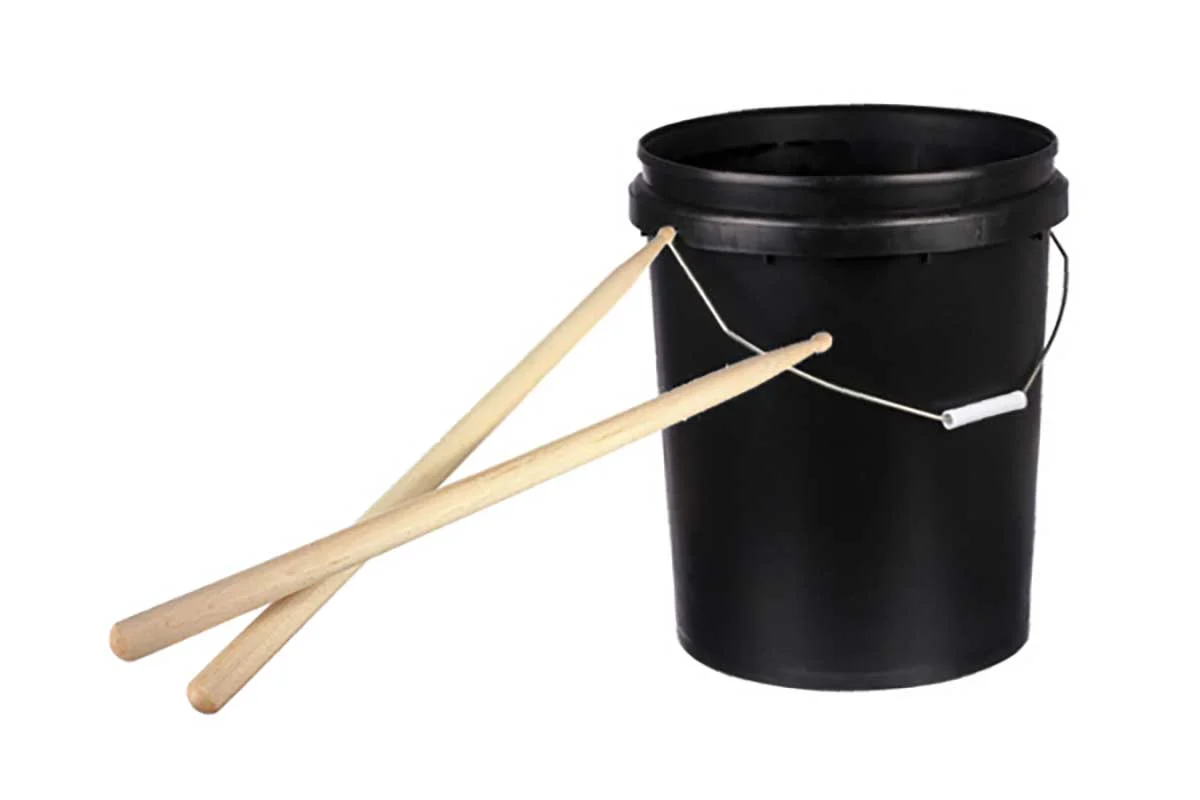
Bucket drumming is exactly what it sounds like: students use plastic buckets as drums and sticks to play rhythmic patterns — either individually or as a group ensemble. The buckets act as percussion instruments, and depending on where and how you strike them, you can produce a surprisingly varied range of sounds: a deep resonant thud from the centre, a sharper crack from the rim, and a bright click from stick-on-stick.
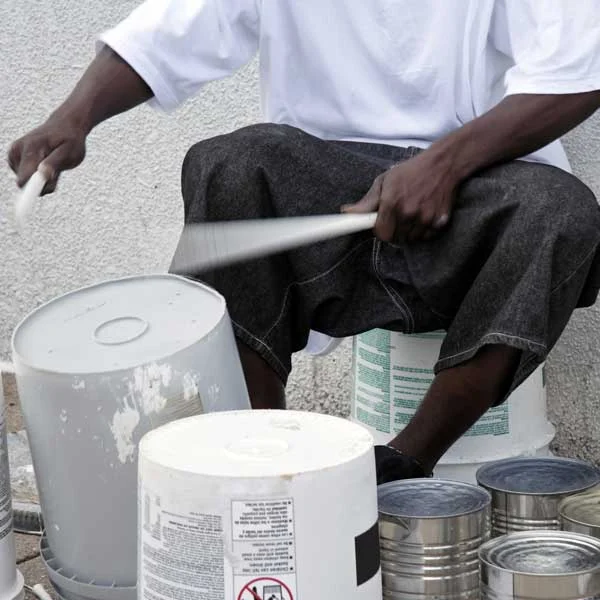
It’s a form of what’s sometimes called junk percussion — the broader practice of making music with everyday objects rather than traditional instruments. You might have seen street performers doing something similar in busy city centres, turning upturned buckets into a full percussion kit. That street performance tradition is very much part of bucket drumming’s DNA, and it’s part of what makes it feel exciting and a little bit different to students — it doesn’t look like a “normal” music lesson.
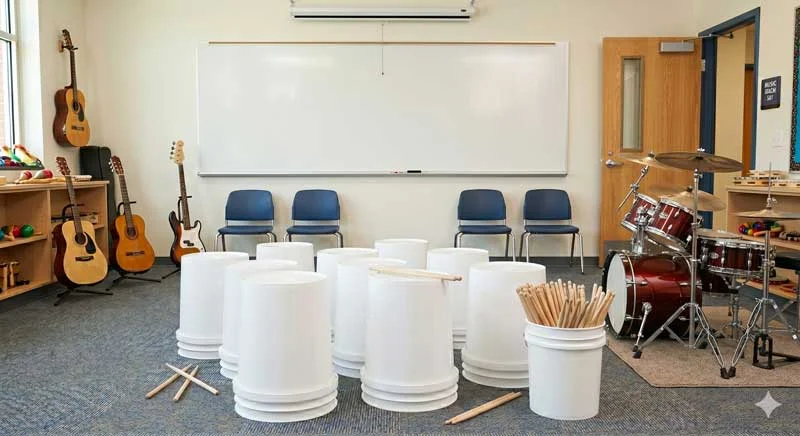
In a classroom context, bucket drumming typically involves students sitting with their bucket in front of them, learning a set of core techniques before building up to playing structured pieces together as a group. Done well, it functions like a percussion ensemble — with real musical goals around rhythm, timing, dynamics, and listening.
And crucially: no one in the room needs to be a drummer for it to work. Not you, and not your students.
Why Teachers Love It (And Why Students Can’t Get Enough)
There are plenty of activities that sound great in theory but fall flat in practice. Bucket drumming is one of the rare ones that genuinely delivers — for teachers and students alike.
Students are hooked from the first lesson. There’s something about the physical, hands-on nature of bucket drumming that captures students in a way that other music activities sometimes struggle to. It feels active, it feels cool, and — once the routines are established — it feels like real music-making, because it is. Students who would normally drift during a music lesson tend to stay focused, because the activity itself demands it. You can’t daydream and keep a steady beat at the same time.
You don’t need a musical background to teach it. This is the big one for many teachers. Bucket drumming is structured around patterns and technique — not musical theory, not notation, not years of instrumental experience. If you can follow a beat and manage a classroom, you have everything you need to get started. The resources we’ve developed at Fun Music Company are specifically designed so that non-specialist teachers can pick them up and run a successful lesson without feeling out of their depth.
The equipment costs next to nothing. Unlike many music programs, bucket drumming doesn’t require a significant budget. Buckets can be sourced from hardware stores for just a few dollars each — and often picked up for free from local businesses, recycling centres, or generous parents. Sticks can be purchased in bulk from a music store or made from timber dowel. It’s one of the most accessible ensemble music activities available to a classroom teacher.
It builds real musical skills. Bucket drumming isn’t just a fun activity — it’s a genuinely effective teaching tool. Students develop rhythmic accuracy, ensemble awareness, dynamic control, and the ability to listen and adjust in real time. These are foundational music skills that transfer across everything else you teach.
It’s performance-ready. A well-rehearsed bucket drumming piece makes a fantastic assembly or concert item. The visual impact of a group of students playing in tight unison — with good technique and genuine musicality — is impressive to an audience and deeply satisfying for the students themselves.
What Age Groups Is Bucket Drumming For?
Bucket drumming is most commonly associated with upper primary — and that’s where it really hits its stride. Grades 5 and 6 are the sweet spot. Students at this age have the coordination, the focus, and frankly the cool-factor awareness to really commit to it. They’re old enough to handle the technique, hold a steady beat, and take pride in a polished performance piece.
That said, Grades 3 and 4 can absolutely give it a go. You may need to simplify the patterns and keep the sessions a little shorter, but many teachers have had real success with middle primary students — particularly once the classroom routines are well established.
For younger students — Grades 1 and 2 — bucket drumming in its traditional form is generally a stretch. The coordination demands and the classroom management required make it a tough ask at that age. If you’re working with younger students and want something similarly hands-on and engaging, Boomwhackers are worth considering first — they’re a much more natural fit for the lower primary years, and just as effective at building foundational rhythm skills. You can find out more in our Boomwhackers for the Classroom guide.
At the other end of the spectrum, bucket drumming works just as well — sometimes even better — with older students. If you’re a middle school or high school teacher who’s stumbled across this guide, don’t let the primary school framing put you off. The activity scales up beautifully, and older students can handle significantly more complex patterns and arrangements.
What Do You Need to Get Started?
One of the best things about bucket drumming is how little you actually need. Here’s the complete list:
Buckets
The standard choice is a 20-litre (5-gallon) plastic bucket — the kind you’d find at any hardware store. These give you a good resonant sound, they’re durable enough to handle enthusiastic students, and they’re not that expensive. You’ll want one per student, so it’s worth asking around — local businesses, recycling centres, and parent networks are all surprisingly good sources for free or heavily discounted buckets. Don’t stress too much about colour or brand; what matters is that they’re solid, sturdy plastic. For a more detailed breakdown of bucket types, where to source them, and what to look for, see our guide: The Best Buckets to Use for Bucket Drumming in Schools.
One quick note on lids: buckets often come with them, and both configurations work. Lid-on gives you a lower, bassier tone. Flipped upside down with the lid removed, you get a slightly higher, tom-tom style sound. Try both and see what you prefer — or let your students experiment and decide.
Sticks
Real drumsticks are ideal — 5A or 7A sizes work well, and your local music store should be able to give you a bulk price on the most affordable options they stock. If budget is tight, timber dowel from the hardware store cut to length is a perfectly workable alternative. A wrap of electrical tape will help them last longer and avoids any splinter concerns.
A Screen
You’ll want a projector or large TV screen to display animations and backing tracks during lessons. This is less about the technology and more about giving students a shared external focus — something to play with rather than just playing at each other.
That’s it. No specialist equipment, no expensive instruments, no elaborate setup. If you have buckets, sticks, and a screen, you’re ready to go.
The One Thing That Makes or Breaks a Bucket Drumming Lesson
Ask any teacher who runs bucket drumming successfully and they’ll tell you the same thing: the music is the easy part. What makes it work is how you bring students into it.
Bucket drumming is an ensemble activity. And like any ensemble — an orchestra, a band, a choir — it only works when everyone is playing their part at the right moment. Students who understand that, and who feel genuinely invested in what the group is creating together, are students who want to hold it together. The focus comes naturally from that sense of shared purpose.
The practical expression of this is straightforward: students play when the group plays, and not at any other time. But the way you establish that expectation matters enormously. The teachers who have the most success with bucket drumming aren’t necessarily the strictest — they’re the ones who enrol students in the idea from the very beginning. Before a single bucket comes out, students understand what they’re part of, what the goal is, and why playing together — with control and precision — is what makes it genuinely impressive.
When that foundation is in place, a few simple principles do the rest:
Let the screen be your conductor. Animations and backing tracks give students a shared external focus — something to play with. This does more for group cohesion than almost anything else.
Stick height controls everything. Lower sticks mean softer sound and better control. Establishing this early makes dynamics, precision, and volume management all much easier as lessons progress.
Consistency over intensity. Clear, calm, consistent expectations from lesson one are far more effective than a loud response to misbehaviour. Students settle quickly into routines that are applied the same way every time.
If you’d like a complete framework for structuring that first lesson — including how to introduce the ensemble concept and build those routines from the ground up — our Bucket Drumming for Beginners guide has you covered.
How to Teach Bucket Drumming (Even If You’ve Never Done It Before)
The good news is that bucket drumming has a very natural teaching progression — and it doesn’t require you to be a percussionist, a music specialist, or even particularly musical. What it requires is a clear sequence, a little patience in the early lessons, and confidence in the process.
Here’s how it typically unfolds:
Start with technique, not music. Before students play a single pattern, they learn how to hold the sticks correctly, how to strike the bucket, and what good posture looks like. This isn’t just about producing a good sound — it’s about establishing the physical habits that make everything else easier. A few minutes on technique in the first lesson saves a lot of correction later.
Build patterns gradually. The most effective approach is to start with simple, short rhythmic patterns and add complexity over time. Students who feel successful early stay engaged — and in bucket drumming, early success is very achievable. A basic four-beat pattern played cleanly and together as a group is genuinely satisfying, even in the first lesson.
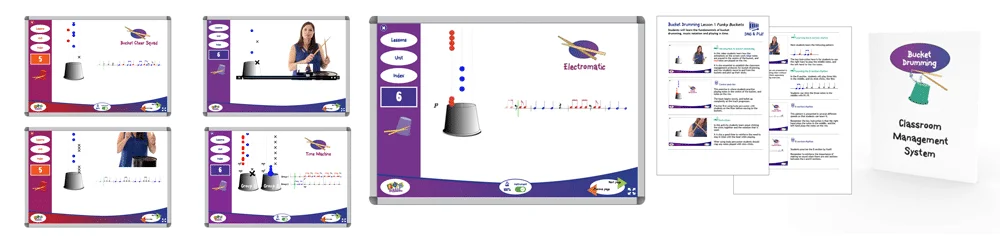
Use animations to carry the teaching load. This is where bucket drumming becomes particularly manageable for non-specialist teachers. Animations display the pattern visually in real time, so students have a clear external reference to follow. You’re not standing at the front trying to model complex rhythms — the screen does that work, and you’re free to move around the room, give feedback, and keep the energy up.
Work toward a performance piece. Having a goal matters. Once students have the foundational techniques and a few patterns under their belts, working toward a complete piece — something performance-ready — gives the whole unit a sense of direction and purpose. The moment students realise they’re building toward something they could perform in front of an audience, the level of buy-in lifts noticeably.
This progression — technique, patterns, ensemble playing, performance — is the backbone of everything we’ve built in the Fun Music Company bucket drumming resources. If you’d like to see exactly how the first lesson is structured, the Bucket Drumming for Beginners guide is the best place to start. And when you’re ready to explore a full library of beats and pieces, the Bucket Drumming Beats Library has everything you need, with free taster beats available to try straight away.
Free Bucket Drumming Resources from Fun Music Company
We’ve built a growing library of bucket drumming resources specifically designed for classroom teachers — whether you’re picking up drumsticks for the first time or you’re looking to expand what you’re already doing. Here’s what’s available:
Bucket Drumming for Beginners
The natural starting point. This guide walks you through everything you need to run your first bucket drumming lesson with confidence — from setting up the room and introducing the ensemble concept, to teaching your first pattern and managing the session from start to finish. Read the Bucket Drumming for Beginners guide →
Bucket Drumming Beats Library
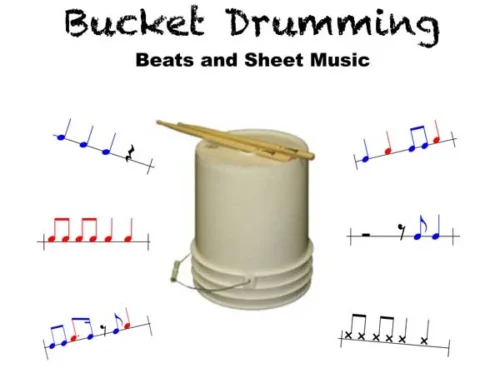
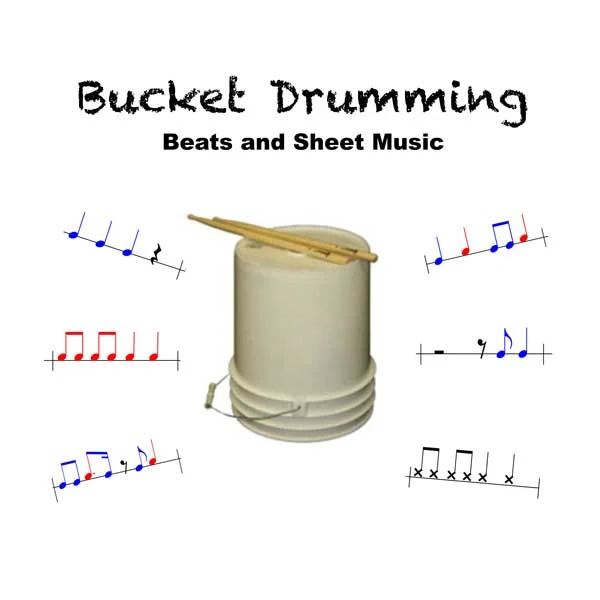
A growing collection of beats and performance pieces, with free taster beats available to try straight away. Each beat comes with sheet music and animations, so you have everything you need to teach it without any additional preparation. Members of the Fun Music Company program have access to the full library, including complete performance pieces. Explore the Beats Library →
The Best Buckets to Use in Schools
Not all buckets are created equal. This guide covers what to look for, where to source them cheaply, and a few things worth knowing before you buy in bulk. Read the guide →
Play-Alongs, Pop Songs, and Copyright
One of the most common questions we get from bucket drumming teachers is about using popular music in the classroom — and it’s a more nuanced topic than most people realise. If you’ve ever wondered whether you can legally use a pop song as a backing track, this article gives you a clear, practical answer. Read the copyright guide →
Percussion is Cool — A Free Resource for Bucket Drumming and Boomwhackers
Percussion is Cool is one of our most popular free pieces, and it works beautifully for both bucket drumming and Boomwhacker ensembles — making it a great bridge if you’re using both activities across your classes. You can find it in the Beats Library, and the Boomwhacker version is available in our Boomwhacker Sheet Music collection →.
Bucket Drumming and the Fun Music Company Curriculum
If you’re finding bucket drumming a good fit for your classes and you’re looking for something more comprehensive — a complete, ready-to-teach program that takes the planning off your plate entirely — bucket drumming is built into the Fun Music Company K–6 Music Curriculum.
The upper primary units include bucket drumming as a core component, with fully sequenced lessons, animations, backing tracks, and performance pieces — all designed so that you can walk into class prepared and confident, without spending hours planning in your own time.
Everything in the curriculum is structured around the same principles we’ve covered in this guide: clear technique progression, ensemble focus, and activities that keep students genuinely engaged and on-task from the first lesson to the last.
If that sounds like what you’ve been looking for, you can find out more about the K–6 Curriculum Program below. Alternatively, if you’d like to start with just the bucket drumming units, the Bucket Drumming Program is available as a standalone package for Grades 5 and 6 — a great way to get started without committing to the full curriculum straight away.
Frequently Asked Questions About Bucket Drumming
This comes up a lot, and the answer is more nuanced than a simple yes or no. Copyright in the classroom is a topic worth understanding properly — particularly around the use of commercially recorded music in teaching contexts. Our article Play-Alongs, Pop Songs, and Copyright covers everything you need to know in plain language.
No prior experience is needed — for you or your students. Bucket drumming is genuinely accessible from the very first lesson, and the progression from simple patterns to more complex pieces means students build skills naturally over time. It works equally well as a standalone unit or as part of a broader music program.
Bucket drumming is technically a form of junk percussion — the broader term for music made with everyday objects rather than traditional instruments. The distinction is that bucket drumming refers specifically to the practice of using plastic buckets and sticks, often in an ensemble setting with structured pieces and technique. Junk percussion is the wider category, which might include anything from pots and pans to cardboard boxes. In a classroom context, the two terms are sometimes used interchangeably, but bucket drumming has its own established pedagogy and repertoire.
Absolutely — and it makes a fantastic one. A well-rehearsed bucket drumming piece has real visual and musical impact, and audiences consistently find it impressive. Students take genuine pride in performing something that looks and sounds as polished as a bucket drumming ensemble can. It’s one of the most reliable performance items available to a primary music teacher.
Not at all. Bucket drumming is built around patterns and technique rather than musical theory or notation, and the animations do much of the modelling work for you. If you can keep a steady beat and manage a classroom, you have everything you need. The resources in our Bucket Drumming for Beginners guide are specifically designed for teachers with no percussion background.
This is probably the most common concern we hear — and it’s a fair one. Bucket drumming can be loud, but it doesn’t have to be. Stick height is the key variable: lower sticks produce a softer sound, and establishing that habit early gives you genuine dynamic control across the class. Many teachers also find that playing with backing tracks and animations naturally moderates volume, because students are focused on staying in time rather than hitting hard. With good ensemble routines in place, bucket drumming is no louder than any other active music lesson.
Ready to Bring Bucket Drumming Into Your Classroom?
Bucket drumming is one of those rare activities that ticks every box — students are engaged, the musical learning is real, the equipment is affordable, and the end result is something that genuinely impresses an audience. Whether you’re a music specialist or a classroom generalist who hasn’t taught percussion before, it’s an activity that rewards the effort you put into setting it up well.
If you’re starting from scratch, the best next step is our Bucket Drumming for Beginners guide — it’ll walk you through everything you need to run a confident, well-structured first lesson.
If you’re ready to explore beats and performance pieces, head straight to the Bucket Drumming Beats Library, where you’ll find free taster beats available to try right away.
And if you’re looking for a complete, ready-to-teach music program that takes the planning off your plate entirely — with bucket drumming built in alongside a full K–6 scope and sequence — the Fun Music Company K–6 Music Curriculum is designed for exactly that.
Whatever your starting point, you’ve got everything you need to make it work. We can’t wait to hear how it goes.