


Christmas Songs for Boomwhackers: Play-Alongs for Your Music Classroom
The last weeks of the school year have a special kind of energy. Concerts are coming, routines are loosening, and everyone can feel the holidays getting close. It’s one of the best times of year to get the boomwhackers out.
A good Christmas play-along gives that energy somewhere to go. Students have a clear job, a part to listen for and a piece to get right together. The best ones teach real music, not just fill time.
Here are four Christmas boomwhacker play-alongs we have arranged for K–4 classrooms. Each one is built around a specific musical idea: harmony, rhythm, dynamics or a change of style. Play them on your whiteboard, hand out the tubes and play.
What are the best Christmas songs for boomwhackers?
Traditional carols with simple melodies work best. Good examples are We Wish You a Merry Christmas, Jingle Bells, O Christmas Tree and Ding Dong Merrily on High. All four can be played with a standard diatonic boomwhacker set (C, D, E, F, G, A, B, C) and suit students from Kindergarten to Year 4. Because they are traditional carols, you can also perform them at school concerts with no copyright issues.
What You’ll Need
Every play-along on this page uses a standard diatonic boomwhacker set, the eight notes from C to high C. You won’t need sharps, flats or octavator caps.
How many sets?
We recommend four to six diatonic sets for a classroom, which covers most class sizes. Each song uses six different notes, so to work out how many sets you need, divide your number of students by six. A class of 30 needs five sets, and every student gets their own boomwhacker.

What if you don’t have enough?
1. Hand out the high Cs. If you have enough tubes without them, we suggest leaving the smaller high C boomwhackers in the box. If you’re short, give them to the red group along with the low Cs. Let students know it doesn’t matter which C they have, because both work in the music.
2. Mix in untuned percussion. Sleigh bells are perfect for Christmas songs. Have each sleigh bell player join a colour group and play whenever that colour plays. Everyone stays involved, and the sound gets a lovely festive sparkle.
For more on choosing, buying and storing boomwhackers, see our Boomwhackers guide.
| Song | Notes used | Suggested grades | Musical focus |
|---|---|---|---|
| We Wish You a Merry Christmas | C D E G A B | K–2 | Steady beat |
| Jingle Bells | C D E F G A | K–2 | Harmony and rhythm |
| O Christmas Tree | C D E F G A | K–2 | Dynamics and changes of style |
| Ding Dong Merrily on High | C D E F G A | K–2 | Rhythm that builds in complexity |
Four Christmas Boomwhacker Play-Alongs
1. We Wish You a Merry Christmas
Grades: K–2 | Notes: C D E G A B
This is the one to start with. The melody is familiar and the phrases are short, so even your youngest students can follow their colour and play in time with the beat. It’s a great first play-along for a class that has never played boomwhackers.
Teaching tip: Before you press play, have the whole class pat the steady beat on their knees while you sing the first verse. Once students can feel the pulse, playing in time with the video comes much more easily.
Want the full lesson? The video below is free to use. Members also get the complete lesson, with teaching videos for the boomwhacker and untuned percussion parts and practice players with tempo and part controls. You’ll find more free resources for this song and the member extras in our Christmas music lesson plans for elementary students.

2. Jingle Bells
Grades: K–2 | Notes: C D E F G A
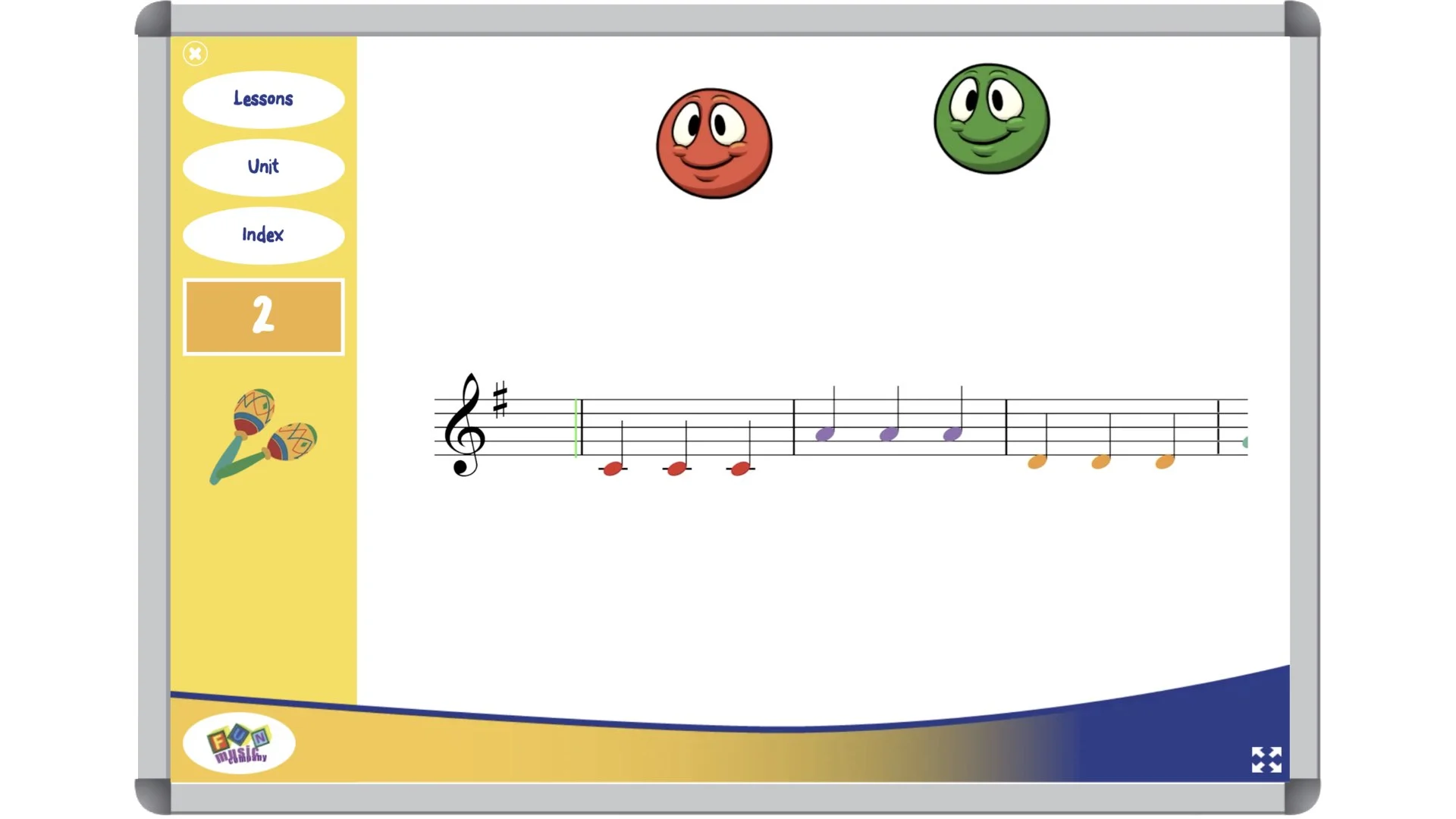
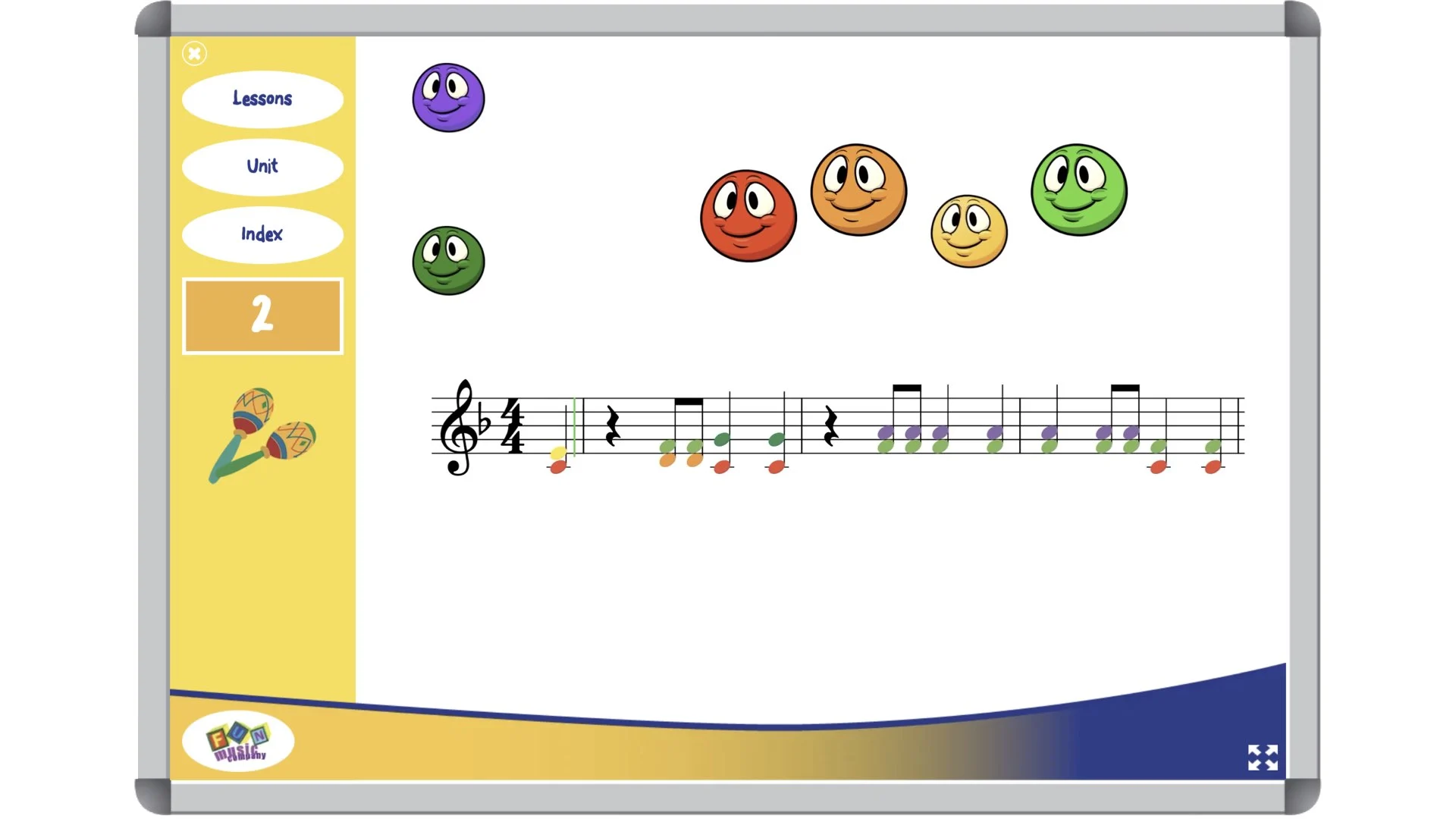
Jingle Bells starts simply, then grows more complex in the chorus. The arrangement uses boomwhackers the way they work best, as a harmony and rhythm instrument. Several colours sound together to build chords, and the rhythm keeps moving underneath.
Teaching tip: Play through the piece, and then ask the students to say what they noticed about the piece. “What happened in the chorus section?” “How was it different?” Have them explore the idea of harmony by noticing that only certain colours play together. Yellow and Red often play together, that’s because they’re part of a chord together.
3. O Christmas Tree
Grades: K-2 | Notes: C D E F G A
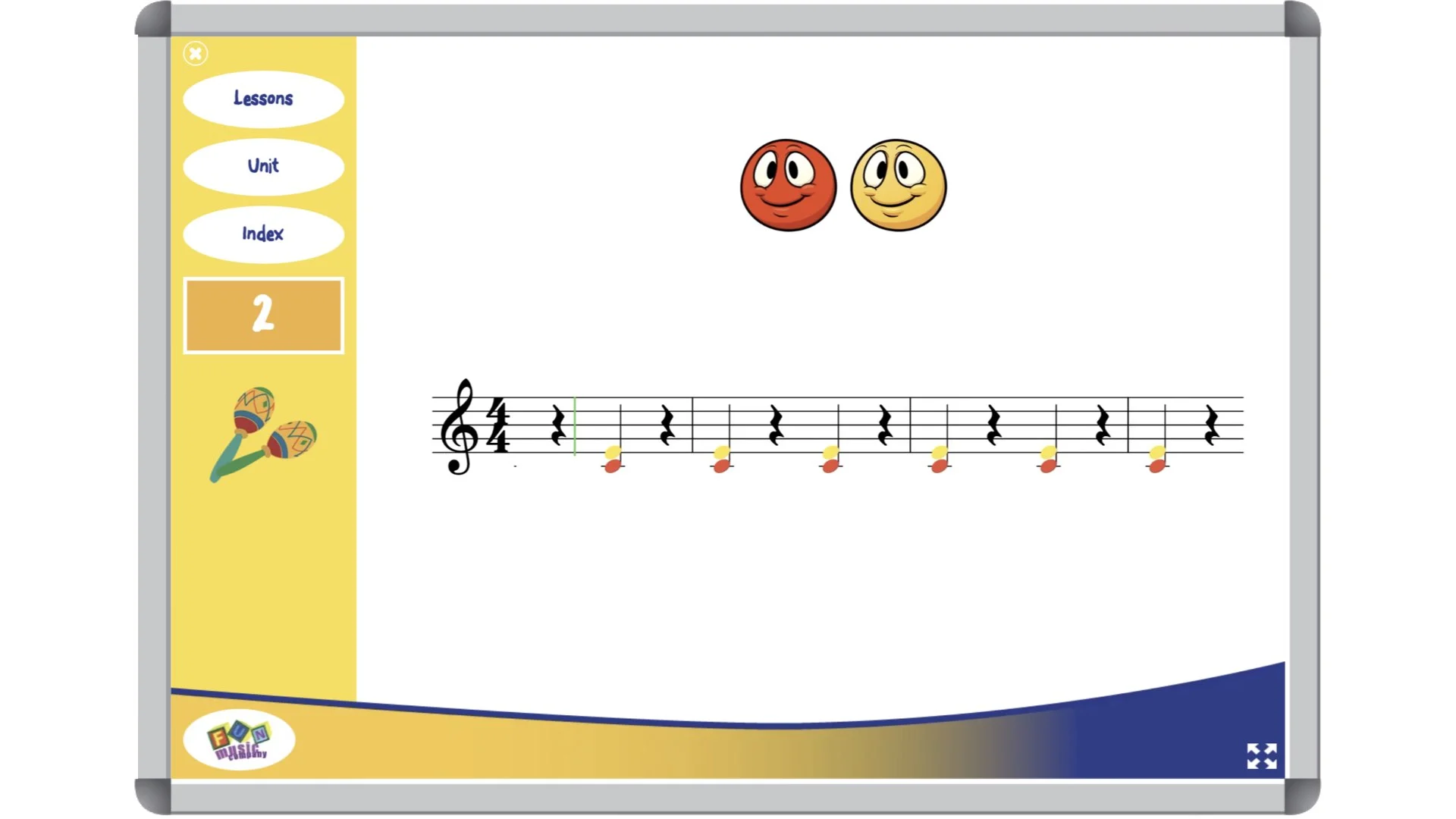
This arrangement has a musical surprise in the second half: a change of style and time signature. The first section is a gentle jazz waltz. The second switches to a driving funk-rock feel.
It also has a dynamics lesson built in. Students play the jazz waltz mezzo piano (mp, moderately soft), then play the funk-rock section forte (f, loud).
Teaching tip: On the first listen, don’t tell students what’s coming. After they have attempted to play it, ask them: what happened in that music? What changed half way through? This way, students are experiencing and observing first. Then have them notice the dynamic markings, and discuss their meanings.
As you discuss forte, remind them that forte means a strong, confident sound, not hitting the tube as hard as they can. Boomwhackers sound best with a controlled stroke, not played as strongly as they can.
4. Ding Dong Merrily on High
Grades: K-2 | Notes: C D E F G A
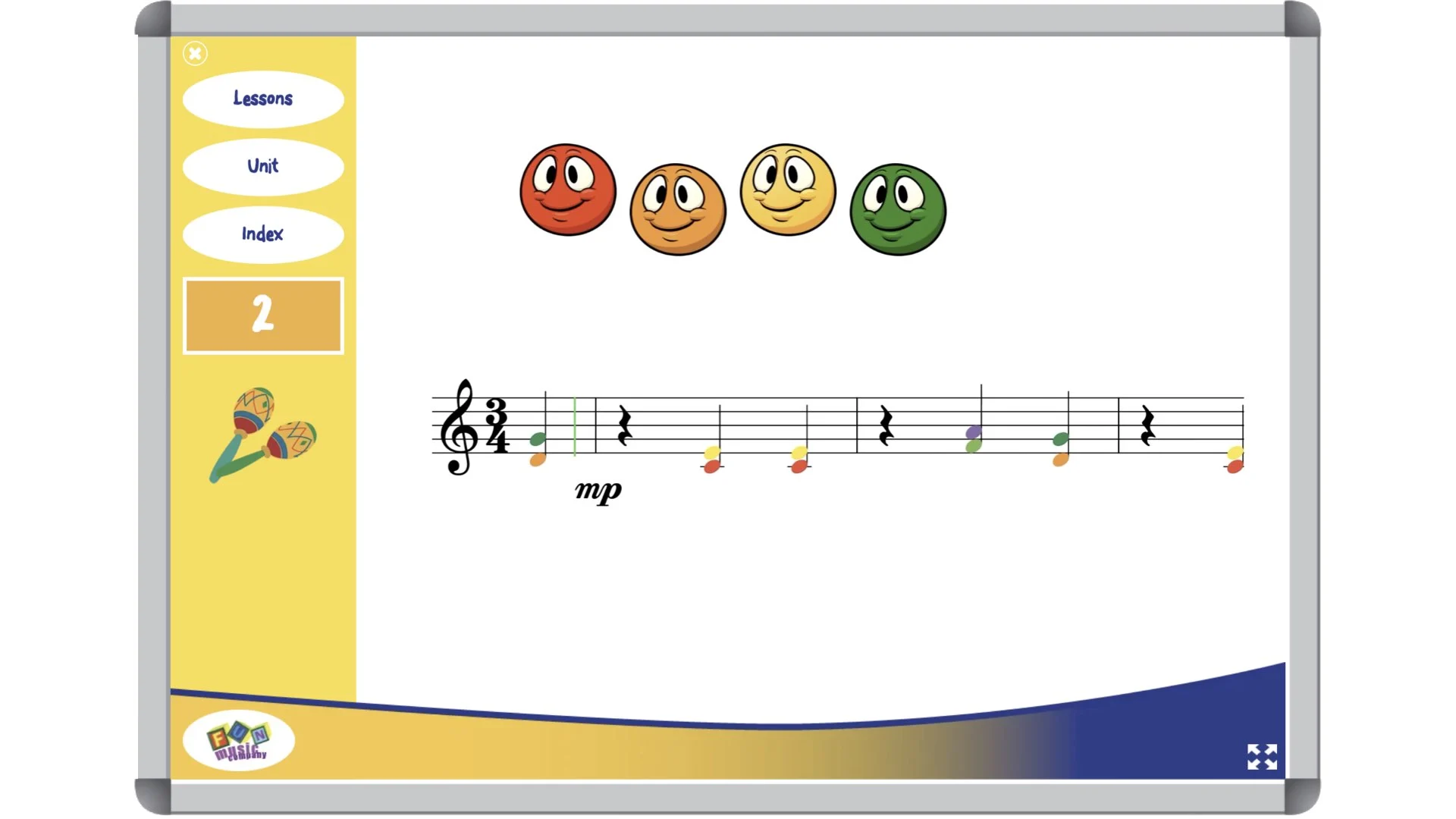
This one is all about rhythm. Students play through the tune three times, and each time the rhythm becomes more complex. It’s a satisfying challenge for older students. They can hear themselves improve from one round to the next.
Teaching tip: Press play, and let the students attempt it the first time. Then, have them notice what changed in each repetition of the tune. Then, use the video scroll feature to move forward to different sections and practice the rhythms with echo clapping before pressing play again.
Why Traditional Carols?
Each of these four songs is a traditional carol, and each one was chosen on purpose.
They’re familiar. Most students already know the tunes, so they can put their attention on playing their part: listening for their colour, keeping in time and following the dynamics. Working out how the melody goes takes much less effort.
They’re built to last. These melodies have been sung for generations because they’re well made. They have clear phrases, singable shapes and strong rhythms, which makes them ideal material for teaching harmony, rhythm and style.
They’re free of copyright worries. These are traditional songs, so you’re not dealing with the licensing questions that come with recent Christmas hits. The melodies belong to everyone. Our arrangements and play-along videos are our own work, so you can use them in class with confidence.
If you’d like to know more about how we choose songs, read Play-Alongs, Pop Songs, and Copyright: Why We Do Things Differently.
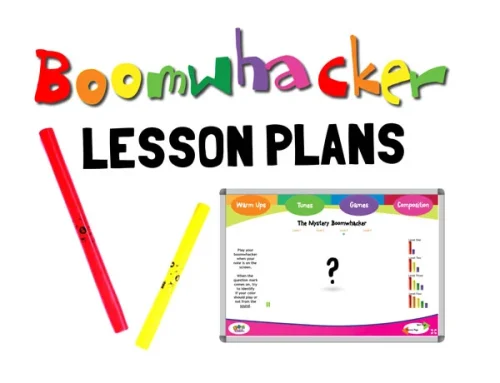
Once the Christmas season is over, keep the tubes out. Our boomwhacker songs for K–6 include three original pieces to carry you into the new year. You’ll find more ideas in our boomwhacker games and activities and our complete guide to boomwhacker lesson plans.
Frequently Asked Questions
We generally recommend Boomwhacker Play Alongs for grades K-2. Some teachers use them effectively with Grades 3-4 also, and that is completely fine. Concepts in O Christmas Tree and Ding Dong Merrily on High are suited up to grade 4.
Divide your number of students by six, because each song uses six notes. A class of 30 needs five diatonic sets, so every student has their own tube. Four to six sets covers most classes.
A standard diatonic set, the eight notes from C to high C, covers every song on this page. You won’t need sharps, flats or octavator caps.
Yes. All four play-along videos on this page are free to use in your classroom. Play them on your interactive whiteboard and your students follow their colour on screen.
Want more Boomwhacker activities for your class?
Get Three Free Boomwhacker Lessons
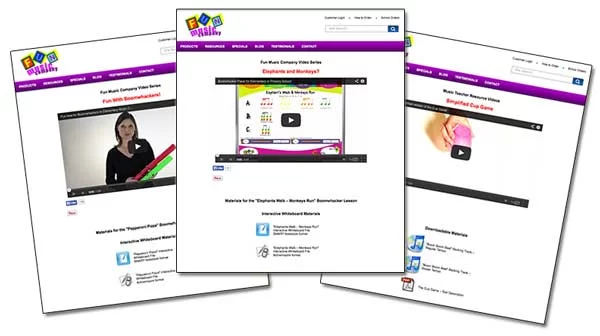
Ready to take boomwhackers past Christmas? Our free Boomwhacker Sample Pack includes three complete, ready-to-use lessons from our K–6 curriculum:
- Boomwhackers for Kindergarten: getting started with your youngest classes
- Boomwhackers for Composition: a step-by-step process for students to create their own music
- Creating a Performance Piece: building an ensemble item for assembly or your next concert



Leave A Comment