


Music and the Brain: What the Neuroscience Actually Shows
This article was originally published in May 2012 and has been substantially revised in May 2026. The original version drew on the left brain/right brain framework that was widely used in popular science writing at the time. Since then, neuroscience research has moved on considerably — including a landmark 2013 study that directly challenged the left/right brain personality model. This revision updates the content to reflect what the research actually shows, while preserving the original comments from readers who found the earlier version useful.
Of all the arguments made in favour of music education, one of the most enduring is that music is uniquely good for the brain. Teachers have sensed it, parents have believed it, and researchers have spent decades trying to understand exactly why.
The intuition is well founded. Music does do something distinctive to the brain — something that most other activities do not. But the explanation for why that is has changed significantly as neuroscience has developed, and the popular framework that shaped much of the early writing on this topic — the idea that music engages the “left brain” and the “right brain” in complementary ways — has not held up well under scrutiny.
That is not a reason to abandon the broader argument. If anything, what modern neuroscience has revealed about how music affects the brain is more interesting and more relevant to music educators than the old framing ever was. The story is not about two hemispheres working in parallel. It is about an entire network of brain systems — auditory, motor, linguistic, emotional — firing together in a way that almost no other human activity produces.
This article explains what that means, why it matters for music education, and what the research actually shows.
The Left/Right Brain Model: What It Got Right and Where It Fell Short
The idea that the brain has two distinct hemispheres with different specialisations is not wrong. It is well established that certain functions are lateralised — meaning they tend to be processed predominantly on one side of the brain. Language processing, for instance, is strongly left-lateralised in most people. Visuospatial processing tends to draw more heavily on the right hemisphere. These are genuine findings, supported by decades of neuroscience research.
Where the model ran into trouble was in the leap from those specific findings to a broader personality theory — the popular notion that some people are fundamentally “left-brained” (analytical, logical, sequential) while others are “right-brained” (creative, intuitive, artistic). That idea took hold in popular culture during the 1970s and 1980s and remained influential for decades. It shaped a great deal of educational thinking, including early writing about music and brain development.
The problem is that it does not reflect how the brain actually works. In 2013 — the same year the original version of this article was gaining traction online — researchers at the University of Utah published a study in PLOS ONE that examined brain imaging data from 1,011 people between the ages of seven and 29. They divided each brain into over 7,000 regions and looked for evidence that individuals consistently favour one hemisphere over the other. They found none. There was no evidence in the brain imaging data that people are either left-brained or right-brained as a matter of personality or cognitive style (Nielsen et al., 2013).
This does not mean the hemispheres are identical or interchangeable. Lateralisation of specific functions is real. But the idea that a person’s fundamental character — their creativity, their analytical ability, their artistic sensibility — is determined by which hemisphere dominates is not supported by the evidence. It was a compelling popular narrative that the data simply did not back up.
For music educators, this matters because some of the arguments built on that framework — that music uniquely bridges the analytical left brain and the creative right brain, producing a kind of cognitive balance unavailable through other activities — rest on a model that neuroscience has since moved away from. The core claim that music is distinctively good for brain development remains well supported. But it needs a different, more accurate explanation.
What Modern Neuroscience Actually Shows: Music and the Whole Brain
When neuroscientists study what happens in the brain during musical activity — playing an instrument, singing, even listening attentively — what they find is not two hemispheres taking turns. They find something considerably more complex and, for music educators, considerably more interesting.
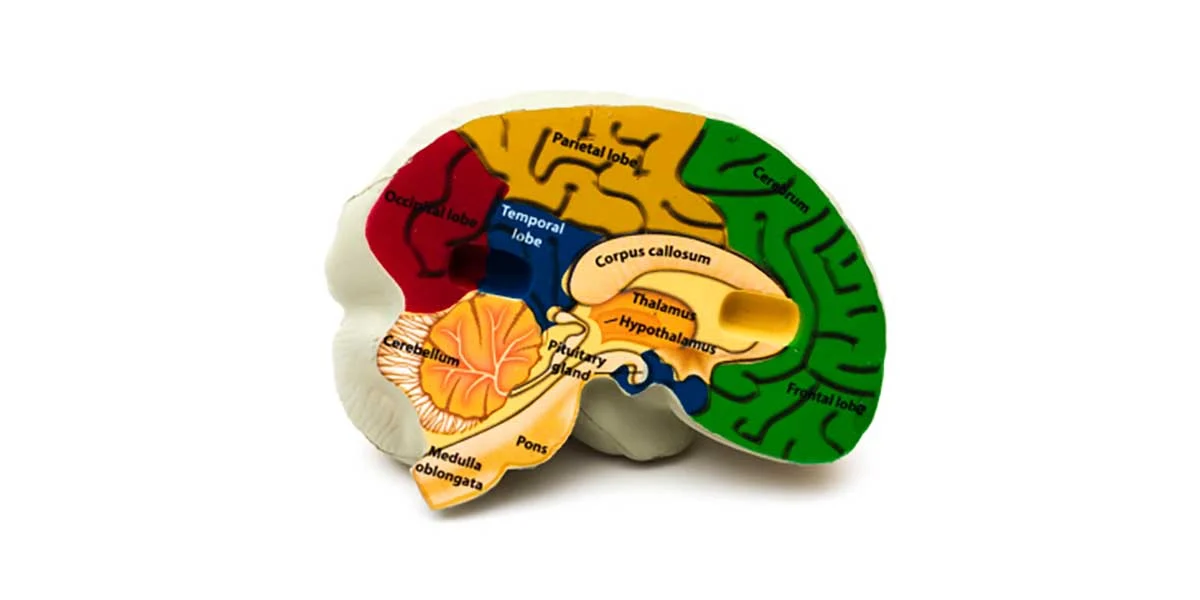
Music engages multiple brain networks simultaneously. Research over the past two decades has established that musical activity draws on the auditory system, the motor system, the language networks, the emotional and reward systems, and the executive function networks — often all at once, and in ways that are tightly interconnected rather than sequential (Thaut et al., 2021; Speranza et al., 2022).
To understand why this matters, it helps to consider what each of these systems is doing during music-making.
The auditory networks are processing pitch, rhythm, timbre, and the relationships between sounds — tracking melody, anticipating what comes next, detecting when something is slightly off. This is not passive reception. Active musical listening and performance involve continuous predictive processing, where the brain is constantly forming and updating expectations about what the music will do.
The motor networks are engaged whenever music involves movement — which, in active music-making, is always. Playing an instrument requires precise, coordinated physical control. Singing requires breath management, laryngeal control, and articulatory movement. Even rhythmic listening activates motor areas of the brain, which is why people naturally move in response to music and why a steady beat has such a powerful effect on physical coordination.
The language networks are recruited because music and language share deep structural similarities. Both involve sequences of sounds organised by rules, both require the brain to track patterns across time, and both draw on overlapping neural resources. Research has consistently found connections between musical training and language processing — a relationship explored in detail in the companion article on this site, The Research Behind Primary School Music Education: What the Evidence Actually Says.
The emotional and reward systems — including the limbic system and the brain’s dopamine pathways — respond to music in ways that are well documented and remarkably consistent across cultures. Music can induce genuine emotional responses, trigger memories, and activate the same reward circuitry involved in other deeply pleasurable experiences. This is not incidental to music’s value. It is central to why music has been part of human life across every culture and every period of recorded history.
What makes this picture significant for music educators is the word simultaneously. Most activities engage one or two of these systems at a time. Reading engages language and visual processing. Sport engages motor systems and some executive function. Music, particularly active music-making, engages all of them together — and in doing so, creates unusually rich and widespread patterns of neural activity.
As Hallam’s comprehensive research synthesis notes, the breadth of this engagement is one of the key reasons musical training is associated with development across so many different domains — not because music magically transfers skills to unrelated areas, but because the neural systems it trains are the same systems that underpin a wide range of cognitive and social functions (Hallam, 2015).
Why Music is Uniquely Powerful for Brain Development
Understanding that music engages multiple brain networks simultaneously raises a natural question: does that engagement actually change the brain, or does it simply reflect the fact that music is a complex activity?
The answer, supported by a substantial body of research, is that sustained musical training does produce measurable changes in brain structure and function. The brain is not a fixed organ. It is plastic — meaning it reshapes itself in response to experience, forming new connections and strengthening existing ones through repeated use. Musical training is one of the more powerful drivers of this neuroplasticity that researchers have identified.
Studies using brain imaging have found structural differences between trained musicians and non-musicians in multiple brain regions — including areas involved in auditory processing, motor control, and the connections between them. These are not small or incidental differences. They reflect the cumulative effect of years of practice that requires the brain to coordinate listening, movement, memory, and emotional response in real time (Hallam, 2015).
Importantly, this is not simply a matter of musicians being born with different brains. Longitudinal research — studies that follow participants over time rather than comparing groups at a single point — has found that musical training itself drives these structural changes. The brain adapts to the demands that music-making places on it. The more precise and sustained that training, the more extensive the adaptation.
This has a direct implication for how we think about music in primary schools. The neural systems being trained through music — auditory discrimination, motor timing and coordination, pattern recognition, emotional regulation, sustained attention — are not music-specific. They are general-purpose cognitive tools that children use across every area of their learning and their lives. When music education is well taught and sustained over time, it is not merely teaching children to sing or play an instrument. It is exercising the brain in ways that few other school activities replicate.
This is also why the quality and consistency of music education matters so much. Neuroplasticity is driven by repeated, effortful engagement — not by occasional exposure. A well-structured, regular music program gives the brain the sustained practice it needs to produce lasting change. A fragmented or infrequent program is less likely to do so. The research does not support the idea that any music education is automatically beneficial. It supports the idea that good music education, delivered consistently, produces genuine and lasting effects on the developing brain.
The Early Childhood Window: What the Research Shows About Starting Young
Of all the findings in the neuroscience of music and brain development, one of the most practically significant for primary school educators concerns the timing of musical training. The research suggests that the brain is particularly receptive to the effects of musical experience during early childhood — and that starting music young produces some specific structural changes that are more difficult to achieve through later training.
The most compelling evidence for this comes from a 2013 study by Steele, Bailey, Zatorre and Penhune, published in the Journal of Neuroscience from Concordia University in Montreal. The researchers tested 36 adult musicians, splitting them into two groups: those who had begun musical training before the age of seven, and those who had begun after. Crucially, both groups had the same number of years of training and experience — which meant any differences between them could not simply be explained by the early starters having practised for longer.
What the researchers found was striking. Musicians who had started before age seven showed enhanced white matter in the corpus callosum — the bundle of nerve fibres that connects the left and right hemispheres and plays a central role in coordinating communication across the brain. Furthermore, the younger a musician had started, the greater the connectivity. The early starters also showed more accurate motor timing on a movement task, and this advantage persisted even after two days of additional practice (Steele et al., 2013).
The researchers interpreted this as evidence for a sensitive period in brain development — a window during which the brain is particularly responsive to musical training, and during which that training produces structural changes that have lasting effects on motor coordination and interhemispheric communication.
It is worth noting the careful qualification offered by co-author Dr Virginia Penhune at the time of the study’s publication. “It’s important to remember that what we are showing is that early starters have some specific skills and differences in the brain that go along with that,” she said. “But these things don’t necessarily make them better musicians.” The research identifies specific neurological advantages associated with early training — it is not a claim that children who start music before seven will outperform those who start later in every respect, or that later starters cannot achieve high levels of musical ability.
What the finding does suggest, however, is that early childhood represents a genuine window of heightened neurological responsiveness to musical experience. The brain structures that musical training strengthens — particularly those involved in motor timing, coordination, and interhemispheric communication — appear to be more malleable during this period than they will be later. This aligns with the broader neuroscientific understanding of sensitive periods in development, where particular types of experience have greater structural impact at certain points in a child’s growth than they will have if the same experience occurs later.
For primary school music educators, and particularly for those working in Foundation Year and the early primary years, this research provides a strong neurological basis for starting music early and taking it seriously from the very beginning of a child’s schooling. It also reinforces the value of the preschool and early childhood music programs that Fun Music Company has developed — a topic explored in more depth in the companion article, Why Starting Music Early Matters: What the Research Shows.
What This Means for Music Education
The neuroscience of music and brain development is a genuinely exciting field, and it has grown substantially in the two decades since the left/right brain framing dominated popular writing on this topic. But research findings are only useful to music educators if they translate into something practical — a clearer sense of what good music education looks like, and why it matters.
Several things emerge clearly from the evidence reviewed in this article.
The first is that active music-making is what drives the neurological benefits. The research consistently distinguishes between passive music listening and active musical participation — singing, playing an instrument, moving to rhythm, engaging with musical structure. Passive listening has some documented benefits, particularly for mood and emotional regulation. But the structural brain changes associated with musical training — the enhanced auditory processing, the motor coordination, the interhemispheric connectivity — are associated with active, sustained, effortful engagement with music. This is a meaningful distinction for how music programs are designed and delivered.
The second is that consistency and duration matter. Neuroplasticity is driven by repeated experience over time. The brain changes associated with musical training do not emerge from occasional exposure. They are the product of regular, structured practice that accumulates over months and years. This has direct implications for how music is scheduled and resourced in primary schools. A music program that runs consistently throughout a child’s primary schooling is neurologically different from one that is delivered sporadically or treated as a lower priority when other demands arise.
The third is that the early years are particularly valuable. The Steele et al. (2013) findings on sensitive periods suggest that Foundation Year and the early primary years represent a window of heightened neurological responsiveness that is worth taking seriously. This does not mean that music education in the later primary years is without value — the evidence does not support that conclusion. But it does suggest that the years before age seven carry a particular neurological significance that educators and school leaders should be aware of when making decisions about when and how music programs are structured.
The fourth — and perhaps most important for generalist classroom teachers who may feel uncertain about their own musical ability — is that the benefits described in this article are associated with well-taught, structured music education, not with any specific level of musical virtuosity in the teacher. What matters is that children are actively engaged with music, that the engagement is regular and sustained, and that it is delivered through a coherent program that builds skills and confidence progressively over time. The RAMSR research discussed in our companion article on the research behind primary school music education demonstrated this clearly: generalist teachers, properly trained and supported, can deliver music and rhythm programs that produce measurable neurological and developmental benefits.
None of this is an argument for music education as a cognitive training tool — a means to an end rather than a worthwhile discipline in its own right. Music deserves its place in primary schools because it is a fundamental part of human experience, because it develops skills and sensibilities that no other subject replicates, and because children have a right to musical education regardless of what it does or does not do for their performance in other areas.
But for those who want to understand what the neuroscience actually shows, the answer is clear. Music is not uniquely good for the brain because it balances two complementary hemispheres. It is uniquely good for the brain because it exercises an unusually wide range of interconnected neural systems — simultaneously, repeatedly, and from an early age. That is a more accurate account of the evidence. And it is, if anything, a more compelling one.
Hallam, S. (2015). The power of music: A research synthesis of the impact of actively making music on the intellectual, social and personal development of children and young people. International Music Education Research Centre (iMerc).
Nielsen, J.A., Zielinski, B.A., Ferguson, M.A., Lainhart, J.E., & Anderson, J.S. (2013). An evaluation of the left-brain vs. right-brain hypothesis with resting state functional connectivity magnetic resonance imaging. PLOS ONE, 8(8).
Speranza, L., Pulcrano, S., Perrone-Capano, C., di Porzio, U., & Volpicelli, F. (2022). Music affects functional brain connectivity and is effective in the treatment of neurological disorders. Reviews in the Neurosciences, 33(7), 789–801.
Steele, C.J., Bailey, J.A., Zatorre, R.J., & Penhune, V.B. (2013). Early musical training and white-matter plasticity in the corpus callosum: Evidence for a sensitive period. Journal of Neuroscience, 33(3), 1282–1290.
Thaut, M.H., Trimarchi, P.D., & Parsons, L.M. (2021). Human brain basis of musical rhythm perception: Common and distinct neural substrates for meter, tempo, and pattern. Frontiers in Human Neuroscience, 15.









Music is engaged and adapted perfectly in the flow of the Present No Matter when or eho made the Song. Perception is shifted in sync with Mind Body and Soul. When this is realized you have full expression thru Music. Others can see this Happening.
[…] the music lovers amongst us, did you know that studies show that people who play instruments have better connectivity between their left and […]
Is this mostly classical music that everyone is referring to? I’m sure that rap wouldn’t fit in bere.
Please list a few of the pieces that would be beneficial.
Awesome! Thanks so much for writing this article! I’m writing an argument essay whether music makes people smarter or not, and this helps SOOO MUCH!!!!
Wow Janice, your article has brought me tears. Because listening to music has always been a sort of therapy to me. Reminds me of five years ago when I was battling acute leukemia, in-between the chemo’s I have kept my iPod beside me to soothe me in trial times.
Thanks for a great article.
Do you know the parts of the brain that is used to play the violin?
Hi Samuel – that is a question someone more qualified than I would have to answer – however a great idea for a follow up article, so we may look into this in the future!
Hi Janice,
Great article, thank you for sharing.
I have been researching music and learning for many years.
Can I quote you on this? What is your last name?
Music is unique in its ability to affect more than a single brain hemisphere, incorporating both the right and left sides of the brain.
I came across this after reading your article. Seems to go hand and hand with yours. Check out the video, How Playing An Instrument Benefits your brain.
http://www.roelhollander.eu/en/blog-music/music-and-the-brain/
Best Regards,
Richard
[…] How Does Music Stimulate Left and Right Brain Function … – 29 Responses to “How Does Music Stimulate Left and Right Brain Function? Why is this Important? ?” Music and Teaching | Modular Designs’ World | a blog about more …… […]
I have always wondered why it was difficult to impossible for me to play the piano, as I have always wanted to. I love music and love to listen to it, and would love to be able to play. But I’m always frustrated. I am a very creative, very right brained artistic person. I doubt my left brain ever even gets used! Now I understand that listening to melody is a right brain activity and playing is a left brain activity. Totally fits in. Now I understand. Thanks.
[…] https://funmusicco.com/research-into-the-benefits-of-music/how-does-music-stimulate-left-and-right-br… […]
this website was very very very very very very very helpful
Dear Janice
I am writing to you as the editor of the Kodaly newsletter in Victoria Australia. As such I was hoping we may be given permission to reprint this fantastic article in our next newsletter?(Fully credited to you of course with a link to your website.
For more information about KMEIA (Kodaly Music Education Institute of Australia) please see http://www.kodaly.org.au/
I look forward to hearing from you if this is a possibility?
Many thanks
Deb
Hi Deborah,
Sure, that is no problem – we’d be happy for you to reprint this article, that is no problem at all
Thanks for such a concise, easy to read article that reinforces what those of us who are music therapists have known for a long time. Everything you mentioned is “used” extensively in most therapeutic settings–it’s nice to have something to put in peoples’ hands when they question the validity of what we do. The only thing missing in most of the things I’ve read is using music for fun. Music has incredible benefit in so many areas of our lives. Let’s not forget the pure joy that it brings!
This a beautifully written article! I run two piano studios with students of all ages. I just finished a Master Class to our more advanced students this week where I taught the left-right brain concept in regards to music. Could I have your permission to post a link on our studio Facebook page? It would greatly help their understanding of this concept.
I also give a presentation to teachers nation wide on a beginning group theory course. I would love to quote from your well written article. May I have your permission?
Thank you for sharing with us!
Paula I would be honoured if you’d like to make reference to this article- thanks so much for your kind words. Yes absolutely- you can link to this article from your studio Facebook page. And with the presentation- all that we ask you to do is acknowledge where you got it from.
Kind Regards,
Janice
Music and Emotions
The most difficult problem in answering the question of how music creates emotions is likely to be the fact that assignments of musical elements and emotions can never be defined clearly. The solution of this problem is the Theory of Musical Equilibration. It says that music can’t convey any emotion at all, but merely volitional processes, the music listener identifies with. Then in the process of identifying the volitional processes are colored with emotions. The same happens when we watch an exciting film and identify with the volitional processes of our favorite figures. Here, too, just the process of identification generates emotions.
An example: If you perceive a major chord, you normally identify with the will “Yes, I want to…”. If you perceive a minor chord, you identify normally with the will “I don’t want any more…”. If you play the minor chord softly, you connect the will “I don’t want any more…” with a feeling of sadness. If you play the minor chord loudly, you connect the same will with a feeling of rage. You distinguish in the same way as you would distinguish, if someone would say the words “I don’t want anymore…” the first time softly and the second time loudly.
Because this detour of emotions via volitional processes was not detected, also all music psychological and neurological experiments, to answer the question of the origin of the emotions in the music, failed.
But how music can convey volitional processes? These volitional processes have something to do with the phenomena which early music theorists called “lead”, “leading tone” or “striving effects”. If we reverse this musical phenomena in imagination into its opposite (not the sound wants to change – but the listener identifies with a will not to change the sound) we have found the contents of will, the music listener identifies with. In practice, everything becomes a bit more complicated, so that even more sophisticated volitional processes can be represented musically.
Further information is available via the free download of the e-book “Music and Emotion – Research on the Theory of Musical Equilibration:
http://www.willimekmusic.de/music-and-emotions.pdf
or on the online journal EUNOMIOS:
http://www.eunomios.org
Enjoy reading
Bernd Willimek
I am in charge of our NEW Music Booster Newsletter and I’m wondering if I could use parts of your articles, giving credit to your site/authors, in it?
Thank you for your consideration!
Hi Tammie,
Sure, you can reprint parts of our articles in your newsletters. Please just include a link to our site
Kind regards,
Janice
I came across research such as this whilst doing my post-graduate study in Music Psychology in Education and have adapted my teaching to incorporate this information. I have also tried to keep colleagues informed so that they too can inform parents and students alike as to the current thinking in music research.
It’s good to see that people such as yourself are getting the information out to the general public.
Thanks again.
You’re welcome Jon- Thanks for your feedback and kind comments.
[…] How Does Music Stimulate Left and Right Brain Function and Why is this Important in Music Teaching? | Home | A Fun Cartoon For Music Teachers […]
Hi Janice,
Thank you for a clear and concise article! I teach music 3 to 93 year-olds and it is amazing what music does for every single individual!I am presenting at a conference and would like to make reference to your article, if you’ll allow me, giving you credit for it of course.
Thanks again!
Hi Jennifer,
I’d be delighted for you to reference this article for your upcoming conference. Thanks so much for asking
Kind Regards,
Janice
Great article. I am a violinst and also teach. Can I link this page to my school website? Thanks
Yes absolutely- you can link to this article from your school website. All that we ask you to do is acknowledge where you got it from on your website.
Kind Regards,
Janice
Janice, I teach beginning piano to older adults at our Adult School. The class evolved out of our Older Adult Co-ordinator to bring a music class that would help to keep seniors using their brains. She also has a program called “Memory Boosters” where the students learn techniques for helping their brains thru diet, exercise,different types of mind games & puzzles. This came abut because of a program that she has for Alzheimer’s & Dementia people who are cared for by a family member to give that family member two days respite. I am going to share this article with her to pass along to her Memory students as well as sharing it with my piano students. I have one lady who will turn 82 years old this week. I love doing what I am to help other Seniors learn to play the piano .
Thanks for sharing your inspiring story with us Pat : ) Your program sounds amazing!
Great Article! To hear researchers affirm what I see happen in the classroom when music is an integral part of the community. This article is the reason I still teach general and choral music at the elementary level!
Thanks!
Thank you Cynthia
I also saw a documentary re: a family w/ at least 6 children, all autistic, and the significant gains they made in and out of school when the parents made listening to classical music a part of their day.
Janice –
Great compilation of information! May I reference your article (with proper citation, of course)?
Tim
Yes -of course Tim. Thank you so much for asking and I’d be thrilled if you can use this article.
R E F L E C T I O N
Synapse transmission between neurons in different systems of dimension .
Music Teaching Technology for Beginners.
Ukraine .
Mr. S.M.Stepanov
http://reflectionmusic.ucoz.com/
We would like to offer the sci.articles
“Digital Music Grammar “ and “Algorithm of Microcycles “
for your review.
A b s t r a c t
Throughout many centuries, the musical structure has had numerous modifications. We can observe the constant use of digits for convenience of notation of the music sounds, for example : digital organ bass, lute tablatures, guitar jazz ciphers. At nowadays the digital system of music teaching is absent in curriculum and is not applied in practice because of teacher’s insufficient professional knowledge in the sphere of child’s neurophysiology . The findings of our scientific investigations have permit us to understand the most delicate mechanisms of child’s mental activity and to detect new creative abilities.Application of the information technologies will help schoolmasters to improve the quality, speed and efficiency of music teaching for beginners. The scientific methods “Digital Music Grammar“ and “ Algorithm of Microcycles “ are dedicated to children on the development their intellectual and creative abilities.
http://educationinjapan.wordpress.com/2011/02/04/considering-the-benefits-of-digital-music-grammar-in-a-music-educational-program/
teacher of music Stepanov S.M.
Hi Janice,
This is a fantastic article. I’m an instrumental teacher in rural Victoria rebuilding a music program at the local high school. I also do occasional presentations for local first-time mothers groups. Would you mind if I used your article in my work? It will be fully creditted, of course.
Thanks
Amanda
Hi Amanda,
I would be delighted if you could use this article in your work. It was written to be used exactly for that purpose- I really appreciate you getting in touch and crediting it as well.
Kind Regards,
Janice
[…] Music and Teaching “How Does Music Stimulate Left and Right Brain Function and Why is this Important in Music Teaching? Music research indicates that music education not only has the benefits of self-expression and enjoyment, but is linked to improved cognitive function (Schellenberg), increased language development from an early age (Legg), and positive social interaction (Netherwood)…” Janice/funmusico.com […]