


The State of Music Curriculum in Australia
Your 2026 Guide to Teaching Primary School Music
Jump to the content for your state:
ACT – New South Wales – Northern Territory – Queensland
South Australia – Tasmania – Victoria – Western Australia
If you’re teaching music in an Australian primary school, you’ve probably asked yourself at least once: “Which curriculum am I actually supposed to be following?”
It’s a fair question. Unlike most countries where one national curriculum covers everyone, Australia’s music curriculum requirements depend entirely on which state you’re teaching in. And if you’ve been teaching for a while, you’ve likely noticed that these curricula keep changing, updating, and evolving—often right when you’ve finally got your lesson plans sorted!
The good news? While the landscape of music curriculum in Australia can feel overwhelming, understanding what applies to your state doesn’t have to be complicated. Even better, you don’t have to rebuild your entire music program every time a new curriculum version is released.
Let’s break down exactly what’s happening with Australian music curriculum in 2026, state by state, so you can stop second-guessing yourself and get back to what you do best: teaching music.
Why Does Australia Have Different Music Curricula?
Before we dive into the state-by-state breakdown, it’s worth understanding why teaching music in Australia looks different depending on where you are.
Australia’s education system allows states and territories to either adopt the national Australian Curriculum or develop their own syllabuses that align with their specific educational priorities. This means that while Queensland, Tasmania, Northern Territory, and South Australia use the Australian Curriculum directly, states like New South Wales, Victoria, and Western Australia have created their own versions.
The Australian Curriculum (currently in version 9.0) serves as the foundation, but states like NSW and Victoria have built upon it to create syllabuses that reflect their unique educational approaches. This isn’t a problem—it just means you need to know which curriculum applies to you and how to ensure your music teaching meets those specific requirements.
That’s where things can get confusing. Not only do different states use different curricula, but these curricula are regularly updated and revised. Keeping track of which version you should be implementing, when new versions are mandatory, and how to align your teaching accordingly can feel like a full-time job on top of your actual full-time job!
NSW: The Creative Arts Syllabus Update
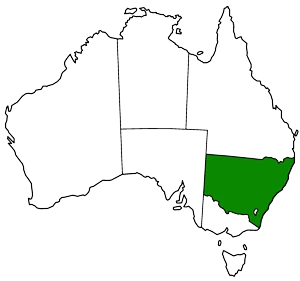
If you’re teaching in New South Wales, you’re working with the NSW Creative Arts Syllabus. The big news for 2026 is that NSW released a completely new version of this syllabus in 2024, and while it’s not mandatory to implement until 2027, many schools are already making the transition.
This new 2024 NSW Creative Arts Syllabus brings some significant changes to how music is taught in NSW primary schools. One of the most notable updates is the increased emphasis on literacy integration within music education. The new syllabus specifically addresses how creating written texts supports understanding in music, particularly for students in Grades 5 and 6. This means music teachers are now expected to incorporate activities where students create written reflections, compose notation, write about musical elements, and document their creative processes—connecting literacy skills directly to musical learning.
For teachers who’ve been using the 2006 version of the NSW Arts Syllabus for years, this shift can feel daunting. How do you suddenly add literacy components to your music lessons when you’re already juggling so much?
The Fun Music Company has already updated our entire program to align with both the 2024 and 2006 versions of the NSW Creative Arts Syllabus. We’ve built in structured literacy activities for Grades 5 and 6 that address this new requirement without overwhelming you or your students. Our lesson plans show you exactly how to incorporate written texts naturally into your music teaching—no reinventing the wheel required.
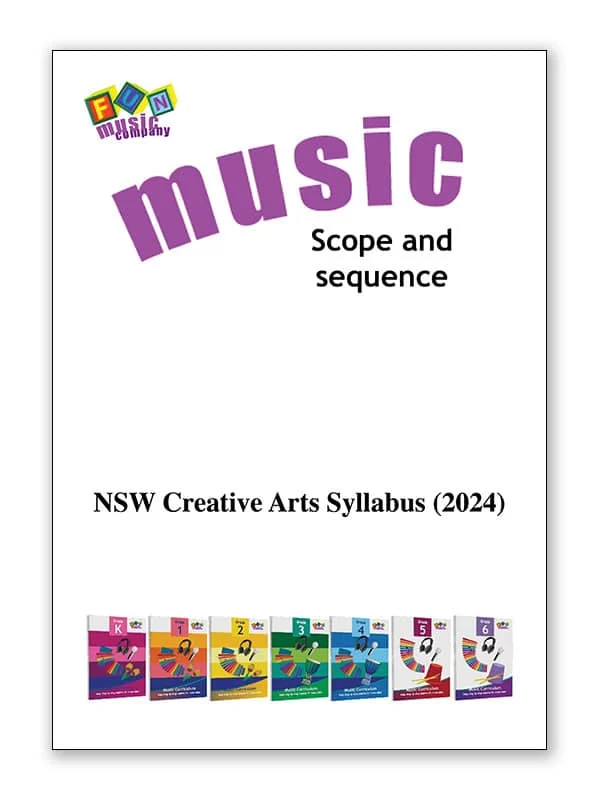
Download the scope and sequence for the new 2024 syllabus below. If you require the 2006 edition, just email us and we can get that to you.
NEW! NOW AVAILABLE! Download the new edition of the Scope and Sequence for the NSW Creative Arts Syllabus (2024) with the link below.
Download now:
Victoria: The Victorian Curriculum
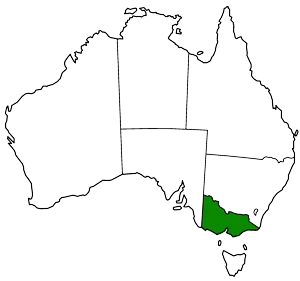
Victorian teachers work with the Victorian Curriculum, which has also seen updates in recent years. The Victorian music curriculum takes a slightly different approach than other states, emphasising the interrelated strands of Exploring and Responding, and Making and Presenting.
The most recent update to the Victorian Curriculum for Music refined the achievement standards and content descriptions, making them more explicit about what students should know and be able to do at each year level. For primary school music teachers, this means clearer expectations around musical elements, performance skills, and creative processes.
One of the strengths of the Victorian Curriculum is its clear progression from Foundation to Year 6, with well-defined content descriptors that help teachers understand exactly what musical concepts to introduce at each stage. However, translating these content descriptors into actual lesson plans that engage students while meeting all the required outcomes can still be time-consuming.
That’s why we’ve developed comprehensive scope and sequence documents specifically for the Victorian Curriculum. Our program maps directly to the Victorian content descriptions and achievement standards, so you can teach with confidence knowing that every lesson you deliver is meeting your curriculum requirements.
Download now:
Western Australia: The Western Australian Curriculum
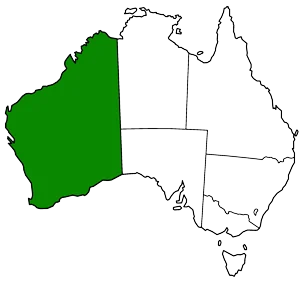
Western Australian teachers follow the Western Australian Curriculum, which is closely based on the Australian Curriculum but includes some WA-specific elements and emphases.
Currently, WA is in the process of developing an updated version of their curriculum, though this hasn’t been released publicly yet. This means that for 2026, you’re still working with the current Western Australian Curriculum for The Arts. When the new version is released, there will likely be a transition period before implementation becomes mandatory—similar to what we’re seeing in NSW.
The uncertainty around curriculum updates can be frustrating. You want to plan ahead and prepare your program, but you can’t fully do that when you don’t know what changes are coming. The best approach is to continue teaching with confidence using the current curriculum, knowing that when updates are released, you’ll have support in making the transition.
The Fun Music Company curriculum is built to be flexible and adaptable. When WA releases its updated curriculum, we’ll be among the first to review it and update our scope and sequence documents accordingly, ensuring you’re always teaching to the most current requirements without having to do the heavy lifting yourself.
Download now:
Australian Capital Territory, Queensland, Northern Territory, Tasmania, and South Australia: The Australian Curriculum
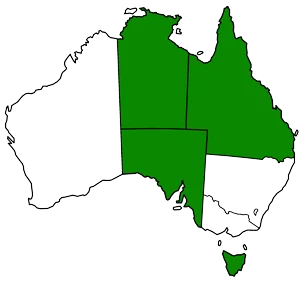
If you’re teaching in Queensland, Northern Territory, Tasmania, or South Australia (in non-public schools), you’re using the Australian Curriculum for The Arts. The current version is version 9.0 (often called v9), which was released in recent years and has now been implemented across all these states and territories.
The Australian Curriculum v9 for Music provides a consistent framework across multiple states, which is particularly helpful if you ever move between these regions or collaborate with teachers in other parts of Australia. The curriculum is organised around two interrelated strands: Making and Responding, with clear content descriptions that outline what students should learn at each year level.
One of the challenges with the Australian Curriculum is that while it provides excellent content descriptions, it doesn’t tell you *how* to teach these concepts or what specific activities will engage your students while meeting the outcomes. You’re given the what, but you still need to figure out the how—and that’s where the time-consuming lesson planning comes in.
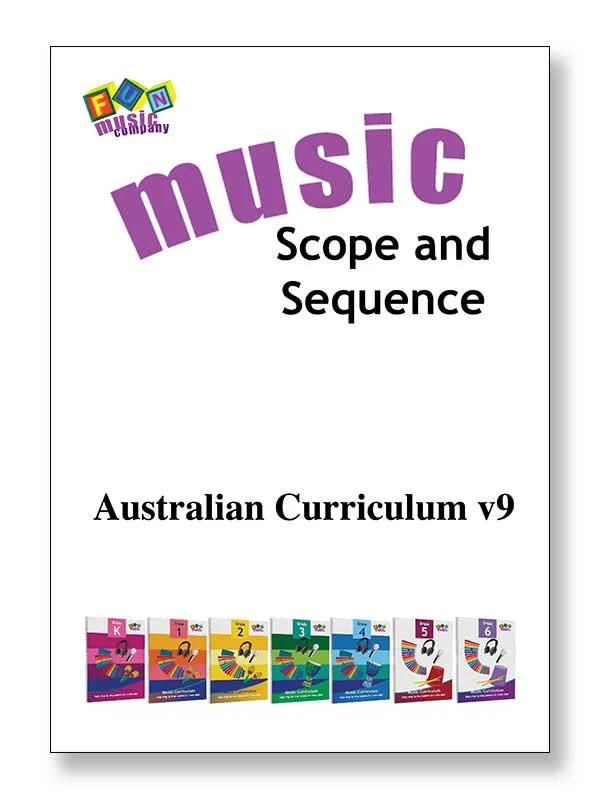
The Fun Music Company program is fully updated and aligned with Australian Curriculum v9. Every lesson we create maps directly to the content descriptions and achievement standards, and we’ve done the work of translating those broad curriculum statements into engaging, practical activities that your students will love. Our scope and sequence documents show you exactly which curriculum outcomes each lesson addresses, giving you complete confidence in your curriculum compliance.
For example, when the Australian Curriculum v9 requires students to “explore and experiment with diverse sounds” in Years 3-4, our lessons provide specific activities using body percussion, vocal exploration, and found sounds that meet this outcome while keeping students engaged and having fun.
When Years 5-6 students need to “develop and practice technical and expressive skills,” our structured activities progress from basic technique to more complex performance skills in a way that builds confidence rather than frustration.
Download now:
South Australia: A Special Note on the SA Curriculum
While South Australian teachers in Catholic and independent schools use the Australian Curriculum v9 (see section above), there’s an additional consideration for those teaching in SA public schools.
South Australia has recently developed the SA Curriculum for Public Education, which is used specifically in public schools across the state. This is a relatively new development, and one of the challenges is that the curriculum documents aren’t yet publicly available, making it difficult for curriculum providers like us to create detailed alignment documents.
Here’s the good news: we’ve had direct conversations with the SA Education Department, and they’ve confirmed that because the Fun Music Company program covers all of the Australian Curriculum v9 requirements, we also cover everything required in the SA Curriculum for Public Education. This means that if you’re teaching in an SA public school and using our program, you can be confident you’re meeting your curriculum requirements.
However, because the SA Curriculum documents aren’t publicly available yet, we cannot provide a formal scope and sequence document specifically for the SA Curriculum for Public Education at this time. We know having that documentation can be important for demonstrating curriculum alignment to school leadership, and we’re monitoring the situation closely. As soon as the full curriculum is released publicly, we’ll create the alignment documents to support SA public school teachers.
In the meantime, if you’re teaching in an SA public school and would like to discuss how our program meets your curriculum requirements, or if you need help explaining to your leadership how the Fun Music Company aligns with the SA Curriculum, we encourage you to book a consultation call with us. We can talk through your specific situation and provide the reassurance you need.
How The Fun Music Company Ensures Curriculum Compliance
You might be wondering: how can one music program possibly meet the requirements of so many different curricula?
The answer is that while these curricula use different language and emphasise slightly different elements, the fundamental goals of primary school music education remain remarkably consistent across Australia. All these curricula want students to:
- Develop their musical skills through singing, playing instruments, and moving to music
- Learn to identify and use musical elements (pitch, rhythm, dynamics, tempo, etc.
- Create their own music through improvisation and composition
- Listen to and respond to diverse musical styles
- Develop an understanding and appreciation of music from different cultures and times
The Fun Music Company music curriculum addresses all these core goals through engaging, age-appropriate activities that teachers actually want to teach and students actually want to participate in. Then, we’ve done the detailed work of mapping our lessons to the specific content descriptions, outcomes, and achievement standards of each state curriculum.
This means you get the best of both worlds: lessons that are genuinely fun and educationally sound, plus the documentation you need to demonstrate curriculum compliance to your school leadership.
Take our literacy integration for NSW Grades 5 and 6 as an example. Rather than just telling you that you need to incorporate written texts into your music lessons, we’ve created specific activities where students compose using standard notation, write reflections on their musical performances, document their creative processes in composition journals, and create written explanations of musical concepts. These activities are built into the lesson structure, so you’re not adding extra work—you’re simply following the lesson plan, and the literacy integration happens naturally.
Similarly, when the Australian Curriculum v9 requires students to develop technical skills on instruments, our lessons provide structured, progressive activities that build these skills step by step. You don’t need to figure out how to scaffold instrumental learning—we’ve already done that work for you, with clear instructions and demonstrations that make teaching even complex skills straightforward.
The Real Cost of Curriculum Confusion
Here’s what often happens when music curriculum requirements aren’t clear or when teachers don’t have curriculum-aligned resources:
You spend hours researching the curriculum documents, trying to understand exactly what you’re supposed to teach. Then you spend more hours searching for activities and lesson plans that might meet those requirements. Then you spend even more hours adapting those activities to work for your specific students and resources. And at the end of all that, you’re still not entirely sure if you’re ticking all the curriculum boxes your school expects.
This isn’t just time-consuming—it’s exhausting. And it’s time you could have spent actually teaching, connecting with your students, or (revolutionary thought!) having a life outside of school.
The confusion around music curriculum in Australia—with different states using different syllabuses, updates happening at different times, and requirements that aren’t always crystal clear—adds an extra layer of stress to an already demanding job. It’s no wonder so many primary school music teachers feel overwhelmed.
But here’s the thing: curriculum compliance doesn’t have to be complicated. When you have resources that are explicitly aligned with your specific state curriculum, with scope and sequence documents that show exactly which outcomes each lesson addresses, the stress disappears. You can teach with confidence, knowing that as long as you’re following the program, you’re meeting your curriculum requirements.
Looking Ahead: 2026 and Beyond
As we move through 2026, here’s what you need to know about school music teaching in Australia:
NSW teachers should be preparing for the mandatory implementation of the 2024 Creative Arts Syllabus in 2027. If you haven’t already started transitioning, 2026 is the perfect time to familiarize yourself with the new requirements and begin incorporating them into your teaching. The Fun Music Company program is already fully updated for the 2024 syllabus, so if you’re using our curriculum, you’re already prepared for the 2027 transition.
Victorian teachers can continue teaching with confidence using the current Victorian Curriculum. Any future updates will likely come with advance notice and transition periods, giving you time to adjust.
WA teachers should stay alert for the release of the updated Western Australian Curriculum. When it arrives, there will be a transition period before mandatory implementation. We’ll be updating our WA scope and sequence documents as soon as the new curriculum is released.
Teachers using the Australian Curriculum (Queensland, NT, Tasmania, SA) are currently teaching with the most recent version (v9), which is fully implemented. This curriculum is likely to remain stable for the next few years, giving you consistency in your planning.
The Bottom Line for Australian Music Teachers
Teaching primary school music in Australia means navigating a complex landscape of different curricula, updates, and state-specific requirements. But it doesn’t mean you need to figure it all out alone.
The music curriculum requirements in Australia are manageable when you have the right support and resources. Whether you’re in NSW adapting to new literacy requirements, in Victoria teaching to clear content descriptors, in WA waiting for curriculum updates, or anywhere else in Australia working with the Australian Curriculum, the fundamental challenge is the same: translating curriculum documents into engaging, effective lessons that your students will actually enjoy.
That’s exactly what the Fun Music Company does. We’ve taken the time to understand each curriculum, map our lessons to specific outcomes, and create the documentation you need to demonstrate compliance. More importantly, we’ve created lessons that actually work in real classrooms with real students—lessons that are fun to teach and fun to learn.
You shouldn’t have to spend your weekends researching curriculum documents and creating lesson plans from scratch. You shouldn’t have to second-guess whether you’re meeting your state’s requirements. And you definitely shouldn’t have to choose between curriculum compliance and engaging, joyful music education.
Ready to Simplify Your Music Curriculum Planning?
If you’re feeling overwhelmed by your state’s music curriculum requirements, or if you’re spending too much time trying to align your lessons with curriculum outcomes, we can help.
The Fun Music Company has comprehensive scope and sequence documents for every Australian music curriculum, and our lessons are designed to meet these requirements while keeping music education joyful, engaging, and manageable for teachers like you.
Not sure which curriculum applies to you, or how our program can specifically support your situation?
Book a free consultation call with the Fun Music Company team, and we’ll talk through exactly what’s required in your state, how our curriculum aligns with those requirements, and how you can simplify your music teaching without sacrificing quality or compliance.
This isn’t a sales pitch—it’s a genuine conversation about your specific situation and how we might be able to help you spend less time planning and more time teaching.
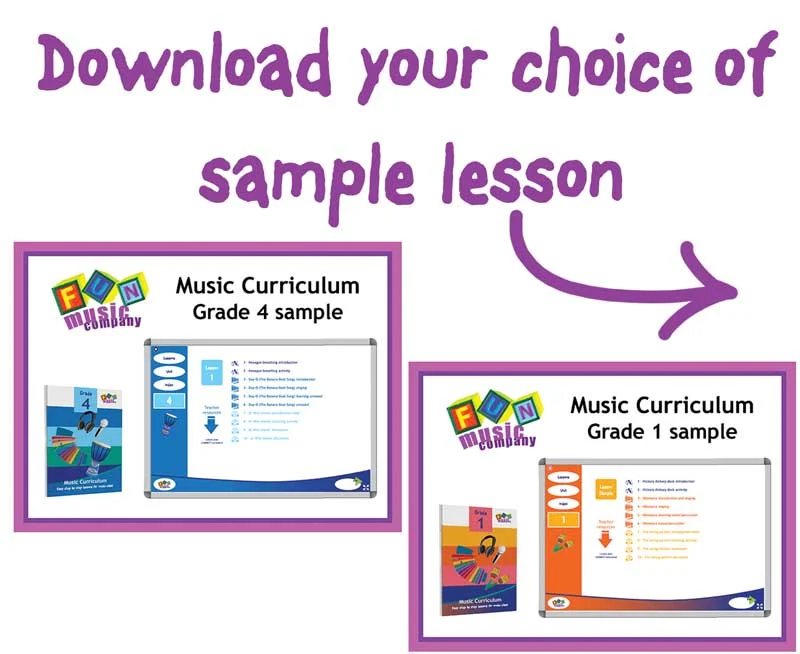
Download a sample pack now of the Fun Music Company Curriculum Program to see how easy it can make your music teaching in 2026!
“Having access to your music program has made the teaching and planning of my music classes SO much easier!”
This was what Liz, a music teacher from a small Catholic school in Sydney wrote to us in an email recently. This is typical of the hundreds of responses we get every week from teachers across Australia using the Fun Music Company Curriculum Program.
Imagine having an entire year of music lessons already planned, prepared, and ready to teach — no more Sunday night scrambles or piecing together resources from different places. That’s exactly what teachers at over 350 schools across Australia are experiencing right now.
Our curriculum program gives you complete, sequential lesson plans for every week of the school year, with videos, worksheets, interactive resources, and everything you need to walk confidently into your music room — whether you’re a specialist or a classroom teacher who’s been asked to teach music.
Ready to see what a week of music lessons looks like in your grade level?
Download a free sample pack below and take it for a test drive in your classroom.

 We value your privacy and would never spam you. We may email you valuable ideas for music teaching once or twice a week, however you can unsubscribe at any time. Check details of our privacy policy here.



Leave A Comment