



Does Starting Music Early Really Matter?
Here’s What the Research Shows.
Does it really matter when children start music education? Or does it all even out in the end?
It’s a fair question — and one that gets asked more often than you might expect, usually at budget time or timetabling time, when music is one of the first things to get squeezed. The argument goes: children will have plenty of opportunity to engage with music later, so why prioritise it in the early years?
The short answer, based on a growing body of research, is that timing does matter — and that the early primary years represent a genuine developmental window for music education that can’t simply be replicated later. This article looks at what the evidence actually says, what it means for teachers working with students from Foundation Year through to Year 6, and why a consistent, sequential music program from the very beginning makes a meaningful difference.
For a broader overview of the research landscape, see the research behind primary school music education.
The Brain in Early Childhood: Why the Window Matters
One of the most significant pieces of research to emerge in recent years came from a 2013 study published in the Journal of Neuroscience. Researchers examined 36 highly skilled adult musicians, all of whom had done comparable amounts of practice and training over their lifetimes. The one key difference was when they had started: half had begun musical training before the age of seven, and half had started after.
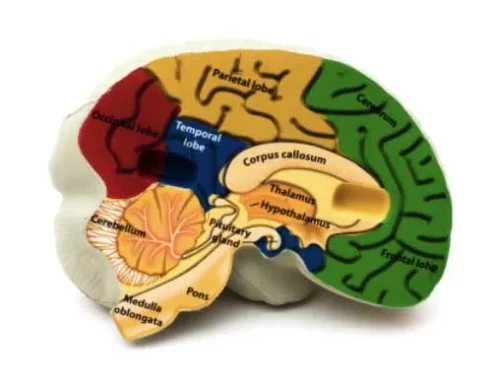
When the researchers looked at brain structure, they found a clear and meaningful difference. The musicians who had started before age seven had significantly more extensive development of the corpus callosum — the bundle of nerve fibres that connects the brain’s two hemispheres and coordinates communication between them. And crucially, this structural difference persisted into adulthood, even though both groups had eventually accumulated similar levels of musical experience.
What this tells us is not that late starters can’t become skilled musicians — clearly they can. What it tells us is that certain aspects of brain development in response to musical training are most pronounced when that training begins early, during a period when the brain is still forming and highly responsive to structured learning.
This connects to the broader concept of sensitive periods in child development — windows of time during which the developing brain is particularly receptive to certain types of input. These windows don’t slam shut; learning remains possible throughout life. But the efficiency and depth of certain kinds of learning is greatest during these early years.
In plain terms: children who receive structured music education in their early primary years are building neural foundations that will support not just their musical development, but their cognitive development more broadly.
Music, Language, and Literacy: The Connection That Starts Early
One of the most consistently supported findings in music education research is the connection between early musical experience and language and literacy development. This isn’t coincidental — music and language share significant neural pathways in the brain, and training one appears to strengthen the other.
Research from Liverpool University confirmed that musical training increases blood flow in the left hemisphere of the brain — the region associated with both music processing and language processing. As the researchers noted, the areas of the brain that process music and language are thought to be shared, and even a short period of musical training produced measurable changes in how those shared mechanisms functioned.
What this means in practical terms is that singing, rhythm work, and musical games in the early primary years aren’t just enjoyable activities — they’re actively developing the phonological awareness that underpins early reading. Phonological awareness — the ability to identify and manipulate the sound structures of language — is one of the strongest predictors of reading success, and music is one of the most natural and engaging ways to build it.
A 2015 meta-analysis by Gordon, Fehd and McCandliss, published in Frontiers in Psychology, examined thirteen studies involving over 900 children and found that music training did produce measurable gains in phonological awareness. The authors noted that the effect grew stronger with more hours of musical training — which is a compelling argument for consistency and frequency in your music program, particularly in the early years.
Susan Hallam’s landmark synthesis The Power of Music (2015), commissioned by the Music Education Council (UK), draws on decades of neuroscience, psychology, and education research to conclude that musical training strengthens verbal memory, language skills, and literacy performance, as well as elements of spatial reasoning and mathematical ability. Critically, Hallam notes that these benefits are most associated with well-taught, sustained, and participatory music-making — not incidental or passive exposure.
For a deeper look at how music affects the developing brain, see our article on music and the brain.
Social and Emotional Development: The Benefits That Often Get Overlooked
Much of the public conversation about early music education focuses on cognitive benefits — brain development, literacy, academic transfer. These are real and worth discussing. But some of the most consistent and meaningful benefits of music in the early primary years sit in a different domain: social and emotional development.
Group music-making — singing together, playing instruments together, moving together in response to sound — creates a very particular kind of shared experience. Children are listening, responding, adjusting, and contributing simultaneously. These are precisely the skills that underpin cooperative learning, turn-taking, and the ability to function as part of a group.
For Foundation and Year 1 and 2 students in particular, this matters enormously. Children at this stage are still developing self-regulation — the ability to manage impulses, wait, and respond appropriately to social cues. Music provides a structured, enjoyable context for practising these skills in a way that feels natural rather than instructional.
Regular, well-structured music sessions in the early years also contribute to:
- Emotional regulation: rhythm and predictable musical structure provide a calming, grounding framework that many students find genuinely settling.
- Confidence and belonging: singing and playing together creates shared experiences that help students feel part of a group, particularly valuable for students who may struggle socially in other contexts.
- Listening and attention: active music-making demands genuine listening — not passive hearing, but focused, intentional attention. This transfers across the curriculum.
- Resilience: learning a song or a musical skill takes repetition and patience. Students who experience that process — and succeed — build a genuine sense of capability.
These benefits don’t appear once and disappear. They compound. Students who enter Years 3 and 4 with several years of regular music experience behind them have a fundamentally different musical — and social — foundation to build on.
What ‘Starting Early’ Actually Looks Like in a Primary Classroom
It’s worth being clear about what the research is — and isn’t — saying here. ‘Starting music early’ doesn’t mean enrolling five-year-olds in private instrument tuition, or expecting Foundation Year students to read music notation. The research points to something more accessible and more suited to the classroom context.
What matters is active, participatory musical engagement, delivered consistently, from early in primary school. That means:
- Singing regularly as a class — not performance, but shared musical experience
- Movement integrated with music, connecting sound to physical response
- Rhythm work that builds awareness of beat, pattern, and structure
- Simple pitched instruments like boomwhackers or glockenspiels introduced early and revisited often
- Listening activities that develop focused, attentive hearing
What the research consistently identifies as important is not complexity or formal instruction — it is frequency and quality. A short, well-structured music session each week, delivered with enthusiasm and clear learning intent, does more for early musical development than an occasional deep dive or a passive viewing experience.
This is especially relevant for generalist classroom teachers who may feel uncertain about their musical confidence. You don’t need to be a trained musician to deliver effective early years music education — you need a structured program, a willingness to engage, and consistency. The Australian Curriculum music strand is built around exactly this. Here at the Fun Music Company, we’ve broken down what is expected in a Foundation Year Music Curriculum, and the program is more accessible than many teachers expect.
Why Years 3–6 Teachers Have a Stake in This Too
The case for early music education isn’t just relevant to teachers working in Foundation, Year 1, and Year 2. It matters to everyone across the primary school, because what happens in the early years shapes what’s possible in the upper primary years.
Students who arrive in Year 3 with three or four years of consistent music experience behind them — who know how to listen, hold a steady beat, follow a musical cue, and engage with group performance — are ready to build on that foundation in meaningful ways. They can explore musical concepts with greater depth, take on more complex repertoire, and participate in ensemble work with genuine engagement.
Students who haven’t had that experience don’t arrive in Year 3 unable to learn music. But their teacher is working from a much earlier starting point — often spending significant lesson time on foundations that could have been laid years earlier, while also trying to meet the demands of the Years 3–4 curriculum.
This is the compounding effect of early music education. It’s not that the window closes — it’s that the foundation laid in the early years determines how quickly and how deeply the upper primary program can go. A school that treats F–2 music as optional, supplementary, or something to be covered ‘when there’s time’ is, in effect, making Years 5 and 6 music harder than it needs to be.
Frequently Asked Questions
Yes — and this is probably the most important question for most primary teachers to hear answered clearly. The benefits described in this article are associated with quality music education in a classroom context, not with individual tuition from a specialist. What makes the difference is structure, consistency, and active participation — all of which are achievable with the right program and support. See our complete guide to teaching music as a non-specialist for practical guidance.
No. The research supports the benefits of active music-making broadly — singing, rhythm and movement activities, and ensemble playing all contribute meaningfully to the developmental outcomes described in this article. Formal instrument tuition can add depth and rigour, but it’s not a prerequisite for the kind of early music education that produces measurable benefits. A well-structured K–6 classroom music program, delivered by a confident and prepared teacher, is exactly what the research is pointing to.
The research doesn’t point to a single magic number, but consistency matters more than volume. Regular, shorter sessions — even 20–30 minutes once or twice a week — appear to be more effective than occasional longer blocks, because consistency builds the repeated practice that develops phonological awareness, rhythmic understanding, and musical memory. The key is that sessions are active and participatory, not passive.
No — it’s not too late. Children who come to music education later absolutely can develop musical skills, and the social and emotional benefits of music-making are available at any age. What changes is the ease and depth of certain developmental outcomes, particularly those linked to brain structure and language development. The practical implication is not that late is hopeless, but that early is genuinely valuable — and that if your school hasn’t prioritised music in the early years, there’s real reason to start now rather than waiting.
Put the Research Into Practice
Understanding why early music education matters is one thing. Having a practical, structured program that makes it easy to deliver consistently — from Foundation Year all the way through to Year 6 — is another.
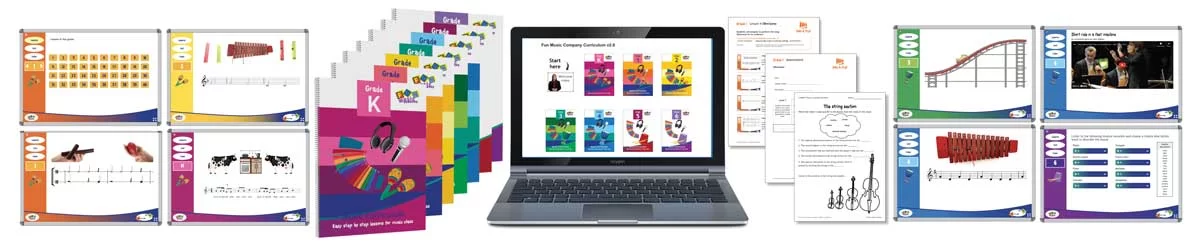
The Fun Music Company K–6 Music Curriculum is built around exactly the principles the research supports: sequential, active, participatory music-making that grows in depth and complexity as students progress through primary school. Whether you’re a music specialist or a generalist classroom teacher, the program is designed to be genuinely usable — with complete lesson plans, interactive presentations, and all the support you need to deliver music with confidence every week.
References
Hallam, S. (2015). The Power of Music. International Music Education Research Centre (iMerc), commissioned by the Music Education Council. Available at: archive.org/details/the-power-of-music-susan-hallam
Gordon, R. L., Fehd, H. M., & McCandliss, B. D. (2015). Does music training enhance literacy skills? A meta-analysis. Frontiers in Psychology, 6, 1777.
Steele, C. J., Bailey, J. A., Zatorre, R. J., & Penhune, V. B. (2013). Early musical training and white-matter plasticity in the corpus callosum: evidence for a sensitive period. Journal of Neuroscience, 33(3), 1282–1290.
Dumont, E., Syurina, E. V., Feron, F. J. M., & van Hooren, S. (2017). Music interventions and child development: a critical review and further directions. Frontiers in Psychology, 8, 1694.
Spray, A., & Mayer, G. (2014). Music and language share the same pathways in the brain. Annual Conference of the British Psychological Society. University of Liverpool.
Research citations in this article are used for educational reference. All studies are published, peer-reviewed works, or commissioned research syntheses. Fun Music Company is not affiliated with the researchers or institutions cited.



Leave A Comment