


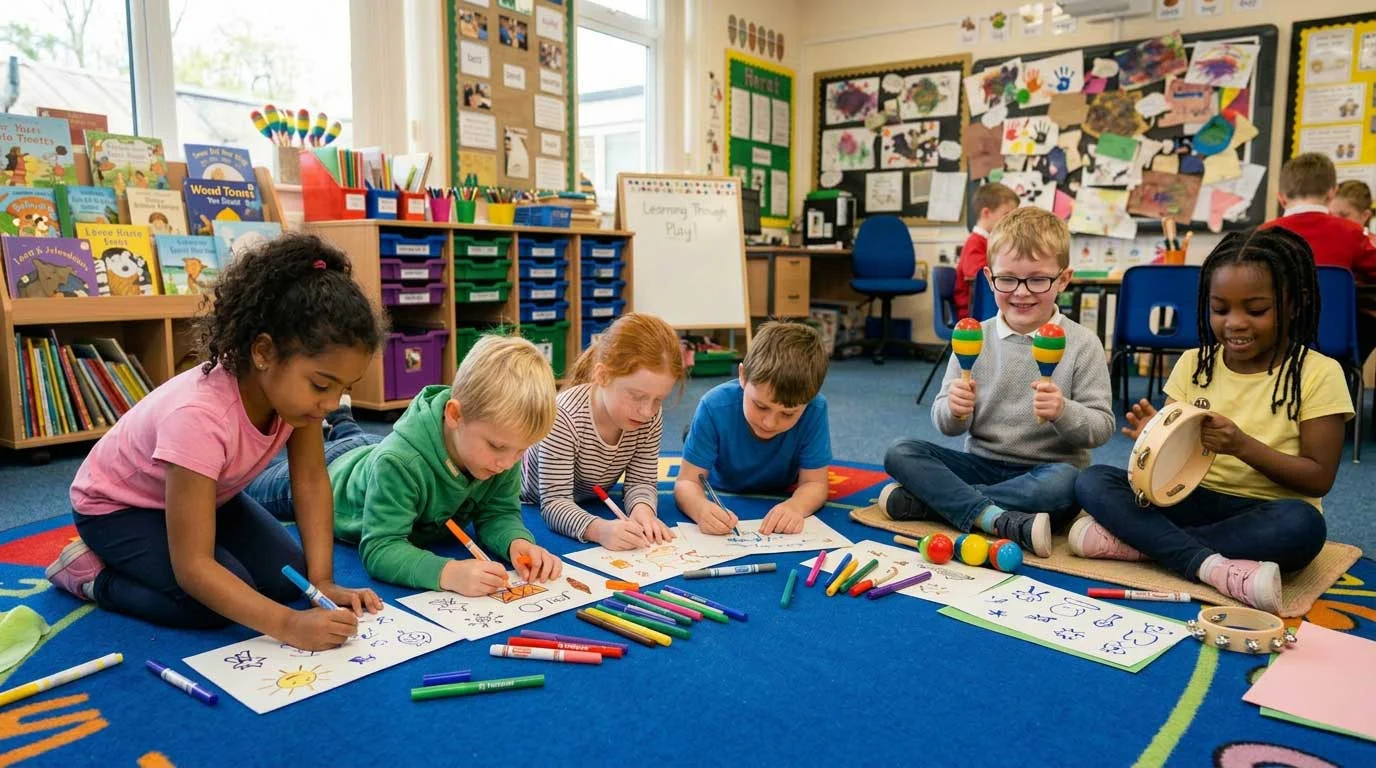
How do you teach music composition to Grade 1 students?
Quick answer:
A Grade 1 music composition lesson introduces students to creative music-making through sound exploration and simple sequencing. Students don’t need to read standard notation — instead, they use iconic notation (their own invented symbols) to record musical ideas. A well-structured lesson moves from a sound stimulus to organising sounds in sequence, then to performing and recording the result. No musical background is required to teach this effectively.
Teaching composition to Grade 1 students is one of those things that sounds much harder than it actually is — once you know the approach.
Most teachers assume that composition means musical theory, notation, and skills they simply don’t have. But at Grade 1, composition means something completely different: it means giving children a framework, a stimulus, and permission to put sounds together in their own way.
I wasn’t a composer when I started teaching. I had no musical composition training, and no idea where to begin when the curriculum told me students needed to “create their own music.” It took me a long time — years of trial and error in actual classrooms — to work out an approach that genuinely works with six and seven year olds.
This article shares that approach. It’s practical, step by step, and designed to work whether you’re a music specialist or a generalist classroom teacher picking up music for the first time.
If you’re looking for a broader overview of how to structure your Grade 1 music lessons across all four strands, our guide to teaching Grade 1 music lessons is a good starting point. This article focuses specifically on the COMPOSE strand.
Why composition belongs in Grade 1 — and what it actually looks like
There’s a common assumption in primary music that composition is something students work up to — something for the older grades, once they can read notation and play with some control. It’s understandable. But it gets composition exactly backwards.
Think about how art works in Grade 1. You don’t hand a child a paintbrush and say: “Replicate this painting exactly.” You give them paper, a colour prompt, and the freedom to create. Anything they make, you respond to with genuine interest and encouragement.
Music should work the same way. When we only teach students to reproduce other people’s music, we leave out the most important part: the experience of making something that is entirely their own.
The Australian Curriculum v9 reflects this. The Years 1–2 creating and making strand requires students to:
“Select and combine elements of music when composing and practising music for performance.”
— AC9AMU2C01
The US National Core Arts Standards describe a similar expectation at this level: students should be generating and developing musical ideas for a specific purpose.
Neither of these statements requires students to know what a quaver is. Neither asks them to read a score. What they ask for is the experience of making musical choices — selecting sounds, putting them in an order, and performing the result.
That is well within what a Grade 1 student can do, and well within what any teacher can facilitate.
What Grade 1 composition is not:
- Writing music in standard notation
- Composing a melody from scratch
- Producing a performance-ready piece
- Something that requires the teacher to be a musician
What Grade 1 composition is:
- Structured sound exploration with a concrete stimulus
- Making musical choices: selecting sounds and arranging them in sequence for a reason
- Recording those choices in a simple, invented way
- Performing the result as a class
For a full breakdown of what the Australian Curriculum requires at Years 1 and 2 across all four strands, see our Years 1–2 music curriculum guide.
The two-stage framework for Grade 1 composition
Before we look at each stage in detail, it helps to understand why this framework is structured the way it is.
Young students need a bridge between the music they experience as listeners and the music they can make as creators. That bridge is sound — familiar, everyday sound that they already have opinions about and responses to. The framework moves in two stages: first, exploring and sequencing sounds; then, recording those sequences using their own invented symbols.
Stage 1 builds the creative idea. Stage 2 captures it. Together, they give students a complete, age-appropriate composition experience.
Stage 1: Sound exploration — from stimulus to sequence
The first stage of a Grade 1 composition lesson begins not with instruments, but with listening.
The most effective stimulus for this age group is something students already have a strong mental image of: animals, weather, environments, movement — any concept that carries a natural sound association. Animals work particularly well because children at this age have an immediate, confident response to them. They know what a dog sounds like. They know what a butterfly sounds like. That prior knowledge is exactly what you need to get them composing without hesitation.
Here is how Stage 1 unfolds in practice.
Step 1 — Introduce the stimulus
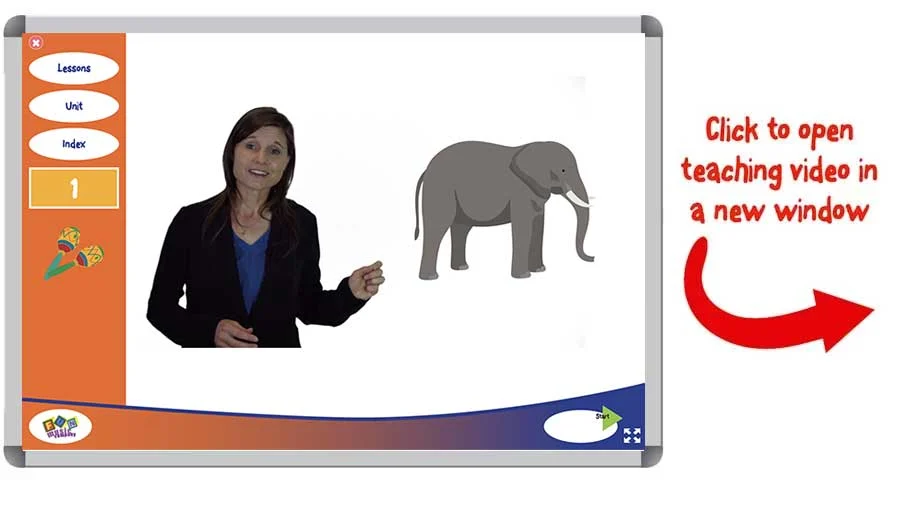
Present four or five sounds on the whiteboard, each represented by a picture. Animals are ideal: a dog, a cat, a lion, a butterfly. Ask students to describe the sound each one makes. Not to make the sound yet — just to describe it. Is it long or short? Loud or soft? High or low? You are doing two things simultaneously: building vocabulary around the elements of music, and generating ideas for the composition.
Step 2 — Explore the sounds as a class
Invite students to make each sound together, one at a time. Keep it structured. This is not a free-for-all — you are leading them through each sound in sequence, listening carefully as a group, and making observations. What does the lion sound different from the butterfly? How?
This guided exploration is critical. It teaches students that musical choices have reasons behind them, and that different sounds create different effects.
Step 3 — Create a sequence
Now ask students to choose an order for the sounds. Which animal comes first? Which comes last? Why? Put the pictures in the order the class decides on. This is the composition — a sequence of sounds arranged for a purpose, in this case to tell a short musical story.
The role of the teacher here is to facilitate the decision-making, not to make the decisions. Accept every suggestion seriously. Ask questions that push thinking: “If we put the lion at the end, what does that feel like? What if the butterfly came last instead?” Students are learning that composition involves choices, and that different choices create different results.
Step 4 — Perform the composition
Perform the sequence together as a class. Move through each animal sound in the agreed order. Then perform it again. Then ask: does anyone want to change anything? This iterative process — create, perform, reflect, refine — is the foundation of compositional thinking, and students are doing it naturally at this stage without any technical knowledge required.
Watch the Stage 1 lesson in action below. In this four-minute video, you’ll see exactly how to introduce the animal sounds stimulus, guide students through the sequencing process, and bring the composition to life as a class performance.
A note on musical terminology
You will notice in Stage 1 that standard musical terms — note names, time signatures, rest values — are not introduced. This is deliberate.
At Grade 1, introducing technical vocabulary before students have had the experience of making music gets in the way of the creative process. The concepts of loud and soft, long and short, high and low are entirely sufficient at this stage, and students engage with them far more naturally when they arise from the activity itself rather than being introduced as definitions to memorise.
Terminology follows experience. This is one of the key principles behind the approach — and one of the reasons it works for teachers who are not music specialists. You don’t need to know the correct musical term for everything that happens in the room. You need to ask good questions and respond to what students create with genuine curiosity.
Stage 2: Iconic notation — from sound to symbol
Once students have created and performed their sound sequence, the natural next question is: how do we remember it?
This is where iconic notation comes in — and it is one of the most powerful and underused tools in early years music education.
What is iconic notation?
Iconic notation is a system of invented symbols that students create themselves to represent the sounds they have made. There is no right or wrong way to do it. A student might draw a big jagged line to represent a lion’s roar, a tiny dotted squiggle for a butterfly, a series of short dashes for a dog’s bark. The symbol just needs to make sense to the person who drew it — and communicate something to others in the class.
Standard music notation took centuries to develop and requires years of dedicated study to read fluently. Iconic notation requires none of that. What it does require is exactly the thinking that underpins all notation: the idea that a sound can be captured as a symbol, and that symbol can be used to reproduce the sound later.
This is the developmental foundation for music literacy. Students who invent their own notation in Grade 1 have a far more intuitive understanding of why standard notation exists by the time they encounter it in the later grades. The symbol always comes after the sound — not before it.
Why iconic notation works at Grade 1
Children at this age are at a significant developmental moment in their relationship with symbols. They are learning to read and write — to understand that a mark on a page represents something in the real world. Iconic notation taps directly into that developing understanding and applies it to music.
It also gives students genuine ownership of their composition. When a child draws their own symbol for a sound, that composition belongs to them in a way that writing someone else’s notation never could. This sense of ownership is one of the most powerful drivers of engagement and creative confidence at this age.
And practically speaking, iconic notation makes composition activities completely self-contained. Students don’t need to know how to read music. They don’t need to know what a crotchet is. They need a piece of paper, something to draw with, and a sound to represent.
How to introduce iconic notation in the classroom
Stage 2 builds directly on the sequence students created in Stage 1. The class has already decided on an order for their animal sounds. Now the task is to write it down.
Step 1 — Pose the problem
Ask students: “How could we remember our composition if I wasn’t here to show you? What if a different class wanted to perform it?” This creates a genuine reason to develop a recording system, rather than asking students to do something abstract.
Step 2 — Invite suggestions
Ask students how they might draw each sound. What does a lion’s roar look like as a picture? What does a butterfly sound look like? Take several suggestions and discuss them as a class. Are some symbols clearer than others? Why?
This discussion is compositional thinking in action. Students are making decisions about representation, clarity, and communication — the same decisions that drove the development of standard notation.
Step 3 — Create a class notation system
Agree on a symbol for each animal sound together. Draw them on the board in the sequence the class composed in Stage 1. This is your class score. It might look nothing like standard notation — and that is exactly the point.
Step 4 — Perform from the notation
Now perform the composition using the symbols as a guide. Point to each symbol in sequence. Can students reproduce the sounds from the symbols alone? If not, refine the symbols together until they work. This iterative process — write, perform, reflect, revise — mirrors professional compositional practice far more closely than most teachers realise.
Step 5 — Individual or small group notation
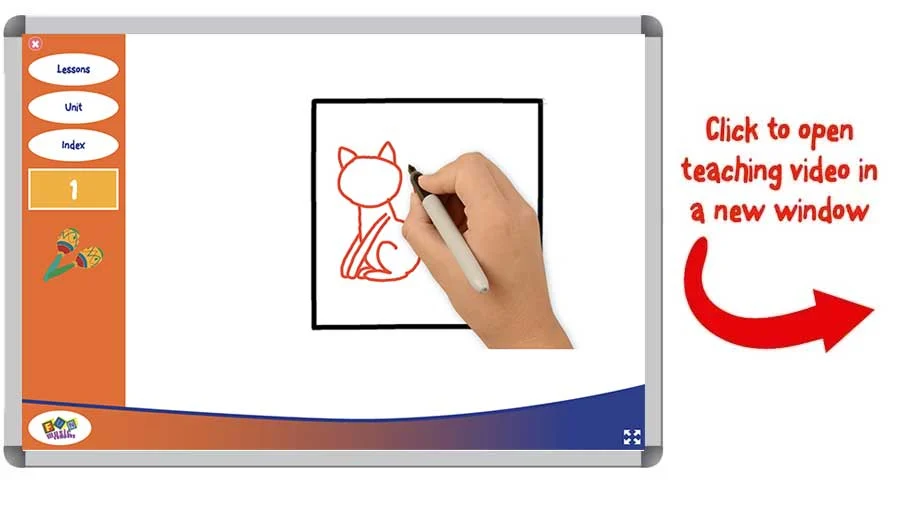
Once the class has worked through the process together, students can create their own notation for a short composition using instruments. This is where the animal squares approach comes in: students are given four squares on a page, each representing one sound, and use their instruments to create a four-sound sequence — then draw their own symbols to record it.
In this five-minute video, watch exactly how to move from the class composition into individual instrument work and iconic notation. You’ll see how students record their musical ideas on paper without any standard notation knowledge — and how the teacher responds to what they create.
What instruments work best for Stage 2?
Small, untuned percussion instruments are ideal: shakers, tapping sticks, hand drums, woodblocks. The key is that all instruments in the room should be similar in size and shape, with no instrument that draws special attention or creates a status issue among students. When every child has the same instrument, the focus stays on the compositional decisions rather than on who has the most exciting thing to play.
At this stage, tuned instruments such as xylophones or glockenspiels can also work well for exploring pitch — for example, representing a high-pitched butterfly sound with high notes and a low-pitched lion’s roar with low notes. If you have access to tuned percussion, Stage 2 is an excellent place to introduce that connection between pitch and symbol.
Making it work in the room: classroom management for Grade 1 composition
Composition lessons have a reputation for being chaotic. With six and seven year olds, instruments in the room, and an invitation to be creative, it can feel like a recipe for noise and lost time. In practice, the opposite is true — when the lesson is well-structured, Grade 1 students can be remarkably focused during composition activities, because they are doing something that feels meaningful to them.
These practical tips will help you keep the lesson purposeful and on track.
Seat students away from instruments before you begin
This is the single most important classroom management decision you will make in a composition lesson. Before students enter the room — or before instruments are distributed — have students seated in a clear space away from any instruments. A mat area or open floor space works well.
The reason is simple: a six year old in arm’s reach of a percussion instrument will play it. This isn’t misbehaviour, it’s developmental. But it means that any instruction you give before instruments are in hand is the instruction that actually lands. Once the instruments come out, your management task becomes significantly harder.
Establish the compositional idea, introduce the stimulus, and complete Stage 1 entirely before any instrument is touched.
Set clear time limits for free exploration
When students first receive instruments, give them a defined, short period — sixty to ninety seconds — to explore the sound freely. Name it explicitly: “You have one minute to explore what your instrument can do. After that, we’ll use it together.”
This does two things. It removes the irresistible novelty of a new instrument before the structured activity begins, and it gives students a legitimate outlet for their natural curiosity. Skipping this step and going straight into structured activity almost always results in students sneaking in their own exploration at the wrong moment.
Use a visual or auditory signal — a raised hand, a single strike of a drum, a countdown — to bring the class back together after the exploration period. Practise this signal before instruments are distributed so students know exactly what it means when it comes.
Keep individual composition time short and purposeful
At Grade 1, open-ended creative time without structure quickly becomes unfocused. Rather than saying “now make your own composition,” give students a clear, bounded task: four sounds, in four squares, in any order they choose. The constraint is what makes the creativity possible — students know exactly what they are working toward.
Five to seven minutes is typically sufficient for individual or pair composition at this age. If students finish early, invite them to practise performing their composition from their notation, or to try a different order for their sounds and see how it changes.
Use the class composition as a model before going individual
Students who are uncertain about what composition means — which at Grade 1 is most of them, at first — need to see the process modelled before they attempt it independently. The class composition in Stage 1 serves this purpose exactly. By the time students move to individual work in Stage 2, they have already been through the entire process once as a group: they chose sounds, arranged them, performed them, and recorded them.
Never skip Stage 1 in favour of going straight to individual work. The class composition is not a warm-up — it is the model that makes independent work possible.
Respond to every composition as a genuine creative act
This is less a management tip and more a teaching principle — but it has a direct effect on how the lesson runs. When students know that their composition will be heard, responded to, and taken seriously, they invest in the work. When they suspect it might be dismissed or corrected, they disengage or play it safe.
At Grade 1, every composition is valid. Your role is not to evaluate whether it sounds good by adult musical standards. Your role is to ask genuine questions about the choices students made: “Why did you put that sound first? What happens if you play this one louder? What does your composition feel like?”
Students who feel heard as composers are students who stay on task, engage with the notation step, and bring real energy to the performance.
Plan your transition back to the whole group
Before students move to individual or pair work, tell them explicitly how the lesson will end: “At the end, three or four people will perform their composition for the class.” This gives students a clear sense of where the lesson is going, and it gives you a natural, purposeful way to bring the group back together.
When you call time, invite volunteers to perform from their notation. Point to their symbols as they play. Ask the class what they notice. This closing performance loop — create, notate, perform, share — completes the compositional cycle and gives the lesson a satisfying conclusion that students will remember.
Building a Grade 1 composition program across the school year
A single composition lesson — even a great one — only takes students so far. What makes the real difference at Grade 1 is returning to composition regularly, with each experience building on the one before it. This progression is what the curriculum actually requires, and it is what turns a collection of individual activities into a genuine compositional education.
Here is what that progression looks like across a school year.
Term 1: Establishing the framework
The first term is about establishing the two-stage framework — sound exploration followed by iconic notation — and building student confidence with the process. The stimulus at this stage should be concrete and immediately familiar: animals, weather, environments, everyday sounds from the world students already know well.
The goal is not sophisticated musical output. The goal is familiarity with the compositional process itself: that we choose sounds, arrange them in a sequence for a reason, perform the result, and record what we did. Students who have worked through this process two or three times by the end of Term 1 have already developed more compositional thinking than many adults give six year olds credit for.
Keep the class composition central in this term. Individual and pair work comes later, once the process is truly understood.
Term 2: Introducing the elements of music
Once students are comfortable with the framework, the second term introduces a more deliberate focus on the elements of music — dynamics, tempo, and pitch — as tools that composers use to create different effects.
This does not mean teaching the elements as definitions. It means building them into the compositional choices students are already making. Instead of simply choosing which animal comes first, students now consider: should the lion be loud or soft? Should the butterfly move quickly or slowly? Can we use high sounds for one animal and low sounds for another?
These questions give students a richer vocabulary for their compositional decisions without adding technical complexity. The iconic notation now begins to capture not just the sequence of sounds, but something about how those sounds should be performed — a big symbol for loud, a small symbol for soft, a jagged line for fast movement, a smooth curve for slow.
Term 3: Moving to instruments with intention
By Term 3, students are ready to compose directly on instruments rather than starting with voice and body sounds. Small untuned percussion remains the most accessible choice — but where tuned instruments are available, this is the term to introduce them into the composition process more deliberately.
A simple pitched composition activity works well here: students use two or three notes on a xylophone or glockenspiel to create a short melodic idea, record it in their own notation, and perform it for the class. The constraint of two or three notes — rather than the full instrument — keeps the task manageable and the creative decisions meaningful.
This is also the term where pair and small group composition becomes genuinely productive. Students have enough experience with the process to collaborate without the activity falling apart, and working with a partner introduces a new compositional challenge: negotiating musical ideas with someone else.
Term 4: Performing and sharing compositions
The final term brings the year’s composition work to a natural conclusion: students perform their compositions for an audience. This does not need to be a formal concert. It can be as simple as each pair performing their composition for another pair, or the class sharing their work with a buddy class from another year level.
The performance element matters because it completes the compositional cycle the curriculum describes. Students are not just composing and notating — they are practising music for performance, which is exactly what AC9AMU2C01 requires. Having a real audience, however small and informal, transforms the experience from a classroom exercise into a genuine musical act.
Across the four terms, students move from class composition with a concrete stimulus, through deliberate engagement with the elements of music, to instrumental composition and collaborative work, and finally to performance and sharing. Each term is a self-contained set of experiences that also builds directly toward the next.
This is what a composition program looks like — not a series of disconnected activities, but a coherent progression that develops creative confidence, musical thinking, and compositional skill across an entire year.
What this means for your planning
Mapping this progression yourself — identifying the right stimuli, sequencing the activities, planning how to introduce the elements of music at the right moment, and building toward performance — takes significant time and expertise. It is also the part of music planning that most teachers, specialist and generalist alike, find most demanding.
The Fun Music Company Grade 1 curriculum includes a fully planned COMPOSE unit with twenty composition lessons built into the forty-lesson sequence. Each lesson is ready to open and teach, with the progression already mapped across the year and the stimuli, activities, and notation approaches all provided.
Frequently asked questions about Grade 1 music composition
The Australian Curriculum v9 for Music includes a dedicated creating and making strand at every year level. At Years 1 and 2, the content statement for this strand requires students to “select and combine elements of music when composing and practising music for performance” (AC9AMU2C01).
The two-stage framework in this article addresses this content statement directly. In Stage 1, students select sounds and combine them into a sequence — meeting the “select and combine” requirement through a concrete, age-appropriate activity. In Stage 2, students practise their composition and develop a recording system for it, connecting to the “practising music for performance” component of the statement. No standard notation is required to meet this curriculum requirement at Years 1 and 2, and the achievement standard for this band does not reference notation literacy. Creative decision-making, sequencing, and performance are sufficient — and well within reach of every Grade 1 student.
For a complete breakdown of all four strands at Years 1 and 2, including the achievement standard and what it looks like in practice, see our Australian Curriculum v9 Years 1–2 guide.
Small, untuned percussion instruments are the most practical choice for Grade 1 composition: shakers, tapping sticks, hand drums, woodblocks, and similar items. The key consideration is consistency — all instruments in the room should be similar in size, shape, and volume, so that no single instrument creates a distraction or becomes a status object among students. When every child has the same thing, the focus stays on the compositional decisions.
Where tuned instruments such as xylophones or glockenspiels are available, they can be introduced effectively in Stage 2, particularly when the composition activity involves exploring pitch. Limiting students to two or three notes — rather than the full range of the instrument — keeps the creative task manageable and the decision-making meaningful. If your school has limited percussion resources, body sounds and vocal sounds work equally well at this stage, and require no equipment at all.
A complete Grade 1 composition lesson using the two-stage framework fits comfortably into a standard forty-five to fifty minute music lesson. Stage 1 — introducing the stimulus, exploring sounds as a class, and creating and performing the class composition — typically takes fifteen to twenty minutes. Stage 2 — introducing iconic notation, completing the class score, and moving to individual or pair instrument work — takes a further twenty to twenty-five minutes, with the final five minutes reserved for sharing and performance.
If you are working with shorter lesson blocks, Stage 1 alone makes a complete and satisfying lesson in its own right, with Stage 2 following in the next session. The two stages are designed to work together, but each is coherent as a standalone experience.
No. Teaching Grade 1 composition does not require musical training, the ability to play an instrument, or any knowledge of music theory. What it requires is the ability to ask good questions, respond to students’ creative ideas with genuine curiosity, and facilitate a structured process.
The two-stage framework described in this article — sound exploration followed by iconic notation — is designed specifically to be accessible to any teacher, regardless of musical background. The stimuli are everyday sounds that students already know. The notation is invented by students themselves. The teacher’s role is to guide the decision-making process, not to provide musical expertise. Generalist classroom teachers who follow a well-structured approach can deliver effective and genuinely creative composition lessons with confidence.
Iconic notation is a system of invented symbols that students create themselves to represent sounds. Rather than using standard music notation — which requires years of dedicated study to read and write — students draw their own marks on paper that capture something about the sound they have made: its shape, its length, its volume, its character. A loud, low sound might become a thick, heavy line. A fast, fluttery sound might become a series of small dots. There is no universal system and no correct answer. What matters is that the symbol communicates the sound to the person performing it.
Iconic notation is developmentally significant because it builds the conceptual foundation for standard notation: the understanding that a mark on a page can represent a sound in time. Students who have invented their own notation system have already grasped the core idea behind all music literacy, which makes the transition to standard notation in the later grades considerably more intuitive.
Ready to take the work out of planning Grade 1 composition?
The Fun Music Company Grade 1 program includes 20 fully planned composition lessons, sequenced across the year and ready to teach — no preparation required.
Joining the full K-6 curriculum program includes our Composition Masterclass: a 90-minute training that walks you through how composition is taught across the full K–6 sequence, so you can teach every grade with confidence.






Leave A Comment