

Kindergarten Music Activities:
Fun Ideas for Early Years Music Classes
Have you ever stood in front of a room full of young children and thought — what on earth do I actually do with them in music today?
It’s one of the most common questions we hear from teachers. Whether you’re a generalist classroom teacher who has music added to your timetable, or a specialist looking for fresh ideas to add to your toolkit, finding kindergarten music activities that genuinely work in the classroom — that keep young children focused, engaged, and learning — isn’t always easy.
The good news is that great music activities for kindergarten don’t have to be complicated. In fact, the simpler the better. This article walks you through five key activity types that are proven to work with early years learners, with practical ideas you can start using straight away.
A quick note on “kindergarten”: In this article, we use the term broadly to cover early years music education for children aged approximately 3–6 years — from preschool and daycare settings through to the first year of formal primary school (known as Foundation, Prep, Kindy, or Reception depending on your state or country). If you’re working with children in this age range, this article is for you.
Five Essential Kindergarten Music Activities
These five activity types form the core of what is commonly done in kindergarten music. They cover the full range of how young children experience music — through voice, body, instrument, and movement — and together they give you everything you need to run varied, balanced sessions that keep early years learners engaged and making real musical progress.
1. Singing and Actions
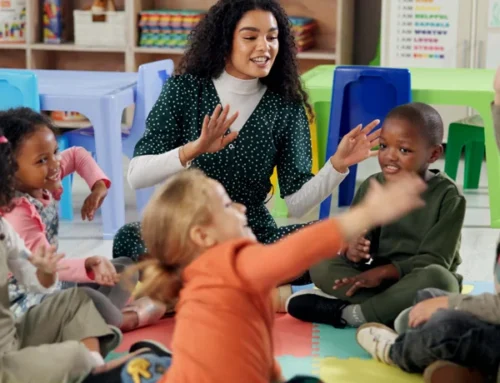
Singing is the most natural starting point for any early years music program — and pairing songs with actions makes them even more effective. When children connect movement to music, they’re not just singing; they’re processing rhythm, internalising pulse, and developing coordination at the same time.
Action songs are particularly powerful with younger learners because the physical component gives children something to do when they’re still finding their singing voice. It reduces self-consciousness and keeps the whole group anchored to the music together.
Ideas to try:
- Traditional action songs where children act out the lyrics (animals, weather, occupations)
- Call-and-response songs where the teacher sings a phrase and children echo it back with a matching action
- Songs that build in complexity — starting simple and adding new verses or actions each time
- Greeting songs at the start of the lesson that settle the group and signal that music time has begun
Revisiting favourite songs across multiple lessons is a feature, not a failing. Young children build confidence and musical understanding through repetition, and returning to a familiar song lets them go deeper each time — listening more carefully, singing more accurately, or adding new layers.
2. Body Percussion and Finger Plays
Body percussion — clapping, patting, stomping, clicking — is one of the most accessible and versatile kindergarten music activities available. No instruments required, no setup, no budget. Just the children themselves.
Finger plays take this a step further, adding fine motor coordination into the mix. For very young children in particular, the challenge of coordinating small finger movements with rhythm and song is genuinely rich musical and developmental work.
Ideas to try:
- Simple clapping patterns to accompany a song — on the beat, off the beat, or both
- Layered body percussion sequences: start with a pat, add a clap, add a stomp
- Echo patterns where the teacher performs a rhythm on the body and children copy
- Finger plays that tell a story or count up and down
- Steady beat activities using different body sounds to keep the pulse
Body percussion also doubles as an excellent classroom management tool. A simple clap pattern from the teacher can refocus the group instantly, and children who have practiced following rhythmic cues respond well to it.
3. Simple Untuned Percussion Instruments
Introducing simple untuned percussion instruments — shakers, tambourines, drums, rhythm sticks, woodblocks — opens up a whole new world of musical exploration for young learners. The focus at this stage is not on technical skill but on listening, responding, and playing together.
Even a basic set of classroom percussion instruments gives children a sense of ownership over their sound. They’re no longer just responding to the teacher — they’re contributing to the music as a group, which builds confidence and a genuine sense of ensemble.
Ideas to try:
- Playing on the beat to accompany a familiar song
- Stop-start activities that develop listening and self-control
- Dividing the class into groups with different instruments to create simple layered textures
- Loud and soft (dynamics) exploration using the same instrument
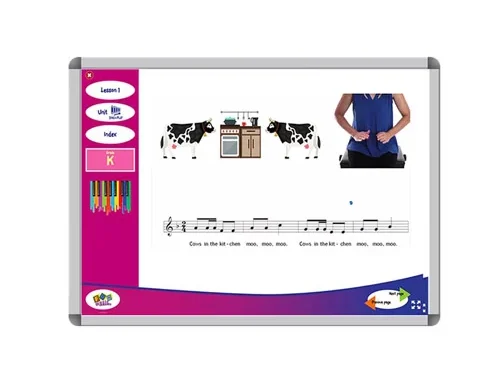
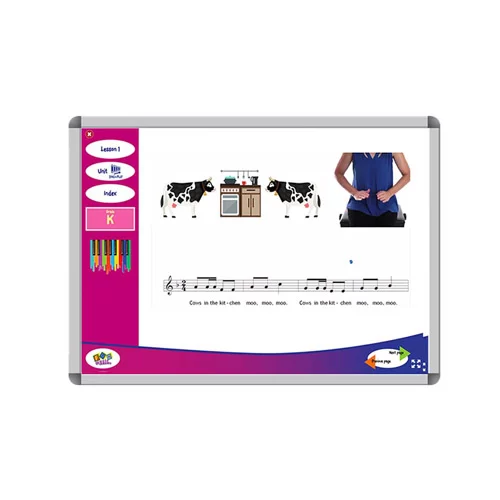
- Following simple music scores written on the board or on video
Classroom management is important here. Clear, consistent routines around picking up, playing, and putting down instruments help ensure instrument time stays focused and productive. Establishing these expectations from the very first session makes a significant difference.
4. Single Note Tuned Percussion
Moving into pitched instruments — where children play specific notes rather than just rhythms — is an exciting step in any early years music program. Single note activities are the ideal entry point: every child is responsible for one note, and together the class makes a complete melody.
This is where instruments like Boomwhackers, handbells, or colour-coded xylophones come into their own. Because each instrument or tube produces only one pitch, children can participate successfully from the very first lesson, long before they’ve developed the coordination to play a full melodic instrument independently.
Ideas to try:
- One-note songs where children play only when their colour or note appears
- Varying tempo and dynamics – so children have to respond to changes
- Echo patterns on the pitched instruments
- Swapping instruments between activities so every child experiences different pitches
Single note tuned percussion also provides a natural bridge to musical literacy concepts — high and low, steps and leaps, melody — all introduced through doing rather than abstract explanation.
5. Dance and Movement
Young children learn through their bodies. Music and movement are deeply connected in the early years, and structured movement activities are not just a fun add-on — they are a core component of high-quality music education.
Dance and movement activities help children internalise the feel of music — its pulse, its phrasing, its dynamics — in a way that sitting still and listening simply cannot achieve. The body becomes the instrument, and the music becomes something they live inside rather than observe from the outside.
Ideas to try:
- Freeze activities where children move freely to music and freeze when it stops
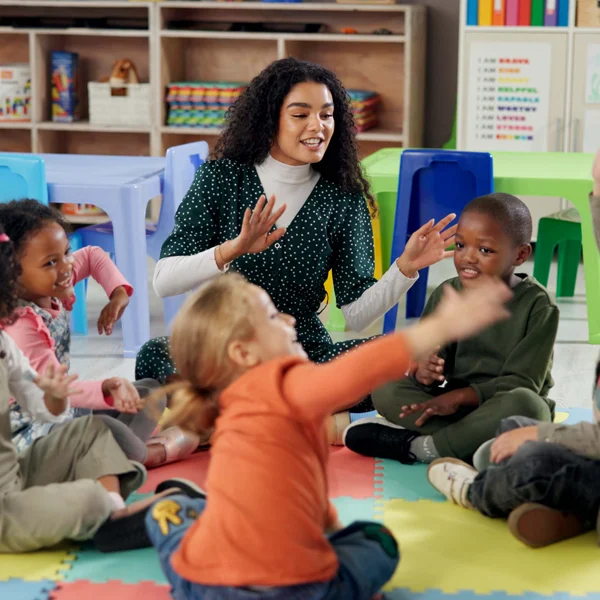
- Mirroring games where children copy the teacher’s movements to the beat
- Moving fast or slow, big or small, high or low in response to changes in the music
- Simple circle dances or singing games with a repeated structure
For generalist teachers who feel uncertain about music, movement activities are often the most comfortable entry point. You don’t need to sing perfectly or play an instrument — you just need to move with the children and respond to the music together.
Putting It All Together
The best kindergarten music sessions don’t focus on just one of these activity types — they weave several of them together within a single lesson. A typical session might begin with a singing and actions warm-up, move into body percussion, introduce a short instrument activity, and finish with a movement game. The variety keeps young learners engaged and ensures you’re addressing a range of musical skills within each session.
Rotating between these five activity types across the week also ensures your program has breadth and balance. Children who shine in movement activities might be quieter during instrument work, and vice versa — variety gives every child a moment to feel capable and confident.
And don’t underestimate the power of revisiting. Returning to a favourite song, a familiar body percussion pattern, or a well-loved instrument activity isn’t repetition for the sake of it — it’s how young children build real musical understanding.
For a complete guide to structuring your sessions from the very beginning, see our kindergarten music lessons guide. And when you’re ready to put it all into a lesson structure, our kindergarten music lesson plans guide walks you through a complete 30-minute session you can teach straight away.
Ready to Put These Activities Into a Complete Program?
For preschool and early childhood educators (ages 3–5):
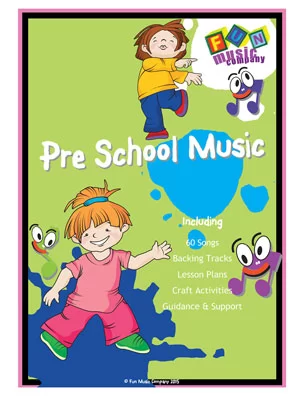
If you’re working with preschoolers and want a complete, ready-to-use program that brings all five of these activity types together in structured, themed lessons, our Preschool Music Curriculum Program has everything you need. Every lesson is planned, sequenced, and ready to teach — no music background required.
For Kindergarten and Foundation year teachers (first year of formal school):
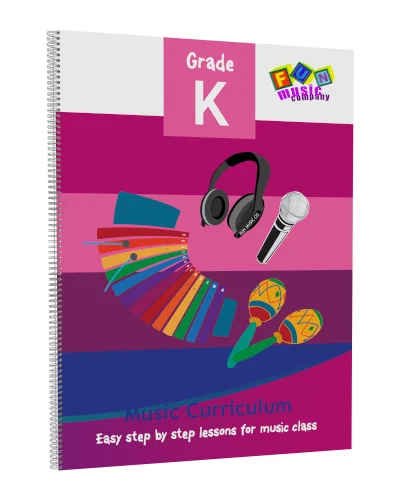
If you’re teaching Kindergarten as the first year of formal primary school, our Kindergarten Music Curriculum is built specifically for this age group. It’s structured to meet curriculum requirements while keeping music enjoyable, accessible, and meaningful for five and six year olds.
Frequently Asked Questions
For the youngest learners, prioritise activities with strong physical components: action songs, finger plays, body percussion, and free movement to music. Keep instrument activities very short and highly structured. Repetition of familiar songs and activities is especially important at this age — children build confidence through knowing what comes next.
Not at all. All five activity types in this article are designed to be accessible to generalist classroom teachers with no formal music training. The most important qualities are enthusiasm, consistency, and a willingness to participate alongside your students. A structured curriculum program can provide the lesson-by-lesson guidance you need so you’re never starting from scratch.
As much as possible! Ideally, children in the early years should have some musical experience every day, even if it’s only a few minutes. Dedicated music lessons of 20–30 minutes, two to three times a week, provide the consistency young learners need to develop real musical skills. Short daily musical moments — a greeting song, a transition rhythm, a movement warm-up — reinforce learning between lessons.
The most effective kindergarten music activities combine multiple learning modes — voice, body, and instrument — in short, varied bursts. Singing with actions, body percussion, simple instrument play, single-note tuned percussion activities, and structured movement are all excellent choices. The key is keeping activities brief, revisiting favourites regularly, and ensuring every child can participate successfully from the start.

Leave A Comment