



Kindergarten Music Lesson Plans
How to create kindergarten music lesson plans — a practical guide
Creating kindergarten music lesson plans that actually work — lessons where 5-year-olds are engaged, learning, and having fun — requires a very different approach to planning for older grades. This guide walks you through the structure, activities, and sequencing that make kindergarten music lessons come alive, whether you’re a specialist music teacher or a generalist classroom teacher picking up music for the first time.Creating kindergarten music lesson plans that actually work — lessons where 5-year-olds are engaged, learning, and having fun — requires a very different approach to planning for older grades. This guide walks you through the structure, activities, and sequencing that make kindergarten music lessons come alive, whether you’re a specialist music teacher or a generalist classroom teacher picking up music for the first time.
If you’re looking for broader guidance on teaching early years music first, our kindergarten music lessons guide is a great starting point. And if you want a bank of practical ideas to draw from when planning, our kindergarten music activities page covers the five core activity types that work best with this age group.
Creating kindergarten music lesson plans that actually work — lessons where 5-year-olds are engaged, learning, and having fun — requires a very different approach to planning for older grades. This guide walks you through the structure, activities, and sequencing that make kindergarten music lessons come alive, whether you’re a specialist music teacher or a generalist classroom teacher picking up music for the first time.
Crafting effective kindergarten music lesson plans requires a blend of structure, spontaneity, and playfulness. This ensures every child feels included, inspired, and excited to participate.
The goal of kindergarten music lessons extends beyond teaching musical notes and rhythms. It’s about inspiring a love for music while supporting other key areas of development, such as language, motor skills, and social-emotional growth.
These lessons can also spark creativity and build confidence. Children will discover their voices, learn to move in rhythm, and explore instruments.
However, how do you create kindergarten music lesson plans, without lots of hard work?
This article will show you some strategies and ideas specific to kindergarten. For a comprehensive guide to creating elementary and primary music lesson plans across all grades, check out our complete lesson planning guide.
How to teach kindergarten music lessons
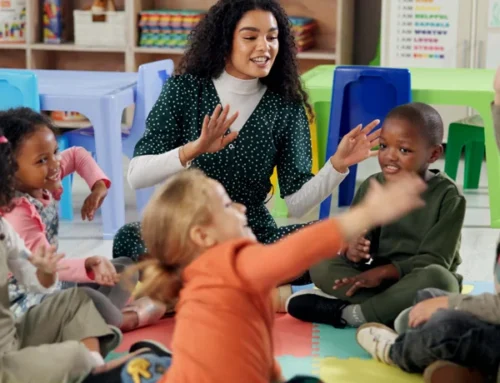
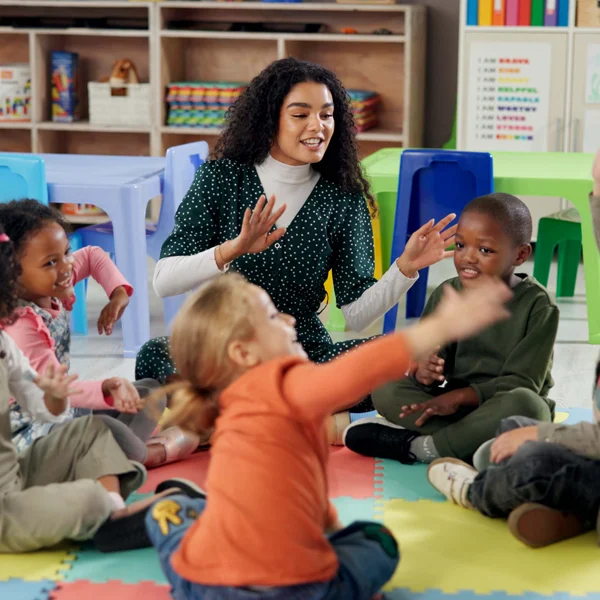
When planning music lessons for kindergarten students, it’s essential to understand their developmental needs. At this stage, children have short attention spans, so activities must be engaging and varied. Including movement, storytelling, and hands-on interaction is key to holding their interest. Lessons should also provide opportunities for active participation. Singing, clapping, dancing, and playing simple instruments are all important.
One effective approach is to structure lessons around a theme. For example, a “nature” theme could involve singing songs about animals. In this lesson they could explore high and low pitches by mimicking birds or frogs. They could also use percussion instruments to imitate rain or thunder.
Keep the themes very simple. Children will love simple themes, like ‘dogs’, ‘cats’, ‘frogs’ and ‘cars.’ This is easier than trying to focus a lesson around an unknown concept. Music is already an unknown concept, so we need to use a theme to link it to things that they already know.
An important element in Kindergarten Music Lessons is repetition
Repetition is key in learning how to teach kindergarten music lessons. Repeating songs, rhythms, and movements helps children build confidence and internalise musical concepts. However, it’s important to balance repetition with variety to keep lessons fresh and exciting.
In the following sections, we’ll explore specific strategies. Ideas for creating engaging and effective kindergarten music lesson plans.
It doesn’t matter if you’re an experienced music educator or a classroom teacher. These ideas will help you inspire your students and foster a lifelong love of music. Let’s get started!
The key is short segments
Whatever you do, make sure that each individual activity is short. A lesson needs to consist of at least 10-12 two or three minute activities. These should flow naturally from one to the other. Children at this age don’t have long attention spans. Therefore, structuring the lesson like this is ideal.
For many children this is the first time that they’ve experienced a class setting. Therefore, it’s important to give a taste of many activities, rather than focusing on one activity in detail.

Four essential elements in Kindergarten Music Lesson Plans
I believe that there are four critical components which should be included in Kindergarten Music Lesson plans.
They are:
- Skill Development
- Singing and Playing
- Composition
- Music Listening and appreciation
Skill Development in Kindergarten Music Lessons
Kindergarten music lessons play a vital role in developing a range of skills that extend beyond music.
Through singing, clapping, and playing instruments, children enhance their fine and gross motor skills. They are also coordinating movements and developing hand-eye coordination.
Rhythmic activities help strengthen their sense of timing and spatial awareness. Learning tunes and melodies improves memory and cognitive abilities.
Music also nurtures language skills, as children practice listening and recognising patterns. They are also expanding their vocabulary through lyrics and rhymes.
Social skills are another key area of development. Group music activities encourage cooperation, turn-taking, and teamwork. This fosters a sense of community and shared achievement.
Of course, we don’t call it “skill development” in front of the children! That is just our ‘teacher’ term for these activities. For the children… we would say: “Let’s play a fun singing game!” and then away we go!
Incorporating Singing and Playing into Kindergarten Music lesson plans
Singing and playing instruments are core components of a successful kindergarten music lesson plan.
Singing introduces children to melody, pitch, and rhythm in an engaging and natural way. This makes it an essential tool for fostering musical development. Simple songs with repetitive patterns, a steady beat and lots of actions are effective for this age group. Singing songs and doing actions are a gateway to being able to learn to play instruments.
Integrating actions, movements, and body percussion with songs enhances motor skills and reinforces rhythm.
Playing percussion instruments like tambourines or shakers allows children to explore sound and develop coordination. Playing tuned instruments such as xylophones or glockenspiels helps them develop a sense of pitch.
Singing and playing music brings music lessons to life! It makes music both accessible and enjoyable for young learners.

How to have Kindergarten Students Compose their own music
Encouraging kindergarten students to compose their own music is a wonderful way to nurture creativity and self-expression while introducing foundational music concepts.
At this age, composition can involve things like creating rhythms, inventing melodies, or arranging sounds.
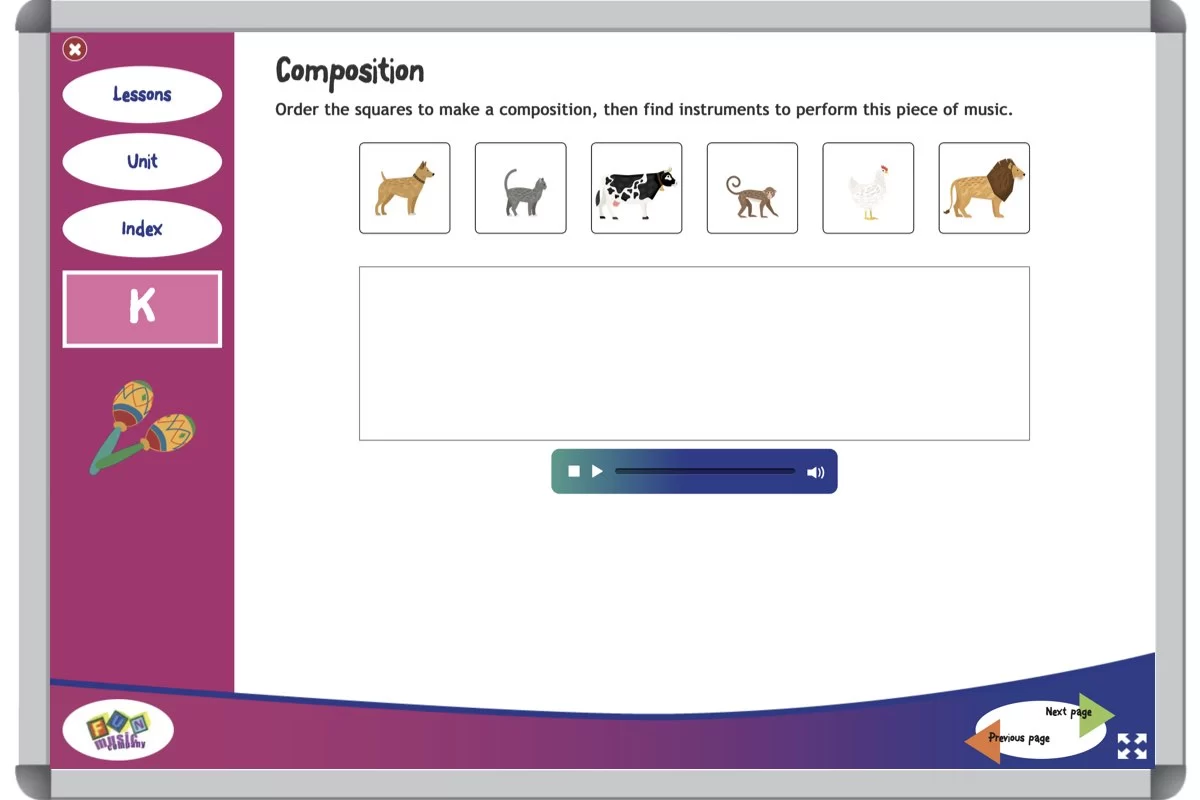
We can start by providing a structured framework, such as a rhyme that needs to be extended. Alternatively an image, such as a picture of animal can be used as a prompt.
For example, a frog might represent a short, bouncy sound, while a lion could inspire a long, roaring note.
Group compositions can involve building a “sound story,” where each child contributes an idea. This encourages collaboration and active listening.
Recording their creations and playing them back can boost confidence and provide a sense of accomplishment.
The key is to celebrate exploration, allowing students to experiment freely with sounds while gradually introducing basic elements of music like tempo, dynamics, and pitch.
Incorporating Music Listening into Kindergarten Music Lesson Plans
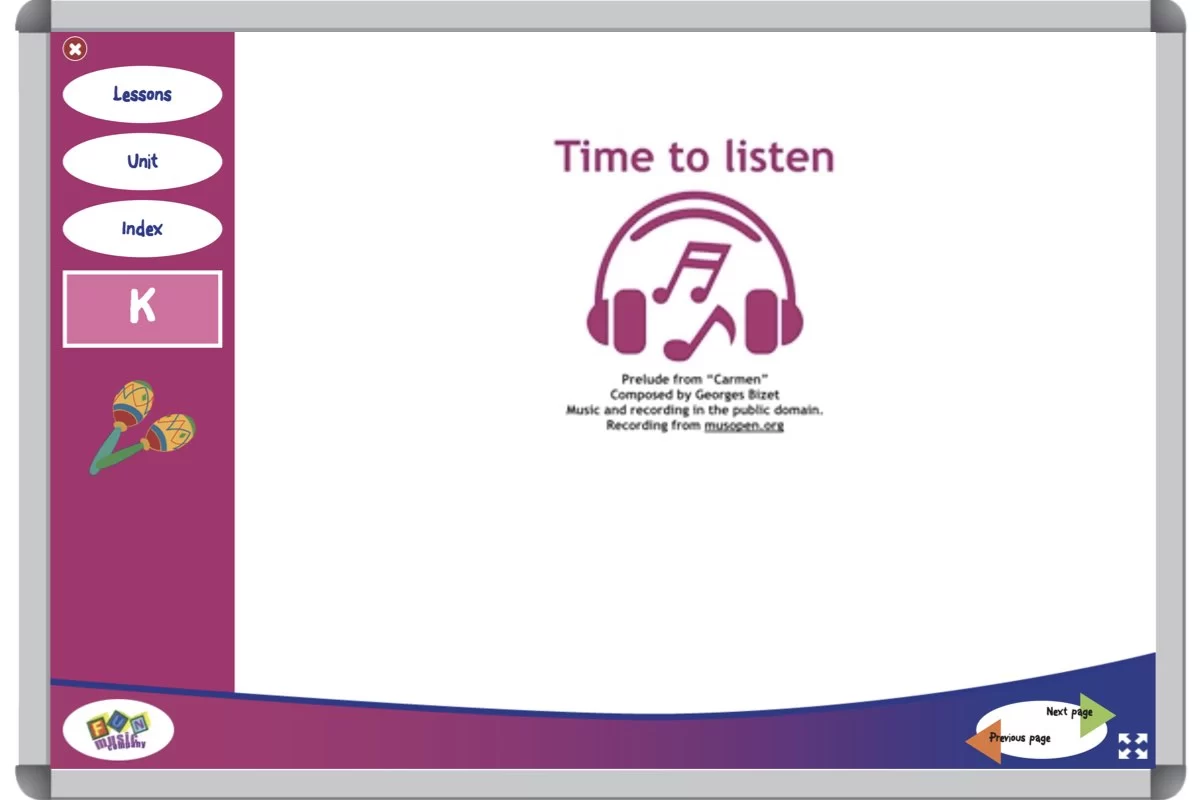
Incorporating music listening helps students develop their first listening skills. It helps them to start becoming curious about the world around them. It also develops an appreciation for a variety of musical styles and cultures. This can all be done within the Kindergarten Music Lesson Plan.
Listening activities can introduce young learners to different instruments, rhythms, and melodies. This sparks curiosity and expands their musical vocabulary.
We start by selecting short, engaging pieces that align with the children’s level and interests. These can be short classical pieces, traditional folk songs, or music from around the world.
We use guided prompts to focus their listening, in the form of a pre-frame video. This will sometimes ask them to look for specific instruments or imagine a story inspired by the music.
This is followed up with directed questions. These questions can open up a discussion on how the music made them feel. It can also reinforce their listening experience and encourage self-expression.
A Sample Kindergarten Music Lesson Plan
0–3 minutes: Welcome routine and hello song
Every kindergarten music lesson plan should begin with the same opening song each week. This isn’t wasted time — repetition builds security, and a settled child learns better. A simple “hello” song where you greet each child by name works beautifully here. After just a few weeks, children will walk in already singing it.
3–7 minutes: Warm-up — frog rhythms
Introduce a simple clapping rhythm and label it the “frog hop” — short, bouncy, repetitive. Clap it, say it (“hop hop hop hop SPLASH”), then have children echo it back. Try two or three variations. This is your skill development moment: steady beat, echo, listening, turn-taking — all wrapped in something that feels like a game.
7–12 minutes: Singing — “Five Little Speckled Frogs”
This classic song is perfect for kindergarten because it counts down (maths!), tells a story, has actions, and is easy to learn in one sitting. Add movements — jumping up, sitting down as frogs “jump into the pool.” Sing it twice: once to learn it, once to perform it. By the second run-through, you’ll have the whole class fully engaged.
12–16 minutes: Movement — moving to the beat
Ask the children: do frogs move quickly or slowly? Then play a short piece of music with a clear, moderate tempo and have children move around the space like frogs — jumping on the beat. Freeze when the music stops. This reinforces steady beat awareness through the whole body, which is exactly how young children internalise rhythm most effectively.
16–20 minutes: Instrument exploration — shakers as “pond sounds”
Hand out shakers (egg shakers work perfectly here). Tell the children the shakers are going to make the sound of rain falling on the pond. Model a slow shake, a fast shake, loud and soft. Then ask can you make a tiny raindrop sound? What about a big storm? This is your introduction to dynamics — but to the children, it’s just playing. Guide them back to the “frog hop” rhythm and shake it together.
20–24 minutes: Listening — what do you hear?
Play a short piece of music that features prominent woodwind or pizzicato strings — something light and bouncy. Ask the children to close their eyes and imagine the frogs. After listening, ask two or three guided questions: Was the music fast or slow? Was it loud or quiet? Did it sound happy or sleepy? These questions are training their ears to listen with intention, which is the foundation of all future music appreciation.
24–28 minutes: Compose — make your frog sound
This is the creative moment. Give each child (or small group) a percussion instrument and ask them to invent a sound their frog makes. It might be a splash, a croak, a jump, or a raindrop. Let them experiment for a minute, then bring them back together to share. Have each child or group perform their “frog sound” while the rest of the class listens. Celebrate every single one.
28–30 minutes: Closing song and goodbye routine
Mirror your opening — same goodbye song each week, ideally with children’s names included. This brings the lesson full circle and helps children transition calmly back to their classroom. Consistency here pays dividends over the whole school year.
Does this all sound like a lot of work?
Get done-for-you Kindergarten Music Lesson Plans!
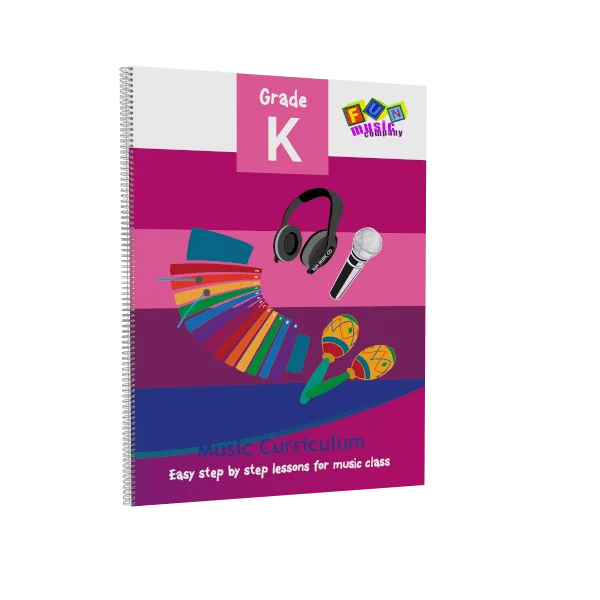
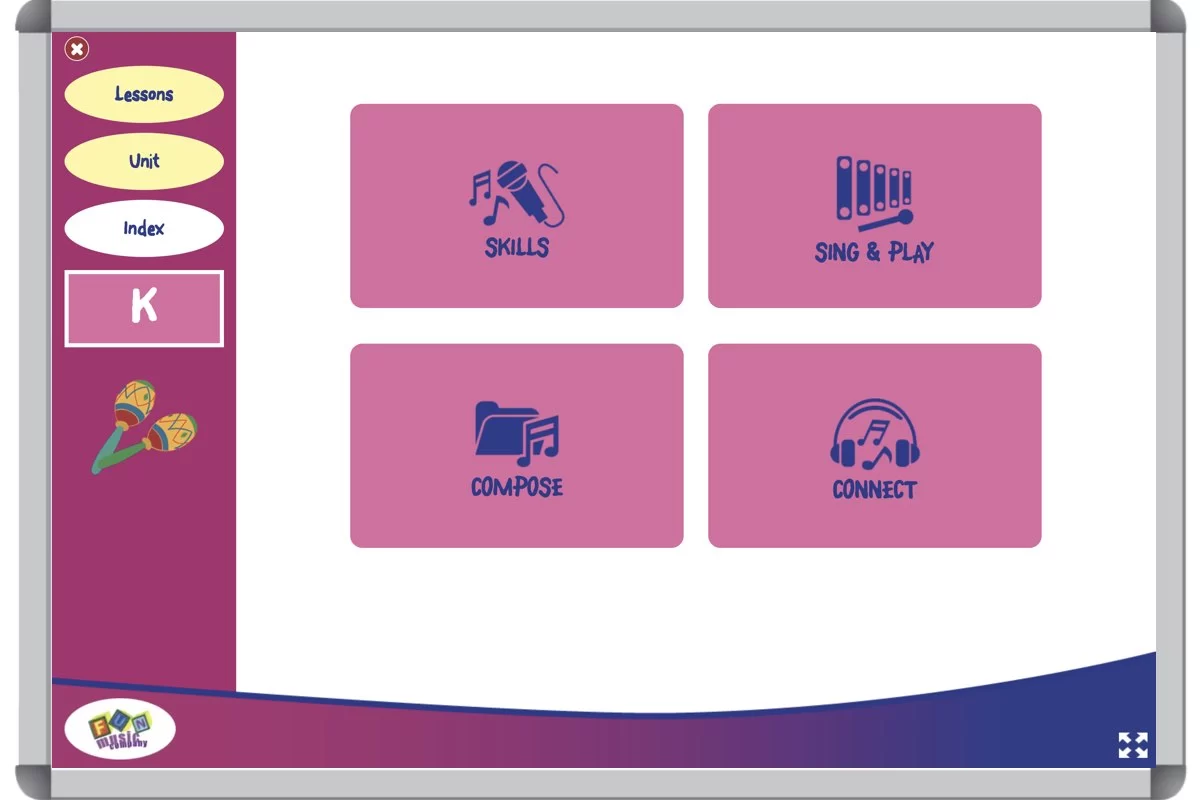
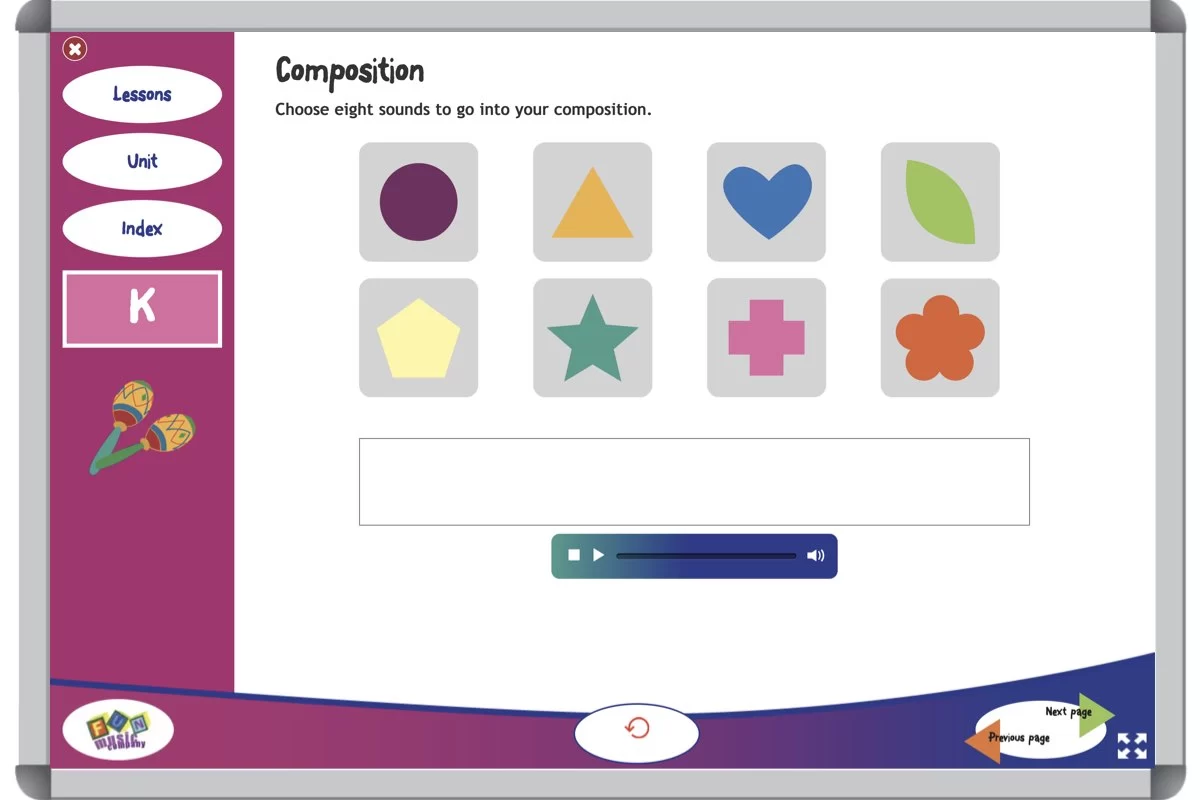
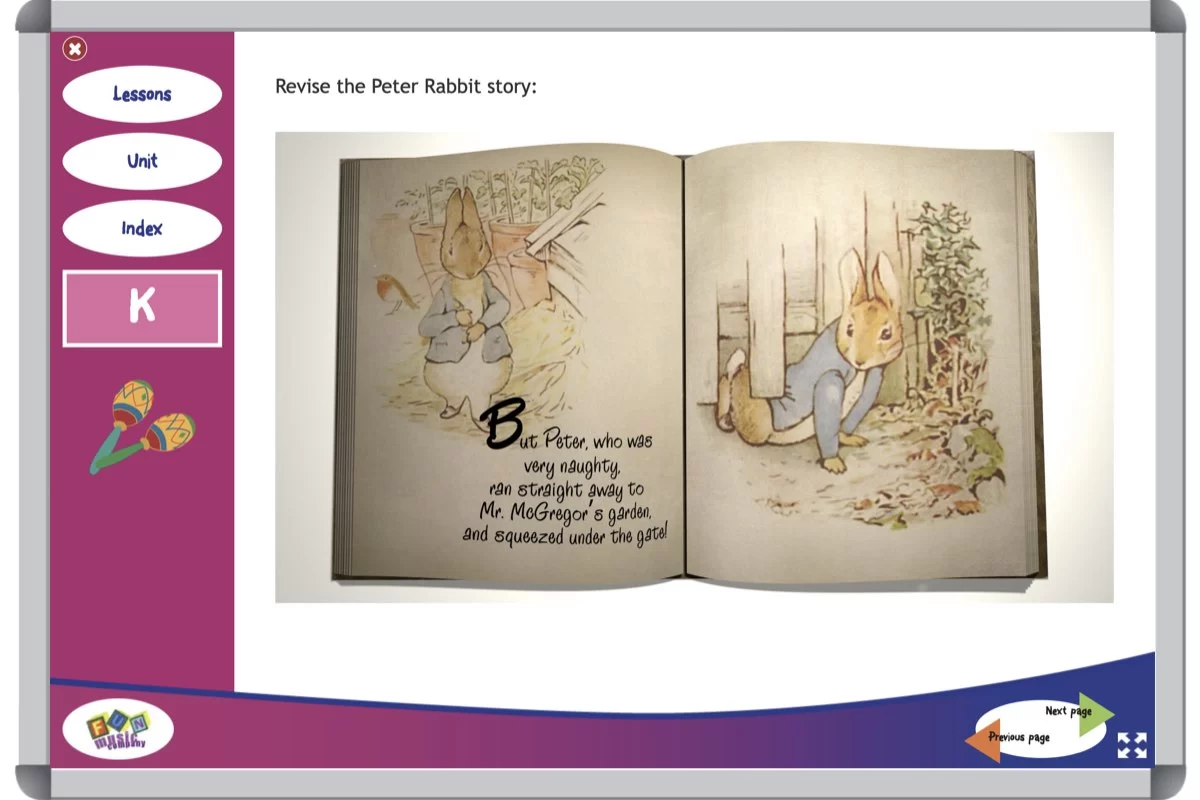
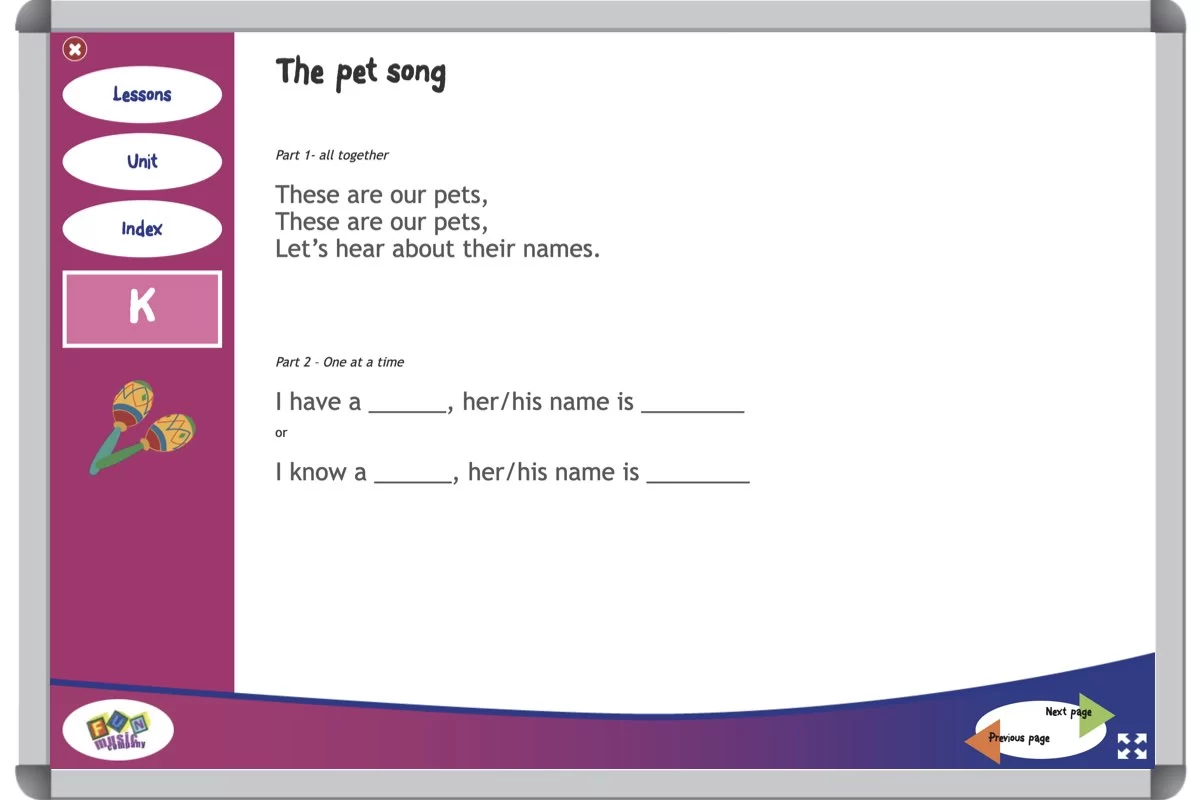
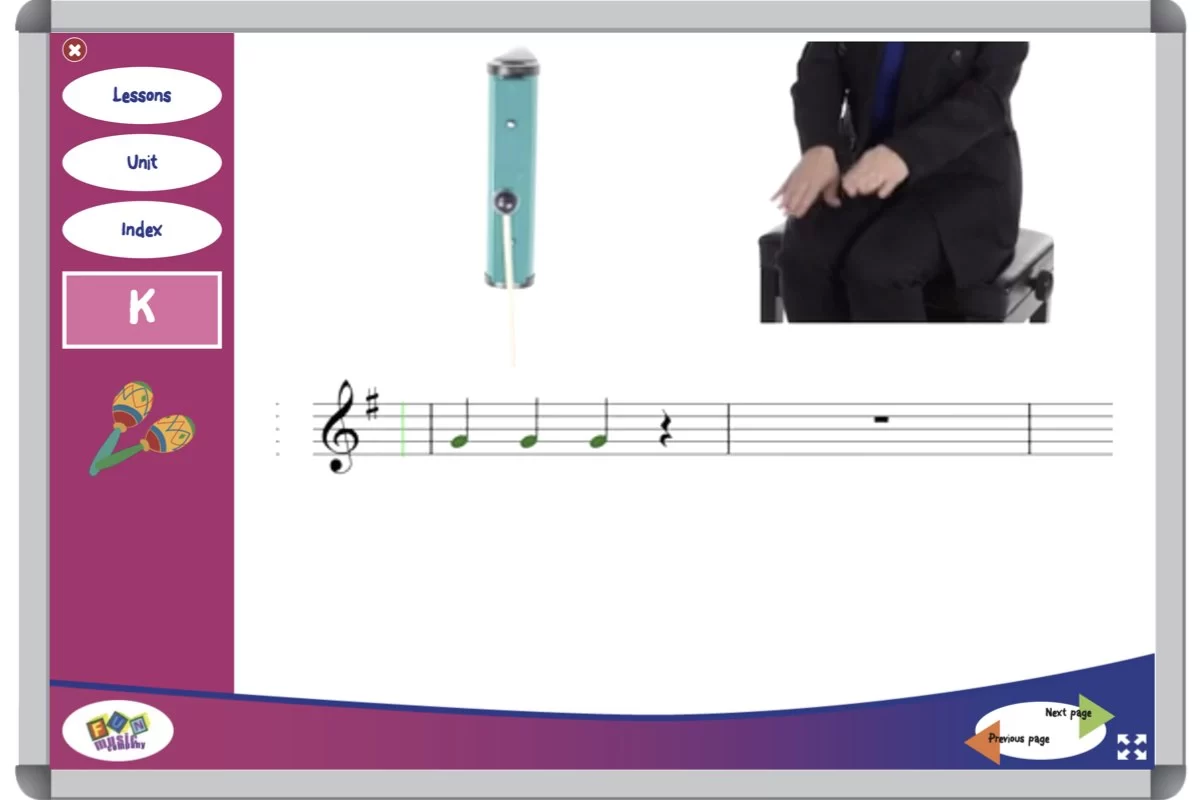
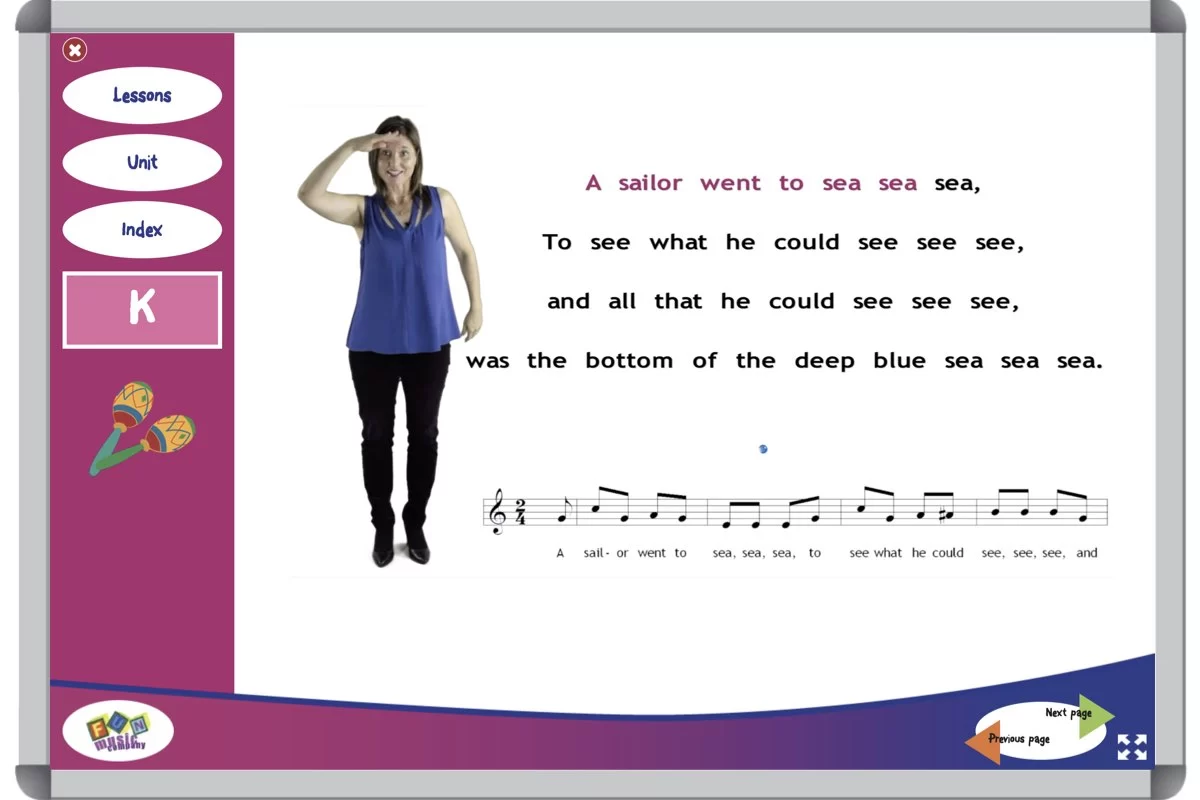
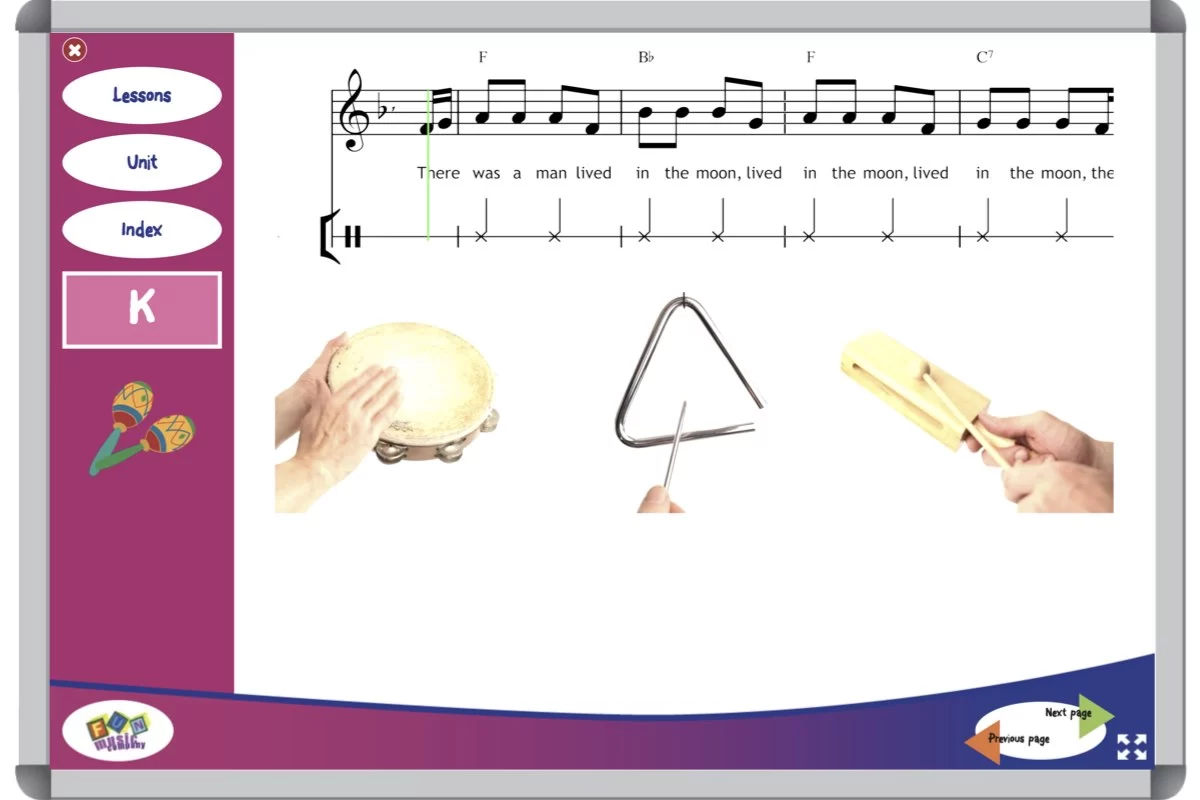
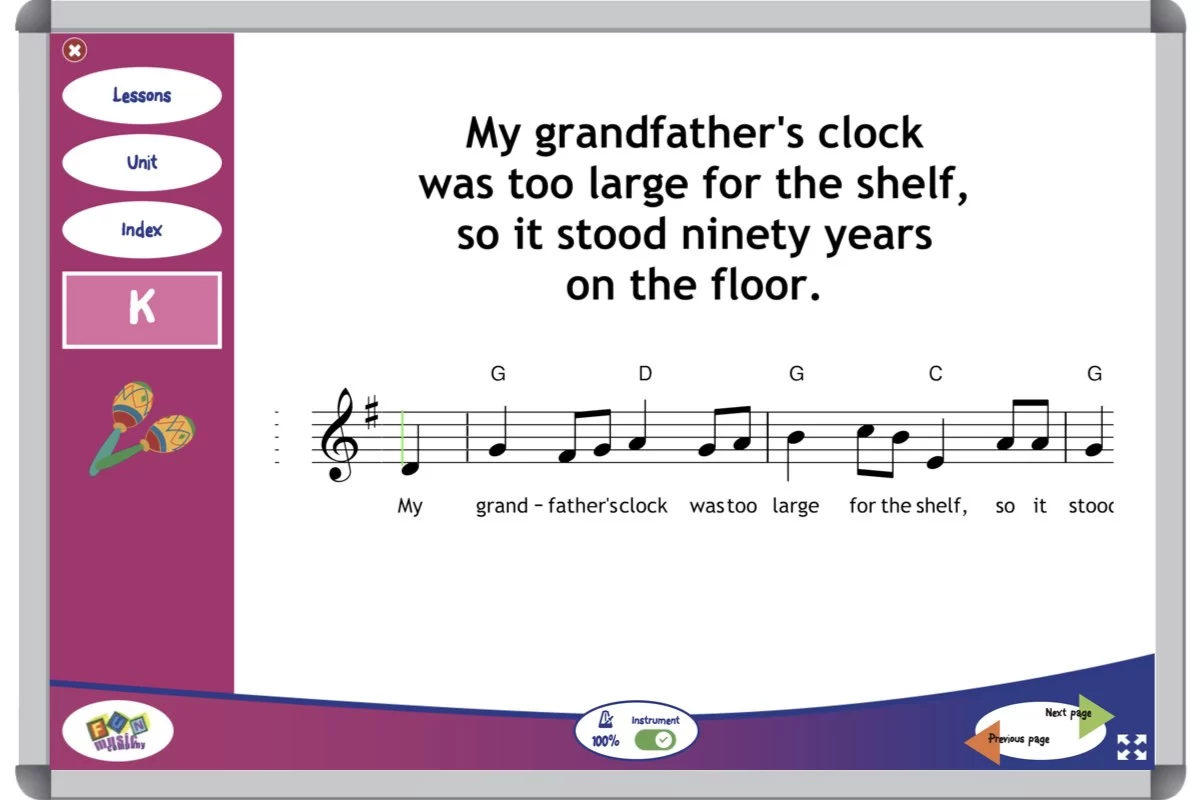
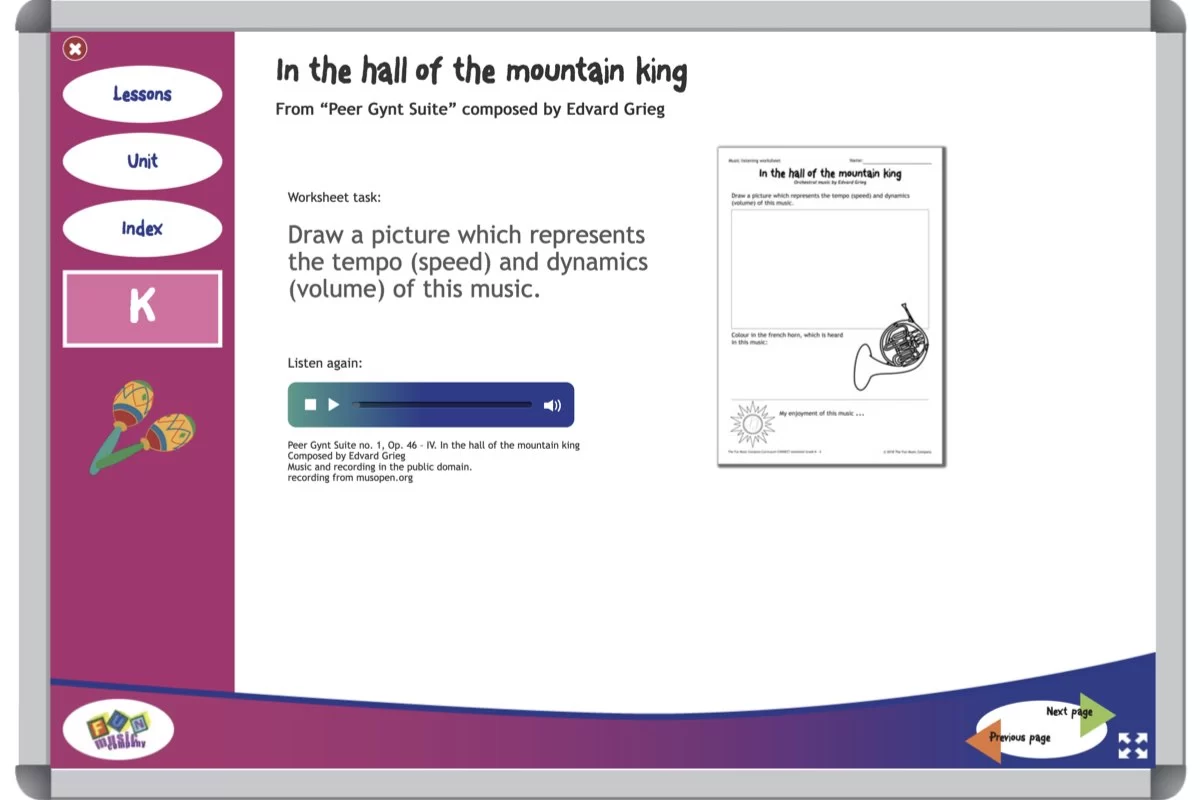
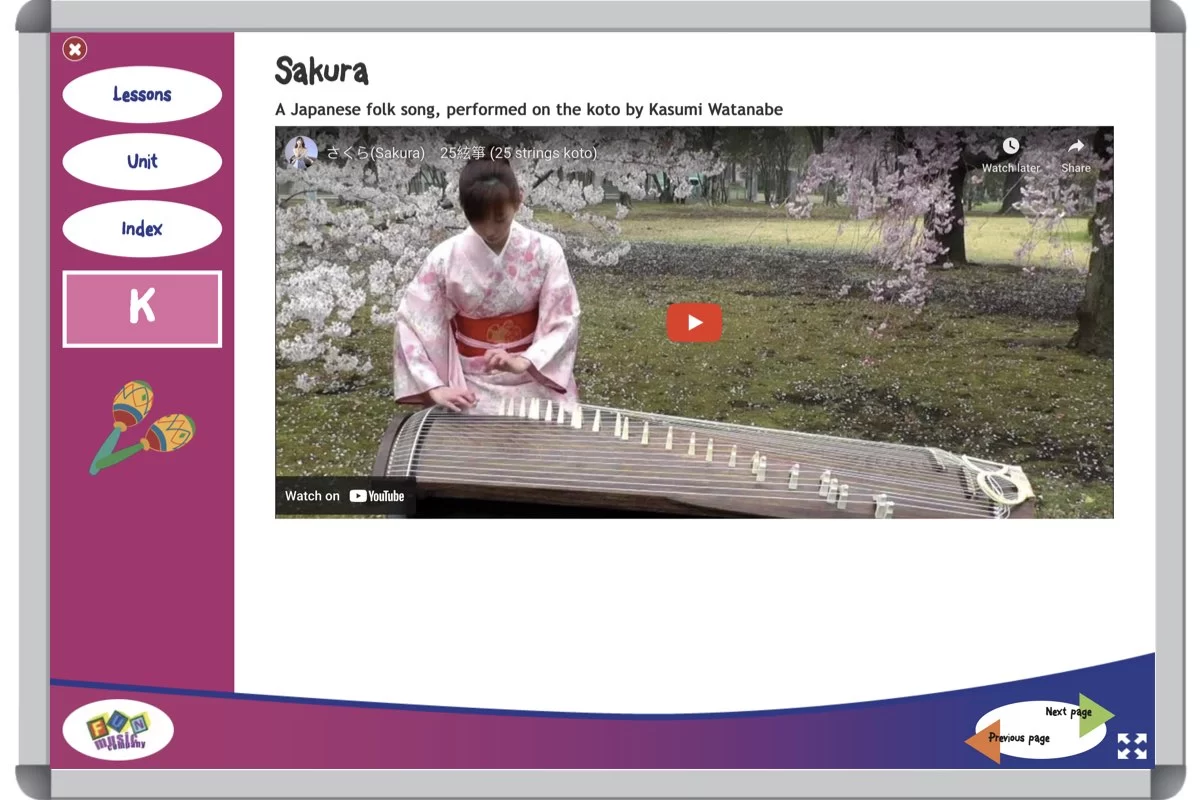
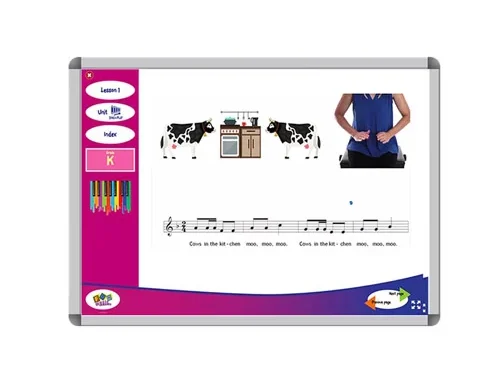
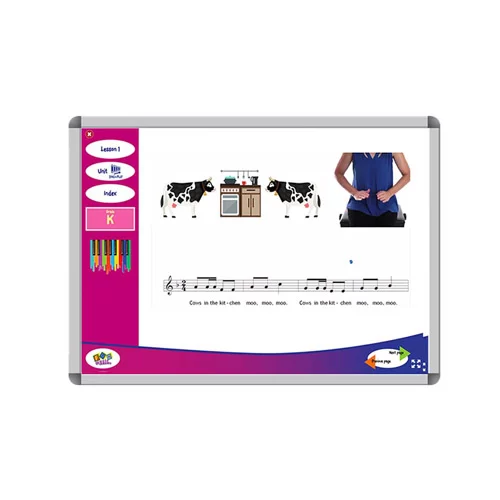
You can get a complete kindergarten music curriculum together with the Fun Music Company kindergarten music program.
This contains activities for:
- Skill development
- Singing and playing
- Composing
- Listening
Matching the requirements of all national and state-based curricula.



Hi Janice,
I’m Dr Anna Mlynek-Kalman (PhD) and I’d like to let your readers know that I provide an on-line course helping teachers create reflective musical process situations in an effort to warm up their own voices. This help prepare them to sing with children and the helps warm their voices and children’s voices, simultaneously. Once teachers understand how to warm their voices through playful interactions with children they should be able to sing many of your songs more confidently, live with children. We find more and more teachers turn to using YouTube recordings as their music program which I would say in many cases becomes mis-education. To avoid this trap and to help teachers sing live with children, as part of my PHD I created a simple, easy to implement, Contour Vocal Play Framework. I have also created a simple 2 hour certified online course found here https://www.musicworksmagic.com/programs/100-organic-intro/